KYIV August 23, 2026 – Ukrainian President Volodymyr Zelenskyy has claimed that Russian President Vladimir Putin is preparing to mobilize between 300,000 and 500,000 additional troops for the war in Ukraine, with the call-up potentially beginning in early October 2026 after Russia’s parliamentary elections.
The remarks, originally made in a July 27, 2026, interview with Britain’s Sky News and shared by Zelenskyy on social media, cite Ukrainian intelligence assessments. Zelenskyy stated that Putin “is not ready to stop this war” and plans to ramp up mobilization after the State Duma elections scheduled for September 18–21, but avoid an open nationwide announcement due to concerns over public opposition.
“He wants to strengthen mobilization, not openly, because he is afraid of his society, but he will do it at the beginning of October,” Zelenskyy said, according to transcripts and reports of the interview. He added that Russia could face significant challenges training the new recruits quickly, leading to poorly prepared soldiers being sent to the front and higher casualties. The Ukrainian leader also urged Western partners to impose “total sanctions” and for Ukraine to disrupt Russian logistics, weapons production, and fuel supplies to hinder any such effort.
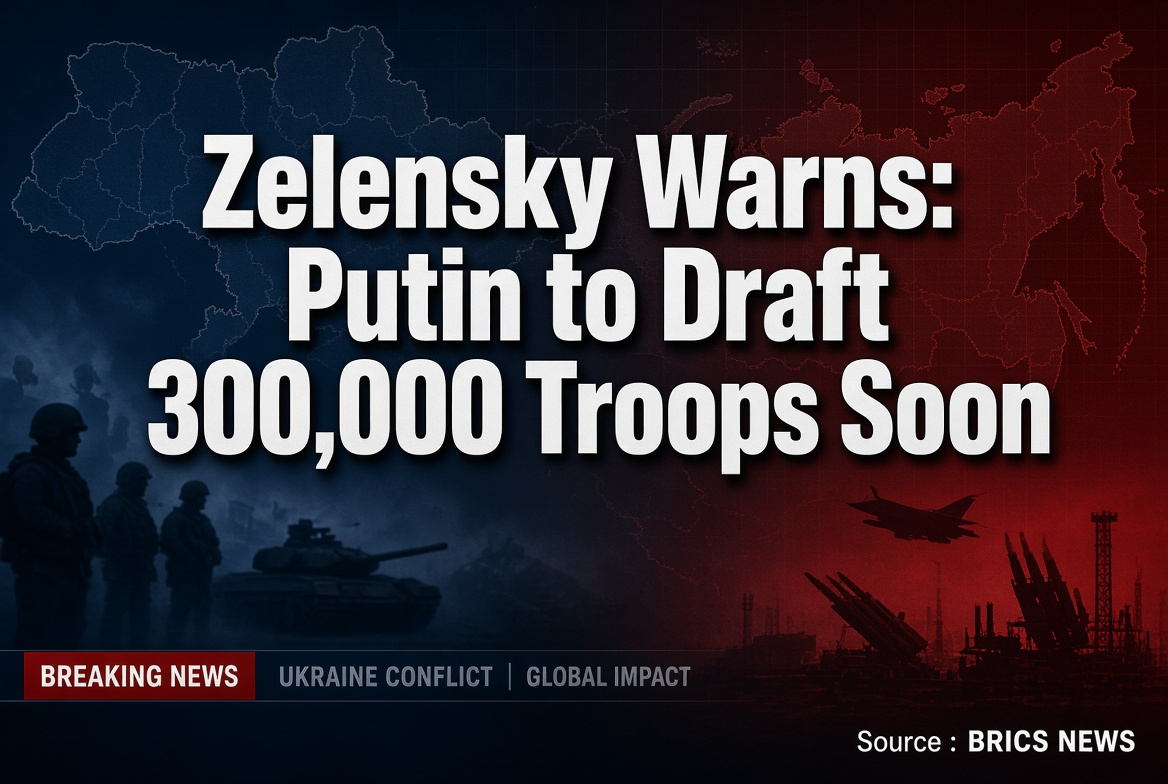
A BRICS News account highlighted the claim in a post on August 23, 2026, framing it as “JUST IN” that Zelenskyy says Putin will draft 300,000 new troops soon. The original statement referenced a range of 300,000 to 500,000.
Zelenskyy has reiterated related warnings in subsequent statements, including on August 11, citing internal Russian documents and intelligence about plans for several hundred thousand additional recruits by the end of 2026 and more the following year.
Russian officials have dismissed the reports. On August 20, Russia’s UN Ambassador Vasily Nebenzya said mass mobilization “is not planned or expected, as far as I know,” while stopping short of fully ruling it out after the elections. A Russian State Duma defense committee official has previously called similar claims a product of Zelenskyy’s “imagination.”
Analysts note that Russia has relied heavily on contract volunteers and incentives rather than another large-scale partial mobilization like the one announced in September 2022 (which targeted about 300,000). Recruitment rates have reportedly slowed in 2026 amid high casualties, economic strains, and public sensitivity to drafts. Independent verification of the specific intelligence claims remains unavailable, and previous Ukrainian warnings of imminent large mobilizations have not always materialized on the predicted scale or timeline.
The elections for Russia’s lower house of parliament are expected to favor the ruling United Russia party. Any post-election manpower expansion could allow Moscow to sustain attrition warfare, rotate units, and maintain pressure, but would also risk domestic backlash, workforce shortages, and the challenges of equipping and training large numbers of new personnel.
About The Author