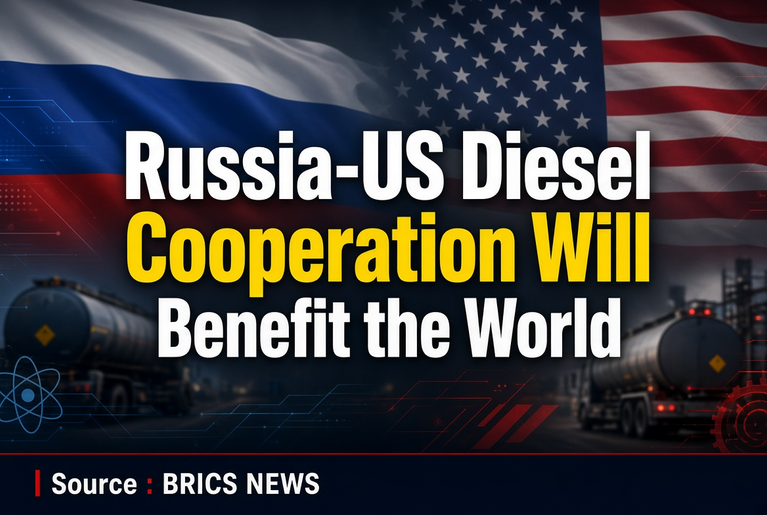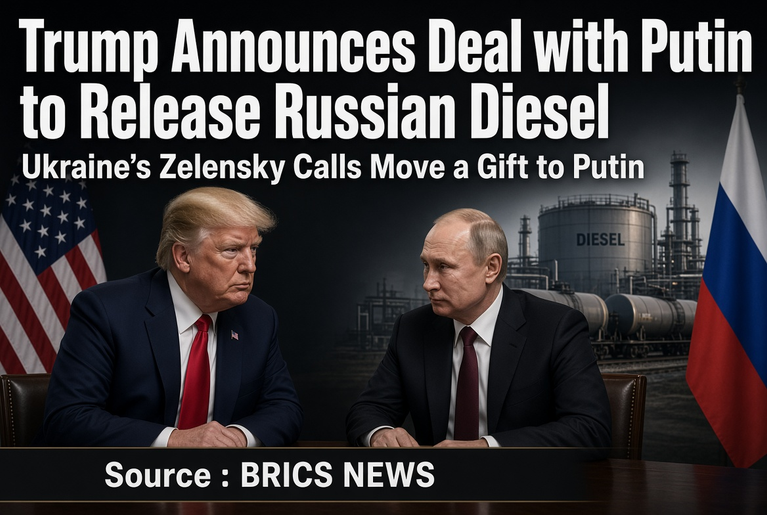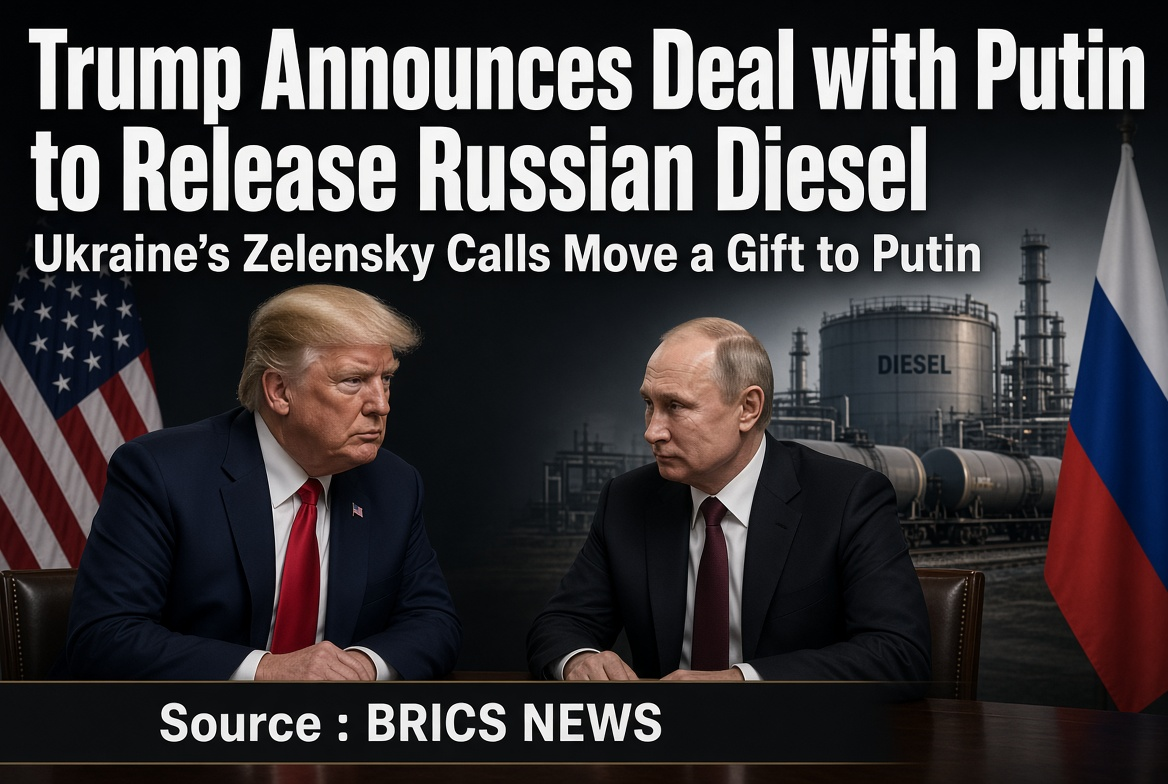
WASHINGTON D.C Oct 9, 2026 – President Donald Trump said Friday he reached an agreement with Russian President Vladimir Putin under which Moscow will supply hundreds of thousands of tons of diesel to global markets, prompting the U.S. Treasury to issue a temporary license easing sanctions on the fuel. Ukrainian President Volodymyr Zelensky sharply criticized the move.
Trump wrote on Truth Social that he held a “highly successful discussion” with Putin in which Russia agreed to “immediately supply over 300,000 Tons of Diesel Fuel to the American and Global Marketplace,” followed by another 500,000 tons in November and 1 million tons shortly thereafter. He said Russia could deliver an additional 3 million tons “based on the condition of their Diesel Refineries,” predicting that “Diesel Prices for Americans and, indeed, the World, will be COMING DOWN, IN RECORD NUMBERS, AND FAST!”
Shortly afterward, the U.S. Treasury’s Office of Foreign Assets Control issued a temporary general license authorizing the sale, delivery, and importation of Russian-origin diesel until early April 2027. The White House described the arrangement as bringing more than 4.8 million tons of diesel to markets. Russian officials, including an account associated with Putin economic envoy Kirill Dmitriev, welcomed the cooperation, stating that Russia-U.S. energy ties would benefit the world.
The announcement comes as U.S. diesel prices remain elevated—averaging about $6.28 a gallon according to AAA—and ahead of midterm elections in which energy costs have been a political focus. It represents a notable shift from recent U.S. policy. Trump had signed a sweeping Russia sanctions measure only last month aimed at constraining Moscow’s energy revenues.
Zelensky responded critically, describing the easing of sanctions as “absolutely terrible” and “not fair and not honest.” He characterized it as a “happy birthday present for Putin” and said “gifts to Putin will not work for peace,” arguing that the step would strengthen Russia’s ability to continue its war against Ukraine. Ukrainian officials have previously highlighted their strikes on Russian refining capacity as a means of reducing Moscow’s fuel exports and revenue.
Energy analysts noted that the initial volumes represent a relatively modest addition to global supply—roughly equivalent to a day and a half of U.S. diesel demand—and questioned how quickly or substantially prices would fall. Diesel futures showed little immediate reaction to the news.
The deal adds a new point of friction between the Trump administration and Kyiv while underscoring the administration’s emphasis on lowering domestic fuel costs.
About The Author