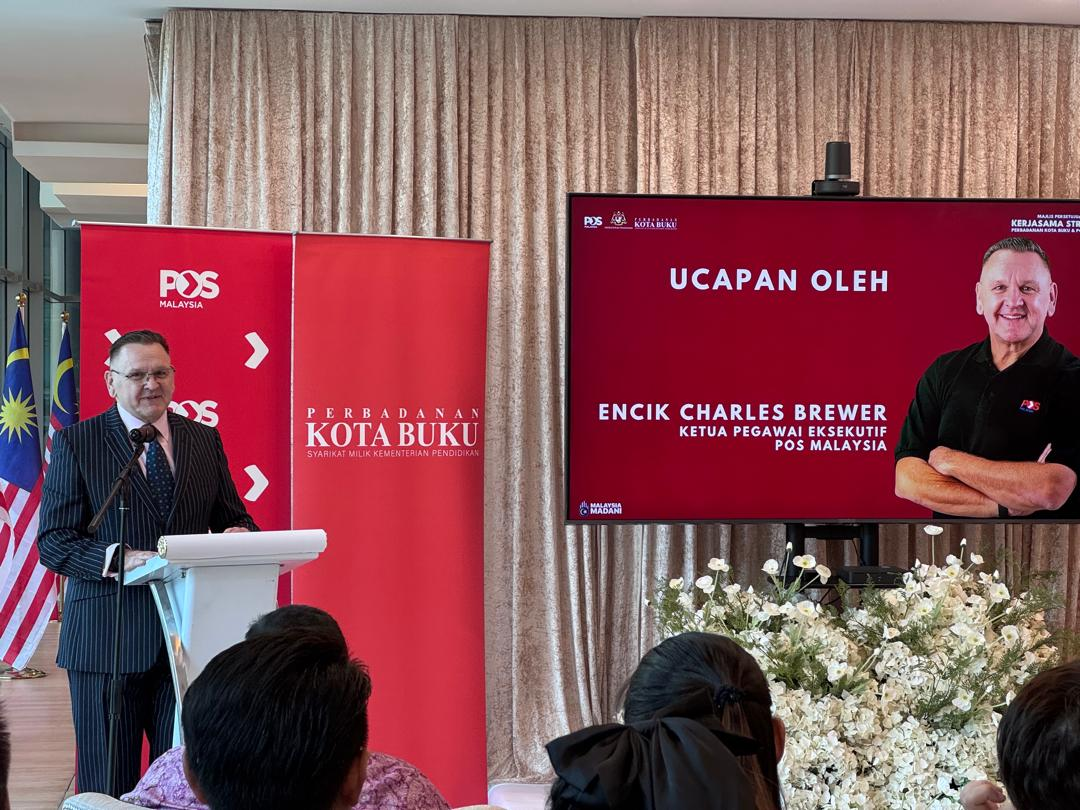
CYBERJAYA — In parts of the Sabah interior, the nearest shop of any kind is a three-hour journey away. There is no bookstore to walk into, no shelf to browse, no cashier to hand a voucher to. For a student in one of these communities, a RM100 book voucher from the government means nothing unless someone — or something — is willing to make that journey for them.
That “someone” turns out to be a red van, an electric delivery bike, or a postal worker who has done this route a hundred times before. It is Pos Malaysia, and it is quietly one of the most important players in a national programme that most Malaysians know simply as the Baucar Buku Madani.
A Promise Made in 2024, Still Being Kept in 2026
The Baucar Buku Madani initiative began in 2024, when the government set aside RM287 million in book vouchers for students from Year 4 and above — a signal, at the time, that reading was going to be treated as a national priority rather than a nice-to-have. In 2025, the programme grew to include educators themselves, with RM42 million extended to 420 teachers. This year, it grew again: RM220 million, reaching more than 2.2 million secondary school students and above.
Numbers on that scale can feel abstract. But behind each one is a fairly ordinary human moment — a teenager logging into an app, picking out a novel or a study guide, and waiting for it to arrive. As of early May, more than two-thirds of this year’s vouchers — 68.56% — had already been redeemed, with the government hoping to hit full redemption by 31 October 2026. It’s an ambitious finish line, and getting there depends less on policy and more on logistics: on whether a book ordered in Kuala Lumpur can be delivered with the same reliability as one ordered in a longhouse in Sarawak or a village in the Sabah interior.
Why It All Runs Through One Door
Kota Buku, the government’s literacy agency, built a single digital storefront called Book Capital specifically to keep the programme honest. Students redeem their vouchers there and nowhere else, accessed through the Ministry of Education’s DELIMa platform. Book Capital sells nothing but books — no gadgets, no snacks, no loopholes — so the RM100 given to a student stays exactly what it was meant to be: a book in their hands. Every purchase is logged, every trend tracked, and three years of reading data now sit on a public dashboard that lets researchers and policymakers see, almost in real time, what Malaysian students are actually choosing to read.
That transparency is the easy part, in a sense — it happens on a screen. What happens after a student clicks “buy” is where the harder, more human work begins.
The Last Mile Is the Whole Point
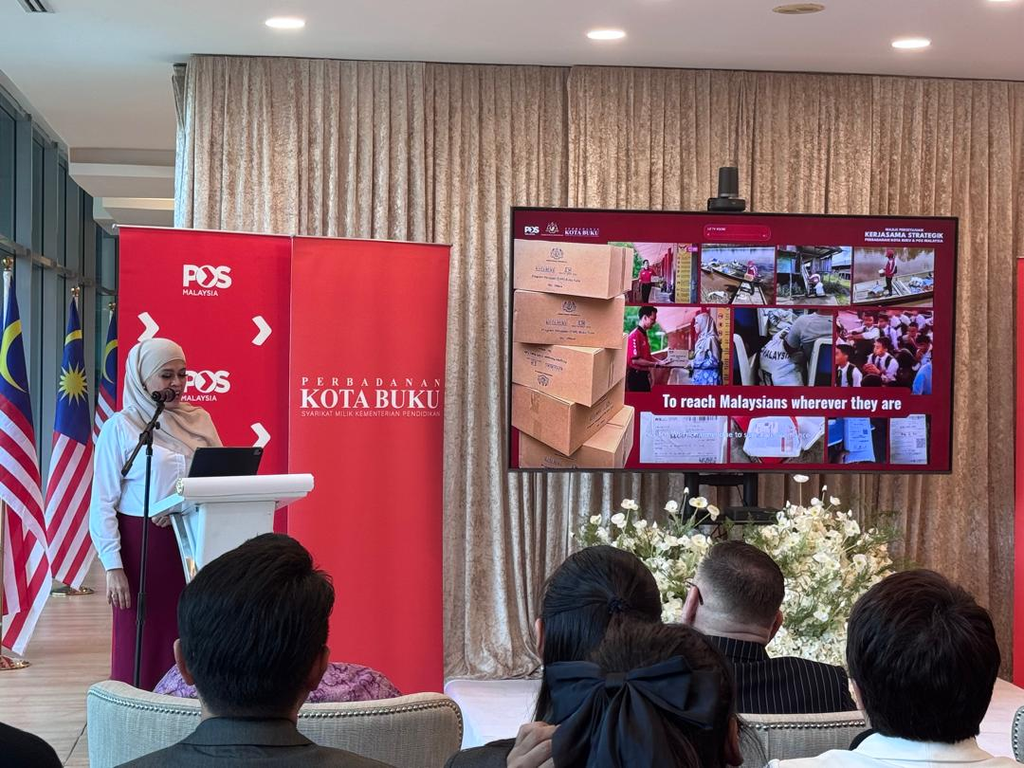
This is where Pos Malaysia comes in, and why its involvement was never just about logistics convenience. The company was chosen because its delivery network reaches into towns, districts, and settlements that ordinary retail has never bothered to serve — the interior Sabah scenario isn’t a hypothetical edge case, it’s a daily reality the network was built to handle.
None of this has been entirely smooth. Book Capital is still a young system, stitched into an already complicated national logistics chain, and early on there were the kinds of hiccups you’d expect — orders that needed chasing, questions that needed answering. Rather than treat these as someone else’s problem, Pos Malaysia leaned in: building a WhatsApp support channel directly into Book Capital so that a student or worried parent wondering where their book has got to can simply ask and get a real answer from a real person. It’s a small feature, easy to overlook, but it’s the kind of detail that tends to separate a programme that merely functions from one that people actually trust.
Green Vans, Old Trees, and a Bigger Picture
There’s a quieter thread running through all of this, too. Pos Malaysia runs the largest green delivery fleet in the country — around 1,400 electric vehicles alongside 250 to 300 vans — which means every book voucher redeemed and delivered carries a slightly smaller environmental footprint than it otherwise would. It echoes another project the two organisations have run together: a recycled exercise book programme that has already reached over 4,120 schools with more than two million books, and in doing so helped spare an estimated 2,832 trees from being cut down.
Put side by side, the voucher programme and the recycled book initiative start to look less like two separate government projects and more like a single, deliberate bet — that a country’s literacy agency and its national postal carrier, working closely together, can solve access and sustainability at the same time, rather than choosing between them.
Five Months to Go
With 68.56% of this year’s vouchers already redeemed and the clock running toward 31 October, the final stretch will say a lot about how far this partnership can be pushed. For Kota Buku, the mission hasn’t really changed since day one: put a book within reach of every Malaysian student, no matter how far from a city that student happens to live. For Pos Malaysia, it’s a chance to prove something its own leadership has said in different words before — that a parcel can carry more than what’s inside the box.
Somewhere between a warehouse in Cyberjaya and a doorstep three hours from the nearest shop, that promise is being tested, one delivery at a time. Asal ada post code, pasti sampai!
About The Author