By Professor Dato Dr Ahmad Ibrahim
Malaysia’s recent strides are undeniable. Economic indicators are promising, political calm offers a welcome respite, and education has rightly been placed at the forefront of the national agenda. Kudos to the Madani unity government. The launch of a new, comprehensive education blueprint signals ambition.
Yet, a single decision within it—the restoration of high-stakes examinations for Primary 6 and Form 3—has ignited a firestorm of debate. This controversy is not merely about examinations; it is a symptom of a deeper, systemic ailment plaguing Malaysian governance: the chronic weakness in policy monitoring, evaluation, and transparent communication.
The government’s move to reinstate these exams is presented as a corrective, a return to rigour after years of a more holistic, assessment-heavy approach. However, the profound flaw lies in the admission, as noted by observers, that this pivot appears to be made “with no real data and evidence to suggest the no-exam system is not good.” This is governance by anecdote, not evidence. It risks replacing one system, whose full effects may not have been rigorously measured, with another based on perception or nostalgia.
Did the previous policy fail to improve critical thinking? Did it worsen learning gaps? Was teacher training inadequate for its implementation? Without clear, publicly shared answers to these questions, the reversal seems arbitrary, undermining public trust and subjecting children to the whims of political cycles rather than pedagogical science. Many view this as unhealthy.
This education debate is a microcosm of a larger national challenge. Malaysia often excels at crafting sophisticated blueprints and launching well-intentioned policies. Where it repeatedly stumbles is in building a robust, independent, and transparent mechanism to ask the simple, vital questions: Is this working? For whom? At what cost? What needs to change?
The absence of such a culture of continuous evaluation creates a policy vacuum. Success is claimed rhetorically, failures are buried, and the public is left in the dark. This leads to a disjointed cycle of launch, forget, and reactive U-turn, rather than one of launch, learn, and refine.
What is urgently required is a fundamental institutional shift. We need to normalise Independent Policy Auditing. Imagine a respected, non-partisan body—or a strengthened role for existing institutions like the Auditor-General’s Office or a parliamentary select committee—mandated to conduct and publish periodic, publicly accessible impact assessments of major national policies. This body would not merely track budget spending, but evaluate outcomes: Did the STEM promotion drive increase qualified graduates? Did the affordable housing scheme create sustainable communities? Did the no-exam policy reduce student anxiety without compromising foundational skills? Is the NIMP or NETR delivering on the promises of the blueprints?
Such a system would serve a dual purpose. First, it would empower evidence-based iteration. Policymakers could detect gaps and make mid-course corrections based on data, not dogma. If exams are restored, within two years we should know their effect on dropout rates, student well-being, and equity—and be prepared to adjust. Second, it would rebuild public trust through transparency.
When findings—both positive and negative—are communicated plainly to all stakeholders (parents, teachers, industry, voters), policy becomes a shared national project, not a top-down decree. It transforms citizens from passive recipients into informed participants. This is a more scientific way of assessing policies.
The restoration of exams may yet prove to be the right decision. But without a system to prove it—or disprove it—we are condemned to repeat the same debates every few years. Malaysia’s current stability and economic momentum provide the perfect platform to institutionalise smarter governance. We must move beyond the cycle of “announce and abandon.” Let the education blueprint be the first policy whose journey is meticulously tracked, audited, and publicly debated.
Our goal should not be to be merely right about exams, but to build a system that relentlessly pursues what works best for Malaysia’s future. The true test is not the one we give our students, but the one we now face in strengthening the foundations of our own governance. This way, there will be more continuity in the country’s many plans and blueprints.
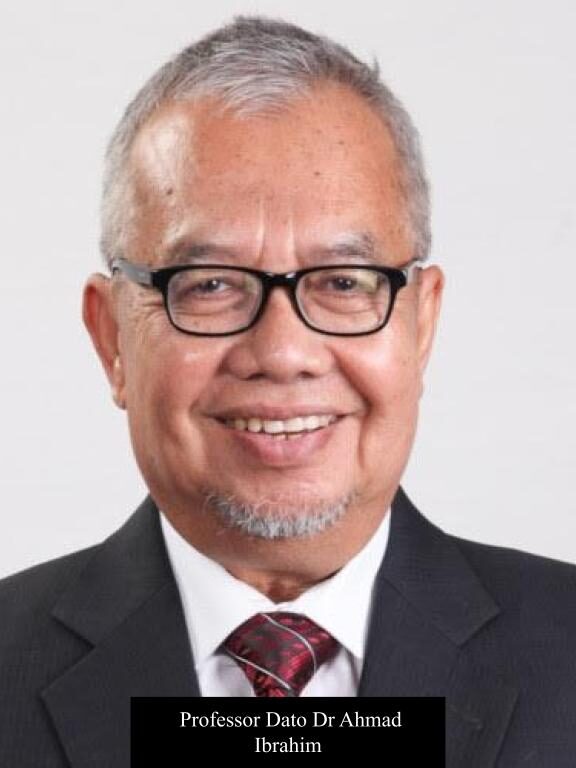
The author is affiliated with the Tan Sri Omar Centre for STI Policy Studies at UCSI University and is an Adjunct Professor at the Ungku Aziz Centre for Development Studies, Universiti Malaya.
About The Author