By Professor Dato Dr Ahmad Ibrahim
For over a century, the car industry and the rubber business share an invisible pact, the tyre. Now, the pact is breaking. The world is going electric, and the humble tyre under your car is about to become a battleground. Nearly 70% of all rubber produced on this planet—both natural and the synthetic—ends up as tyres. But electric vehicles (EVs) are a different beast. They are heavier, quieter, and focused on one thing: range. An EV driver’s greatest anxiety isn’t speed—it’s watching that battery meter drop. And every time a tyre flexes and deforms against the road, it wastes energy as heat. That’s called rolling resistance. For a petrol car, it’s an annoyance. For an EV, it’s a crisis. The solution seems simple: design tyres with lower rolling resistance.
This is where the showdown between natural and synthetic rubber begins. Conventional wisdom, backed by science, points to one winner: natural rubber. Why? Because NR has a unique property called “low hysteresis- it springs back into shape with very little energy loss. It’s resilient, tough, and loves wet roads. Synthetic rubber, derived from petroleum, is often stiffer and generates more internal friction. For rolling resistance, NR is the undisputed champion.
So, problem solved, right? The EV revolution means more natural rubber and less oil. A green victory. Not so fast. Remember those two words: heavier and quieter. EVs are silent. Suddenly, every tiny noise from the tyres becomes a nuisance. And here, synthetic rubber excels. SR can be engineered to be whisper-quiet in ways natural rubber cannot easily match. Furthermore, the immense torque of an electric motor, instant acceleration, shreds ordinary tyres. EVs need abrasion-resistant compounds to survive 20,000 miles. That, too, leans back towards synthetics.
So the tyre maker is trapped. They need the low rolling resistance of natural rubber to satisfy range anxiety. But they also need the durability and acoustic comfort of synthetic rubber to satisfy safety and luxury. The coming war is not a substitution; it’s a reformulation. For the next decade, expect the tyre industry to move towards highly engineered “smart” tyres. The likely path? A renewed love affair with natural rubber for the tread—the part touching the road—where rolling resistance matters most. But reinforced with synthetic polymers in the sidewall and inner liner to handle weight and silence.
This is not good news for everyone. For the natural rubber industry—largely smallholder farmers in Thailand, Indonesia, and Vietnam—this is a double-edged sword. Demand could rise as EV tyre treads go NR-heavy. But the quality demanded will be brutal. No more inconsistent, smoky, low-grade slabs. EV tyres need pristine, highly purified natural rubber with molecular perfection. Small farmers without access to modern processing will be squeezed out. We could see a wave of consolidation, or worse, a shift to genetically engineered rubber plantations, wiping out traditional livelihoods.
For the synthetic rubber giants, the future is defensive. Their product will lose share in the tread but gain premium pricing for specialty applications. They will survive, but the era of cheap, bulk SR for every budget tyre is ending. And what about the rest of us? We will pay. A high-performance EV tyre is already a marvel of engineering; soon it will be even more expensive. But we’ll also win. Lower rolling resistance means smaller batteries, less mining for lithium, and lower electricity bills. The carbon footprint of driving could finally drop meaningfully.
The car industry is moving electric. That much is headline news. But the quieter revolution—the one happening in the rubber compounders’ labs, the latex processing sheds of Sumatra, and the boardrooms of petrochemical firms—will ultimately decide whether the EV era fulfills its promise. Natural rubber is poised for a comeback. But only if it can modernise fast enough. And only if we, the public, understand that the tyre under our silent new car is no longer just a tyre. It’s a geopolitical and ecological statement. Let the rubber meet the road. But first, let the science meet the tree.
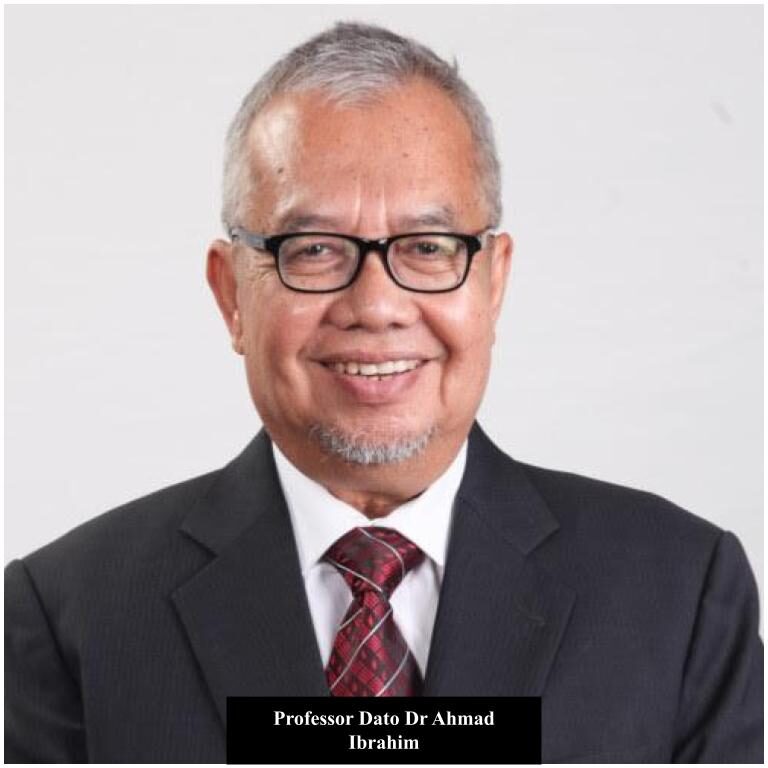
The author is affiliated with the Tan Sri Omar Centre for STI Policy Studies at UCSI University and is an Adjunct Professor at the Ungku Aziz Centre for Development Studies, Universiti Malaya.
About The Author