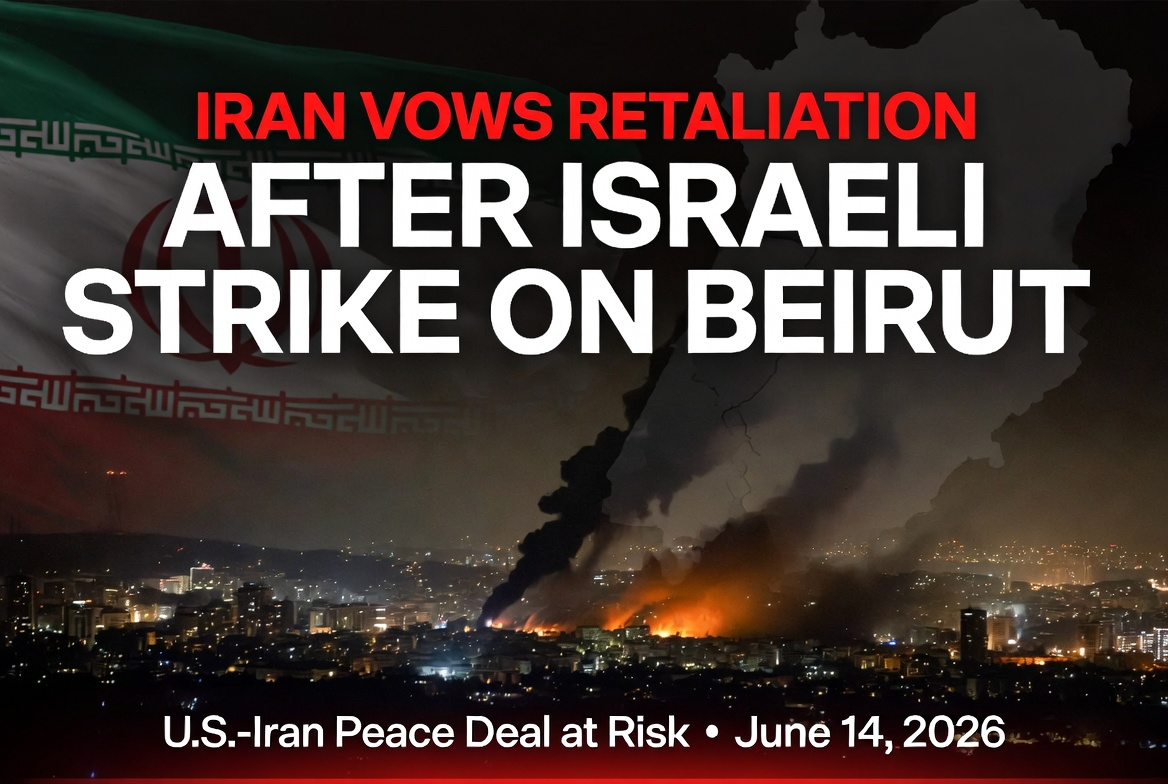
TEHRAN, June 14, 2026 — Iran’s Supreme National Security Council and senior officials have pledged a firm response to Israel’s airstrikes on Hezbollah targets in Beirut’s southern suburbs (Dahieh), an escalation that threatens to unravel delicate U.S.-brokered peace negotiations with Tehran.
The Israeli Defense Forces (IDF) conducted the strikes early Sunday in retaliation for drone attacks launched from Lebanon toward northern Israel, which caused no injuries but violated a fragile ceasefire. Lebanese health authorities reported at least three killed and 16 wounded, with smoke rising over residential areas.
Iranian parliamentary speaker and chief negotiator Mohammad Bagher Ghalibaf condemned the action, stating it showed the U.S. “either lacks the will or the ability to fulfill its commitments.” He warned that continuing talks under such conditions would be pointless.
Brigadier General Mohammad Jafar Asadi, deputy commander of Iran’s Khatam al-Anbiya Central Headquarters, declared the strikes “will not go unanswered.” Other Iranian lawmakers echoed calls for a “strong response.”
The incident comes as President Donald Trump has repeatedly claimed a comprehensive U.S.-Iran memorandum of understanding is imminent. The deal reportedly aims to end hostilities, prevent Iran from developing nuclear weapons, reopen the Strait of Hormuz to international shipping, and stabilize the broader region — including Lebanon.
Trump criticized the Beirut strike on social media, calling it unnecessary “particularly on a special day when we are so close to a Peace Deal with Iran” and urging all parties not to “blow it.” He indicated plans to press Iran against immediate retaliation.
Iran had previously identified attacks on Beirut as a “red line” that could derail any agreement. Tehran insists any broader ceasefire must address Israeli operations in Lebanon and Hezbollah’s role.
Hezbollah, Iran’s key proxy, has been engaged in cross-border exchanges with Israel. Israeli officials, including Prime Minister Benjamin Netanyahu, have vowed zero tolerance for violations, emphasizing self-defense rights.
The escalation risks wider conflict, potential oil price spikes, and complications for energy markets and global alliances. Markets are already watching for volatility.
As of Sunday evening, no immediate Iranian military action has been confirmed, but statements from Tehran signal heightened alert. Diplomatic efforts continue amid the uncertainty.
This developing story is being monitored closely as the region balances fragile talks with longstanding rivalries.
About The Author