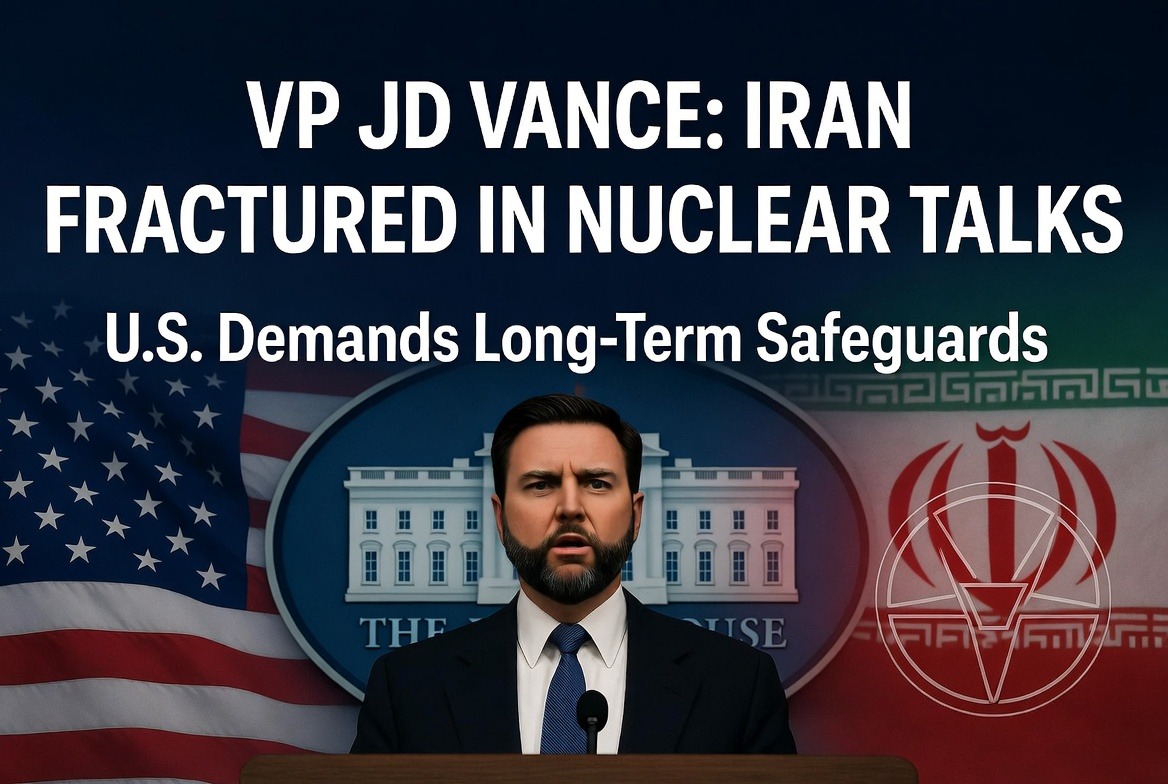
WASHINGTON D.C May 19, 2026 – Vice President JD Vance offered a candid assessment of ongoing U.S.-Iran nuclear negotiations Tuesday, describing Iran as an internally divided nation with unclear negotiating objectives while reaffirming the Trump administration’s firm red line against Tehran acquiring nuclear weapons.
Speaking at the White House, Vance highlighted the complexities of dealing with Iran’s leadership structure. “I think you see that conflict; the fact that maybe the Iranians aren’t themselves quite clear in what direction they want to go. They also are just a fractured country,” he said.
Vance noted the presence of both pragmatic and hardline elements within Iran’s negotiating team, as well as tensions between Supreme Leader Ali Khamenei and lower-level officials. “There’s this Supreme Leader and then a lot of officials below the Supreme Leader that has some influence,” he explained, adding that it is “sometimes hard to figure out exactly what the Iranians would accomplish out of the negotiations.”
Despite these challenges, Vance stressed the administration’s clear objectives. The U.S. seeks not only a commitment from Iran to forgo nuclear weapons but a verifiable process ensuring Tehran cannot rebuild its nuclear capabilities “years down the road” after President Trump leaves office.
“We want to see not just the commitment to not have a nuclear weapon, but the commitment to work with us on a process to ensure that not just now—not just when Donald Trump is POTUS—but years down the road, that the Iranians are not rebuilding that nuclear capability,” Vance stated.
The remarks come amid indirect and intermittent direct talks, largely mediated by Pakistan, following U.S. strikes on Iranian nuclear facilities in February 2026. A fragile ceasefire brokered in April has held, but progress toward a comprehensive deal remains elusive. Earlier rounds in Islamabad produced no breakthrough, with the U.S. insisting on long-term restrictions on uranium enrichment and other safeguards.
The Trump administration has paired diplomatic efforts with maximum pressure, including sanctions and naval actions in the Strait of Hormuz region. Vance’s comments underscore a strategy focused on durable verification mechanisms rather than short-term promises.
Iranian officials have pushed back against U.S. demands, while domestic Iranian opposition voices and diaspora communities continue to urge stronger action against the regime.
The White House Rapid Response team amplified Vance’s full remarks on X, signaling the administration’s continued emphasis on transparency in its Iran policy as talks proceed.
About The Author