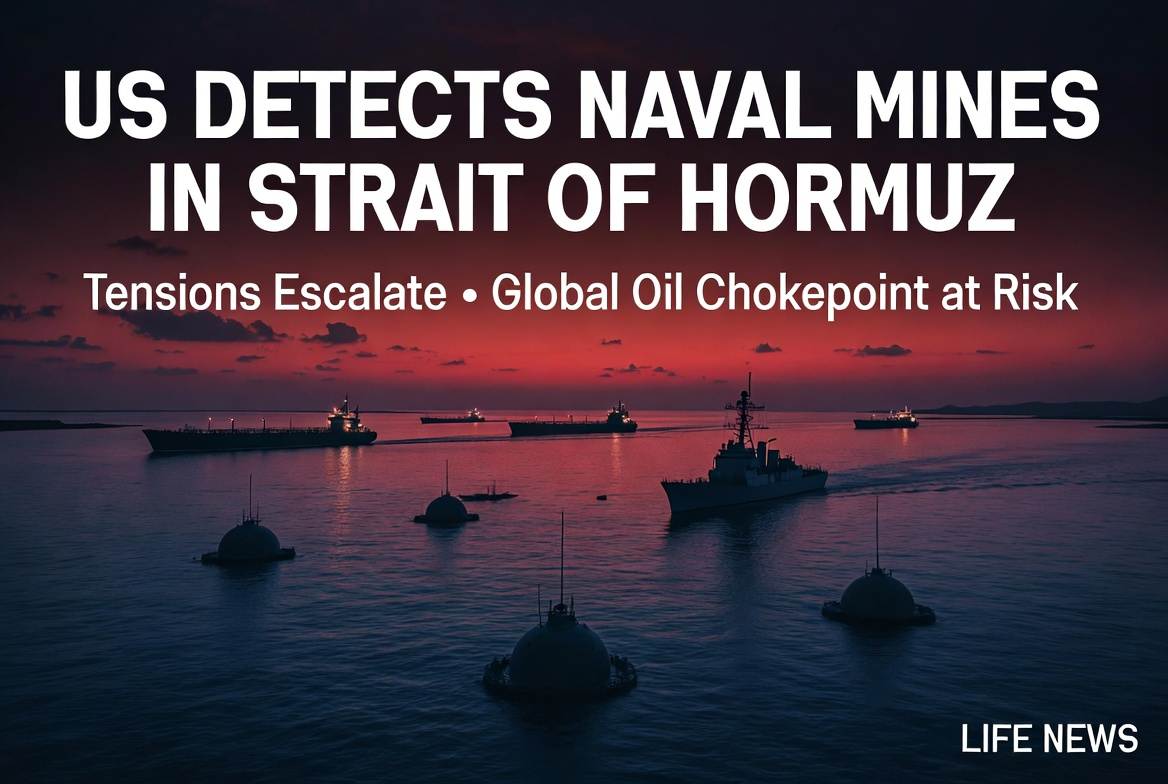
WASHINGTON May 19, 2026 — U.S. intelligence has identified at least 10 naval mines in the Strait of Hormuz, the critical chokepoint for global oil shipments, as efforts to fully secure the waterway continue following months of conflict with Iran.
The discovery, reported Tuesday, underscores persistent risks in the narrow passage between the Persian Gulf and the Gulf of Oman, which handles roughly one-fifth of the world’s seaborne crude oil. Mines were initially deployed by Iran earlier this year as an asymmetric response to U.S. and Israeli strikes on Iranian nuclear and military targets.
According to officials familiar with the assessments, the mines—some potentially drifting or unrecorded—pose a significant challenge for clearance operations. Pentagon estimates suggest that complete demining could take up to six months, even with advanced tools like AI-assisted underwater drones.
Background on the Crisis
Iran began laying mines in the Strait in March 2026, shortly after the escalation of hostilities. U.S. forces responded by striking Iranian mine-laying vessels, but Tehran retained significant capacity and reportedly deployed additional mines in subsequent weeks, including during periods of fragile ceasefires.
Some mines have proven difficult to track, with reports indicating Iran itself has struggled to locate all devices it placed, complicating reopenings of the strait to full commercial traffic.
The U.S. Navy has ramped up mine-countermeasure operations, incorporating unmanned systems, sensors, and AI technology to accelerate detection while minimizing risks to personnel. Despite progress, shipping through the strait remains heavily disrupted, contributing to elevated global energy prices.
Broader Implications
The situation has ripple effects on energy markets, with tanker traffic reduced and alternative routes adding costs and delays. Analysts warn that even a small number of undetected mines can deter insurers and operators, effectively maintaining pressure on global oil supplies.
No immediate explosions or vessel incidents were reported in connection with the latest detections. U.S. officials continue to monitor the area closely, emphasizing freedom of navigation as a core interest.
This development comes as diplomatic efforts between the U.S. and Iran remain tense, with both sides navigating a complex mix of military posturing and negotiation signals.
This is a developing story. Updates will follow as more details emerge from U.S. Central Command and regional authorities.
About The Author