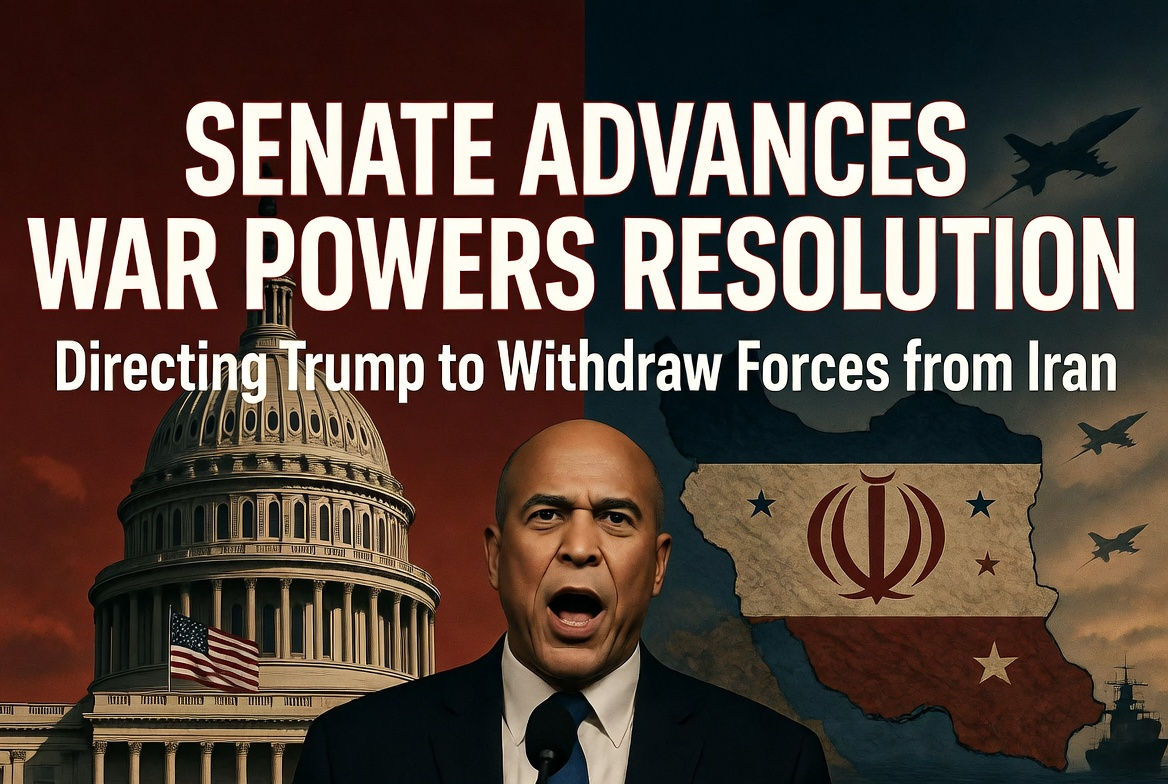
WASHINGTON, D.C. May 19,2026 — In a significant procedural victory for opponents of the ongoing U.S. military campaign against Iran, the Senate on Tuesday advanced a War Powers Resolution directing President Donald Trump to withdraw American forces from unauthorized hostilities with Iran unless Congress explicitly approves continued action.
The measure, sponsored by Sen. Tim Kaine (D-VA) and supported by Senate Democrats including Sen. Cory Booker (D-NJ), passed a key procedural vote 50-47. It marks the first time the chamber has advanced such a resolution after multiple failed attempts earlier in 2026. Four Republicans — Sens. Bill Cassidy (R-LA), Susan Collins (R-ME), Lisa Murkowski (R-AK), and Rand Paul (R-KY) — joined Democrats in supporting the move.
In a video statement posted to X shortly after the vote, Sen. Booker declared: “BREAKING: Senate finally advances resolution to end war with Iran. Keep speaking out!” He described the development as a “big step” forward, noting growing bipartisan frustration with the conflict.
The resolution invokes the 1973 War Powers Resolution, which requires presidents to seek congressional authorization for sustained military engagements beyond 60 days. The U.S. campaign, dubbed Operation Epic Fury, began on February 28, 2026, in coordination with Israel. It has involved strikes on Iranian missile sites, naval assets, and other targets amid escalating tensions.
Critics, including Booker, argue the war has flared up oil prices, strained the U.S. military, cost billions in taxpayer dollars, and failed to achieve lasting stability. In his video, Booker highlighted risks such as increased fissile material concerns in Iran, disruptions in the Strait of Hormuz, and broader economic impacts on American families.
The Trump administration maintains the actions were necessary for national security, to protect U.S. forces and allies, and to counter Iran’s nuclear ambitions and proxy networks. A fragile ceasefire has held in recent weeks, mediated in part by Pakistan, but tensions persist with unresolved issues around Iran’s enriched uranium stockpiles and regional threats.
While the resolution now moves to the Senate floor for debate, it faces significant hurdles: a likely filibuster requiring 60 votes to overcome, and uncertain prospects in the Republican-controlled House. Even if passed by Congress, President Trump could veto it, and overriding that would need two-thirds majorities in both chambers.
This vote comes amid broader public skepticism. Recent polls show majority disapproval of the administration’s handling of the Iran conflict, with concerns over costs, lack of clear objectives, and impacts on domestic priorities like lowering prices.
Senate action reflects ongoing constitutional debates over war powers, with Democrats and a small group of Republicans pushing back against executive-led military operations without explicit congressional approval.
The fight is far from over, as Booker urged continued public pressure: “The work continues. We still need you… speaking up against a war that is [a] disaster.”
This is a developing story.
About The Author