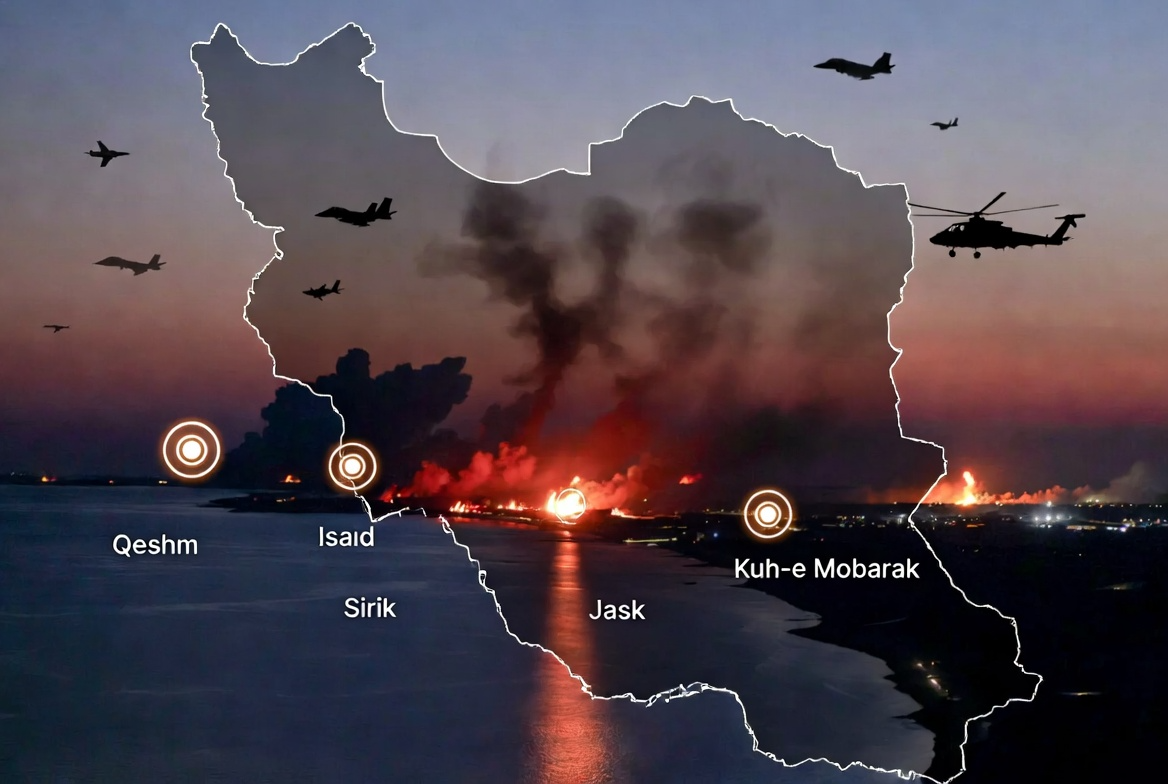
TEHRAN, IRAN June 10, 2026 – Iranian state media announced Wednesdayday that U.S. attacks on southern Iran have ended, with the situation now calm across targeted areas. The strikes hit sites including Qeshm Island, Sirik, Jask, and Kuh-e Mobarak in Hormozgan province near the strategic Strait of Hormuz.
The announcement follows a rapid escalation after a U.S. Army Apache helicopter went down near the Strait of Hormuz on Monday. U.S. officials, including President Donald Trump, blamed Iran for downing the aircraft—possibly with a drone—though the exact cause remains under investigation. Both crew members were rescued safely.
U.S. Central Command (CENTCOM) described the strikes as a “proportional response” to what it called Iranian aggression. Targets reportedly included air defenses, radar sites, and drone-related facilities along Iran’s southern coast. No U.S. personnel were reported harmed in the operation.
President Trump had vowed retaliation shortly after the helicopter incident, posting on social media that the U.S. “must respond” to the alleged attack.
The incident occurs amid heightened tensions in the region:
- Ongoing Israel-Iran exchanges.
- U.S. pressure on Israeli Prime Minister Benjamin Netanyahu for restraint.
- Parallel diplomatic efforts between Washington and Tehran on a potential nuclear deal.
Iran has denied direct involvement in the helicopter downing and condemned the U.S. strikes as violations of sovereignty. Iranian officials earlier warned of risks in the crowded Strait of Hormuz, a vital global oil chokepoint.
Iranian media described the strikes as hitting military and coastal facilities but reported no major civilian casualties in the latest wave. State outlets emphasized that operations have now ceased, signaling a potential de-escalation for the moment.
Markets reacted with initial volatility on fears of wider conflict before partially rebounding.
Live updates continue on Al Jazeera as the situation develops. International calls for restraint are growing, with concerns that further tit-for-tat actions could destabilize the Persian Gulf.
This marks another flashpoint in the volatile U.S.-Iran relationship, even as both sides navigate ceasefire frameworks and diplomatic channels.
About The Author