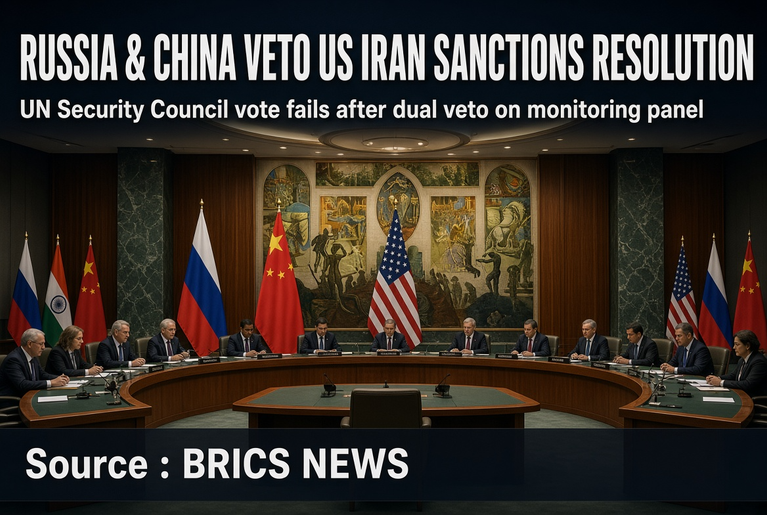
TEHRAN July 27, 2026 – Iran has accused the United States of failing to deliver on its commitment to unfreeze Iranian assets, according to reports circulating Sunday evening.
The independent account BRICS News (@BRICSinfo) posted the claim under the headline “JUST IN,” stating that Iran says the US did not follow through on the promise made in a June memorandum of understanding (MOU).
The MOU, signed on June 17, 2026, and often referred to as the Islamabad Memorandum, was intended to de-escalate a broader regional conflict involving the US, Israel, and Iran. Key provisions included ending the US naval blockade, ensuring safe passage through the Strait of Hormuz, temporarily waiving sanctions on Iranian oil and petrochemical exports for 60 days, and making frozen or restricted Iranian funds available for use.
Iranian officials had publicly expected the release of roughly $6 billion to $12 billion, much of it held in Qatar, as an initial step. Iranian President Masoud Pezeshkian and chief negotiator Mohammad Bagher Ghalibaf both described the asset release as part of the agreed framework in late June.
US officials, however, repeatedly stressed that any transfer of funds was conditional. Administration sources stated that no money would be released until Iran met specific “milestones” and benchmarks outlined in the agreement, and that funds would be disbursed incrementally rather than in a lump sum. As of late June, US and Qatari officials confirmed that no frozen assets had been transferred.
By late July the MOU was widely described as collapsed. On July 24, Iranian Foreign Minister Abbas Araghchi condemned recent US comments about potentially using Iranian assets to cover damages to shipping in the Strait of Hormuz, calling such an approach an “incendiary precedent.”
A related post circulating alongside the BRICS News update claimed the US had fulfilled only the naval blockade clause and that the rest of the MOU was effectively dead.
The dispute over the frozen assets—estimated by various sources at well over $100 billion in total across multiple countries—remains a central point of friction between Washington and Tehran as efforts to stabilize the region continue.
About The Author