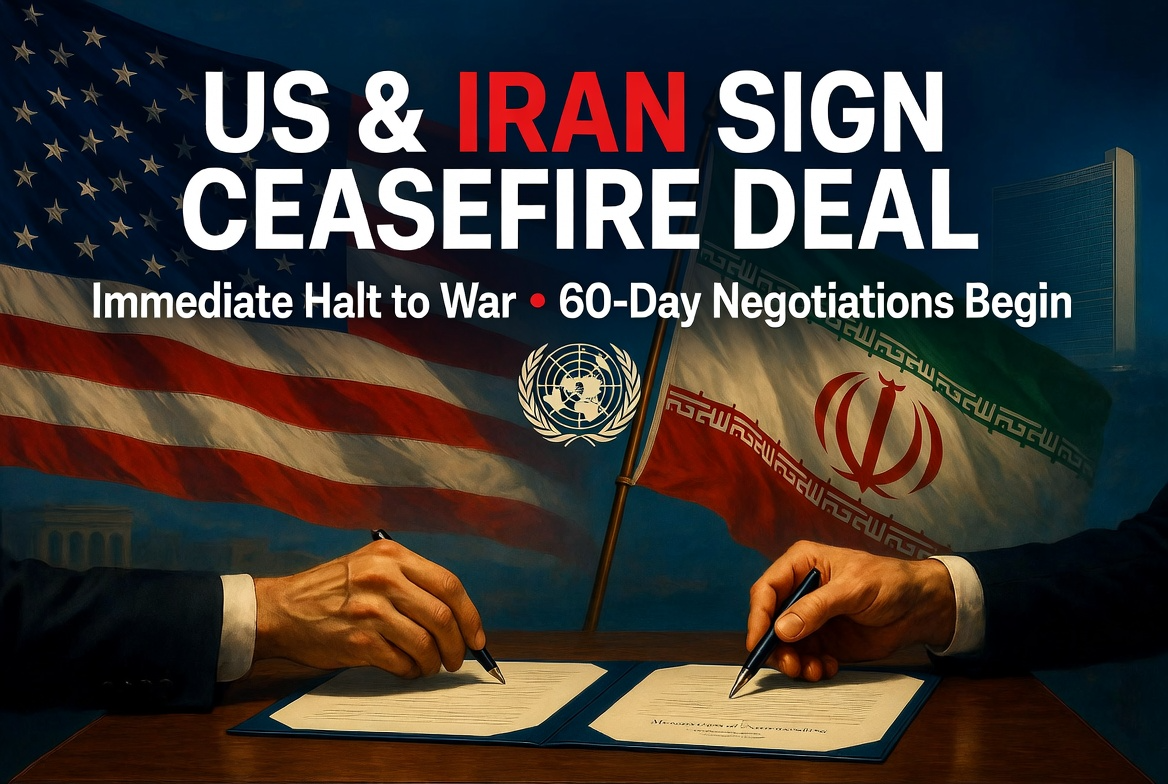
GENEVA SWITZERLAND June 17, 2026 — The United States and Iran have formally agreed to a 14-point Memorandum of Understanding (MOU) aimed at ending months of conflict, with an immediate ceasefire, reopening of the Strait of Hormuz, and a 60-day window for broader negotiations on Iran’s nuclear program and sanctions.
The agreement, mediated by Pakistan and Qatar, was initially signed electronically by both sides, with a ceremonial signing planned for Friday, June 19, in Geneva (or Switzerland). U.S. President Donald Trump, attending the G7 in France, participated in the process. Iran has confirmed elements of the deal, though full public text remains limited.
Key Terms of the MOU
According to U.S. officials and reports:
- Immediate Ceasefire: Halt to all military operations, including in Lebanon. Both sides commit to de-escalation across fronts.
- Strait of Hormuz: Iran will clear mines and ensure safe passage for commercial traffic; the U.S. will lift its naval blockade.
- Economic Relief: Sanctions waivers for Iranian oil exports; release of frozen assets; commitments toward reconstruction funding (reportedly up to $300 billion from regional partners).
- Nuclear Commitments: Iran reaffirms it will not pursue nuclear weapons and will engage in technical talks on its uranium stockpile and enrichment capabilities.
- Duration: 60-day extension of the ceasefire to negotiate a permanent truce, with performance-based sanctions relief.
The framework has been described as an interim step rather than a final treaty, with both sides able to withdraw before the formal ceremony.
Background and Reactions
The deal follows over 100 days of intense conflict that began earlier in 2026, involving U.S.-Israeli strikes on Iranian targets, Iranian responses, and significant casualties (including thousands in Iran and Lebanon). It builds on an earlier, shorter ceasefire in April.
Trump hailed the agreement as a major diplomatic achievement, stating it rules out an Iranian nuclear weapon while warning that violations could lead to resumed strikes. Oil prices plunged in response, reflecting expectations of resumed energy flows through the Strait of Hormuz.
Iran has welcomed the de-escalation but emphasized the non-binding nature of the MOU and the need for verifiable sanctions relief.
Israel has rejected the deal outright, viewing it as insufficiently addressing threats from Iran and its proxies. Critics in the U.S. have called it weak or appeasement, while supporters praise the avoidance of wider war.
Regional reactions are mixed, with cautious optimism from Gulf states and calls for full implementation from mediators.
What’s Next
Negotiations over the next 60 days will focus on a comprehensive agreement, potentially including IAEA oversight of Iran’s nuclear activities and a UN-backed framework. Enforcement remains a key challenge amid fragile trust and ongoing regional tensions.
This breakthrough marks a significant shift after prolonged hostilities, though analysts caution that long-term peace depends on sustained compliance and addressing deeper disputes.
About The Author