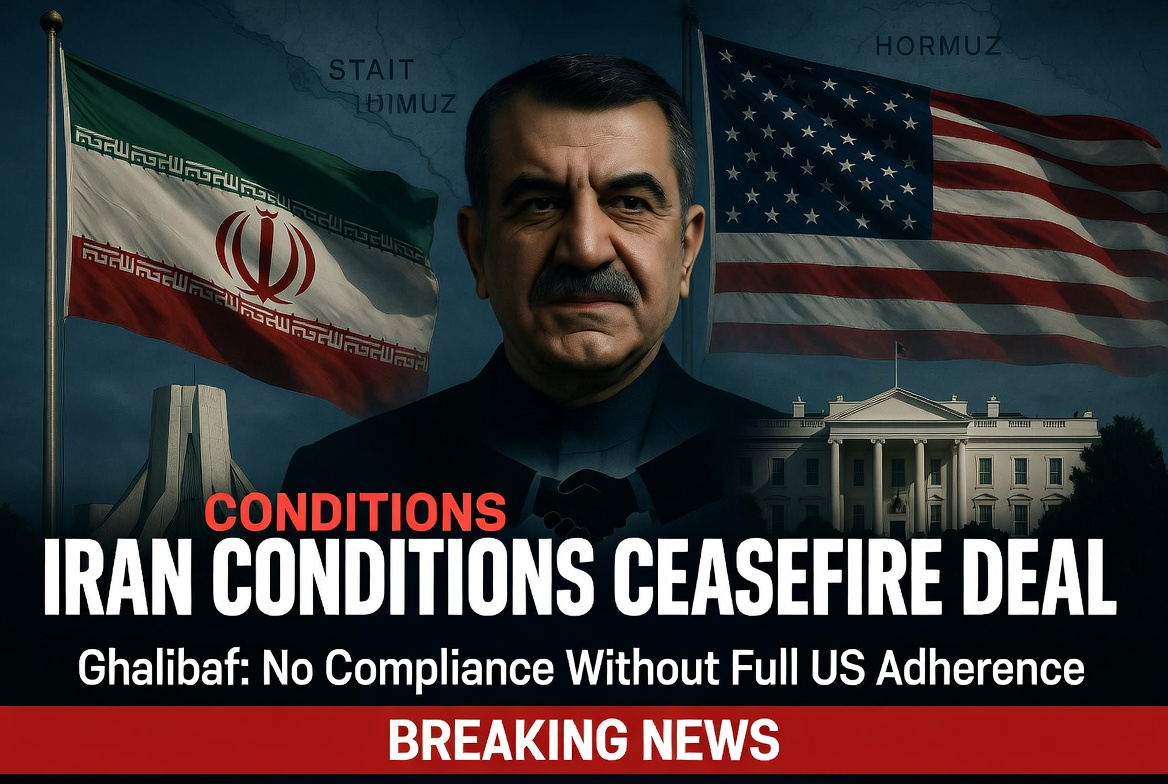
TEHRAN June 17, 2026 — Iranian Parliament Speaker Mohammad Bagher Ghalibaf has stated that Iran will not honor the recently signed Islamabad Memorandum of Understanding (MoU) unless the United States fully complies with its commitments, highlighting the fragile trust underpinning the agreement that ended months of conflict.
The MoU, digitally signed in recent days by US President Donald Trump, Vice President JD Vance, and Iranian representatives including Ghalibaf (who signed on behalf of Tehran), aims to implement an immediate ceasefire, reopen the Strait of Hormuz for commercial shipping, provide sanctions relief, and pave the way for broader negotiations on nuclear issues and economic cooperation. Pakistan mediated the deal, with a formal signing ceremony planned for Switzerland.
In remarks reported widely and echoed in the BRICS News post, Ghalibaf emphasized reciprocity: “Iran will not honor the agreement if the US doesn’t.” This mirrors his earlier public positions stressing “no ifs, no buts, no excuses” on commitments and that Tehran’s actions would depend on tangible US and Israeli compliance, including lifting naval blockades and halting related hostilities.
The deal follows a war that began in late February 2026 with US-Israeli strikes on Iranian targets, causing significant casualties and disrupting global energy markets. Both sides have hailed it as a step toward de-escalation, with Trump describing it as a “great deal” for regional peace and security. Iran’s President Masoud Pezeshkian and negotiators have framed it as a victory through diplomacy after military resilience.
Analysts note that Ghalibaf’s conditional stance reflects longstanding skepticism in Tehran toward US promises, especially after past agreements like the 2015 JCPOA. Iranian officials have repeatedly stated that compliance will be based on “actions, not words,” amid concerns over potential Israeli influence or future US policy shifts.
US officials have confirmed the MoU’s immediate effect, including phased reopening of the Strait of Hormuz and sanctions easing, while cautioning that full normalization will take time. Vice President Vance is expected to attend related events.
Reactions and Next Steps
- Positive notes: Regional mediators like Pakistan’s PM Shehbaz Sharif welcomed the breakthrough, and some Iranian conservatives praised it as advancing “victory” without full capitulation.
- Skepticism: Hardliners in Iran and observers worldwide question the deal’s durability, with comments on social media calling it a “blame game” setup or predicting short-term fragility.
Technical talks are set to follow the formal ceremony, focusing on sanctions relief, nuclear safeguards, and reconstruction. The agreement reportedly includes Iran’s commitment against pursuing nuclear weapons under monitoring.
This development marks a significant diplomatic pivot after direct military confrontation, though enforcement will test both nations’ willingness to prioritize stability over confrontation.
About The Author