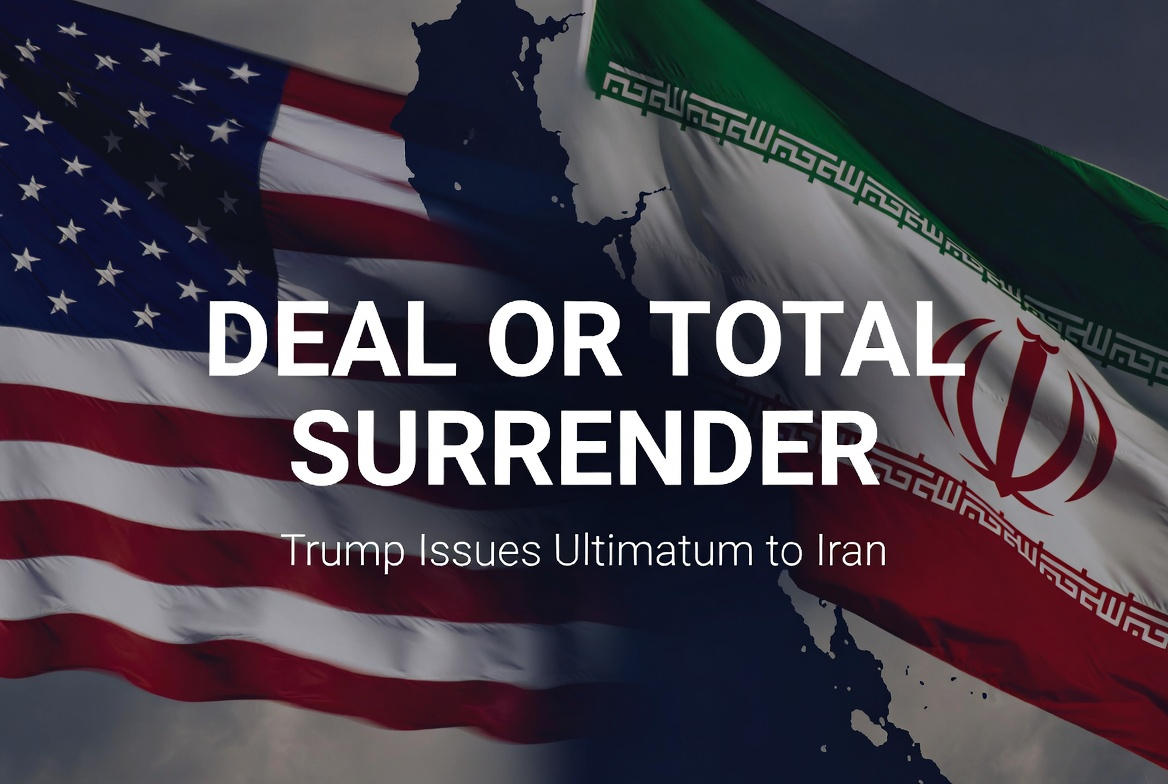
WASHINGTON D.C Aug 3, 2026 — U.S. President Donald Trump on Monday accused Iranian leaders of being “unbelievably duplicitous” and declared that American pressure on Tehran will not ease until it reaches a deal or accepts “total surrender.”
In a Truth Social post, Trump claimed Iranian officials had privately requested meetings — “some would say ‘beg’” — only to publicly deny any negotiations were taking place and insist they were dealing solely with Oman. He dismissed Iranian statements about control of the Strait of Hormuz as “usual blather,” asserting the waterway is already under U.S. naval control through a blockade he called a “Wall of Steel.”
“Nothing gets through to Iran, unless we want it to, and nothing will get through, unless a Deal, or Total Surrender, is accomplished,” Trump wrote. “Whether Iran wants to admit it or not, we are, in fact, talking of a solution to a problem that they have caused, for decades. It is very simple, IRAN WILL NEVER HAVE A NUCLEAR WEAPON!”
The comments came hours after Trump said he had called off what he described as a planned major military strike over the weekend. He said Gulf allies including Saudi Arabia, the United Arab Emirates and Qatar, along with Iranian contacts, had urged him to give diplomacy more time. Trump claimed talks focused on reopening the Strait of Hormuz and eventual denuclearization would begin Monday.
Iranian officials rejected the claim. Foreign Ministry spokesman Esmaeil Baghaei said no negotiations with the United States were underway or scheduled. He stated that current discussions were limited to Oman and centered on a temporary safe shipping route through the Strait of Hormuz. Iranian Foreign Minister Abbas Araghchi was reported to be on a religious pilgrimage in Iraq.
The exchange highlights the continued volatility in the months-long conflict between the United States and Iran, which has featured repeated cycles of threatened military action, paused strikes, and disputed diplomatic outreach. Trump has previously demanded “unconditional surrender” from Tehran at earlier stages of the fighting while also pursuing temporary frameworks for talks on the nuclear program and maritime access.
Oil markets reacted to the latest developments, with prices falling on expectations that a temporary arrangement on the Strait of Hormuz could ease shipping risks.
About The Author