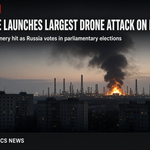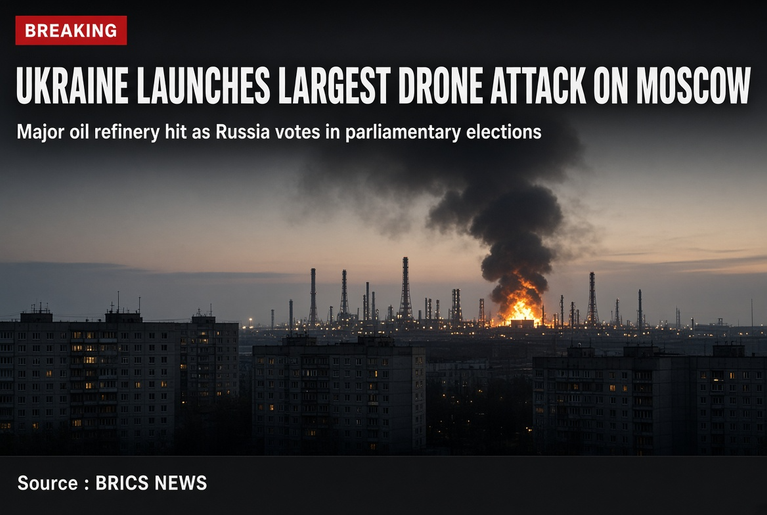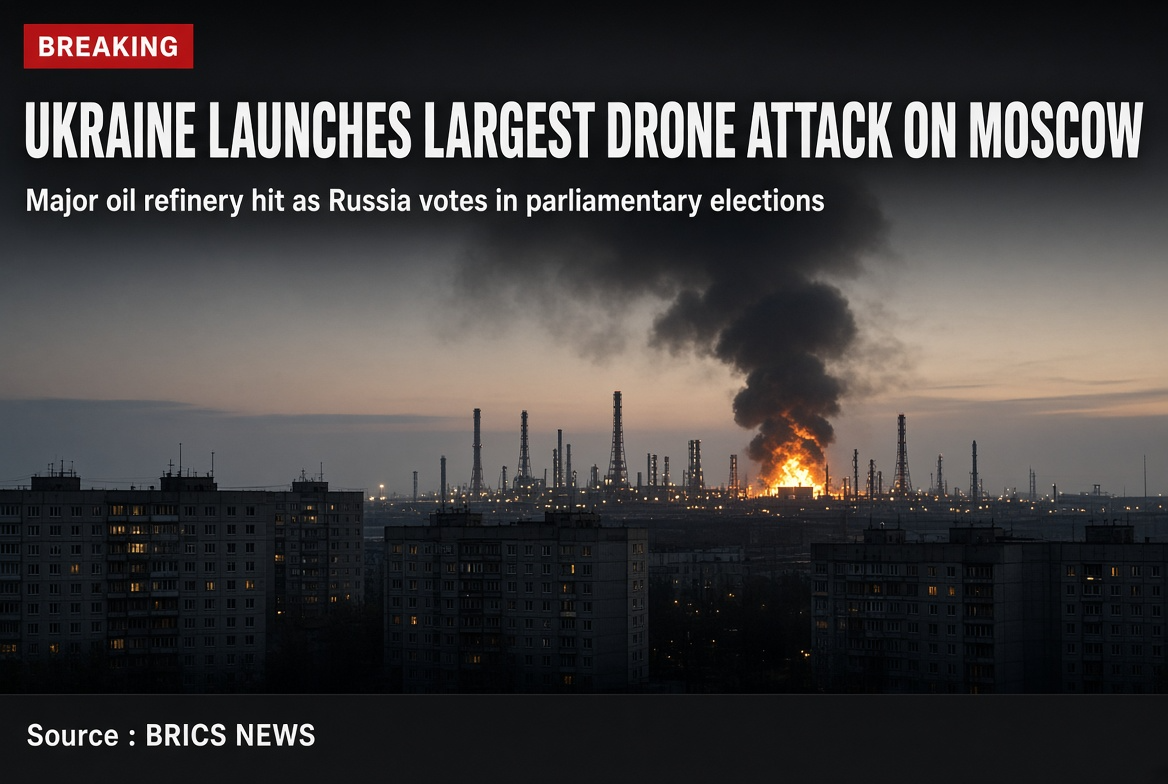
MOSCOW / KYIV Sept 20, 2026 — Ukraine carried out what Russian officials described as its largest-ever drone assault on the Moscow region overnight into Sunday, hitting the Gazprom Neft-owned Moscow Oil Refinery in the Kapotnya district and a logistics warehouse complex as Russia voted in parliamentary elections.
Moscow Mayor Sergei Sobyanin said air defenses intercepted more than 1,600 drones since Saturday, including about 450 heading toward the capital. Several drones reached the refinery grounds and one struck a residential building, he said. Moscow Region Governor Andrey Vorobyov reported at least two people killed and several others injured.
Ukrainian President Volodymyr Zelensky confirmed the operation, saying long-range drones and missiles struck “one of Russia’s key oil industry facilities and the aggressor’s logistics facility.” He described the targets as representing “billions of dollars that sustain the war machine.” Ukraine’s General Staff said strikes damaged primary processing and isomerization units at the plant, sparking a large fire.
The Moscow Oil Refinery processes more than 11 million metric tons of crude annually and supplies roughly 35–40% of the capital region’s fuel, including gasoline, diesel, and aviation kerosene used by both civilian and military consumers. The facility has been targeted in previous Ukrainian strikes.
Sobyanin accused Ukraine of timing the barrage to disrupt the three-day parliamentary vote, calling it an “unprecedented attack” that failed to achieve that goal. Voting continued on Sunday, the final day of the election. Zelensky framed the strikes as a necessary response to Russia’s ongoing campaign against Ukrainian energy and civilian infrastructure.
Videos and photos circulating on social media showed tall columns of smoke and flames rising from the industrial zone on Moscow’s southeastern edge, visible from nearby residential districts. Independent geolocation of resident footage corroborated a substantial fire at the refining complex. Flights at Vnukovo airport were briefly suspended before resuming.
The attack continues a pattern of tit-for-tat strikes on energy infrastructure that both sides have maintained despite earlier diplomatic signals about possible de-escalation. Russia has reported repeated Ukrainian hits on refineries across the country this year, contributing to fuel shortages and price increases in some regions. Ukraine, meanwhile, continues to face Russian drone and missile attacks on its own power grid and cities.
About The Author