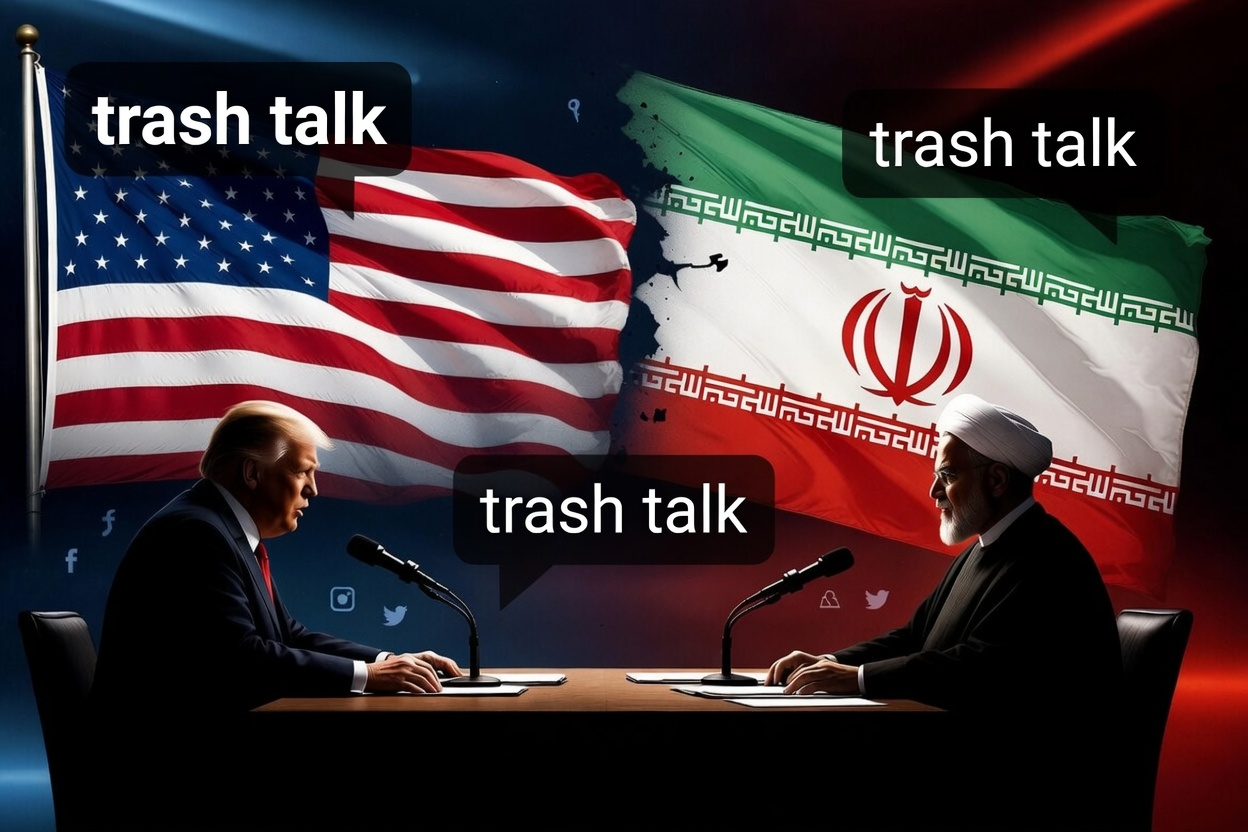
GENEVA June 24, 2026 — Mutual “trash talking” between the United States and Iran is complicating ongoing peace talks, according to a Wall Street Journal report published Tuesday. President Donald Trump’s social media posts, in particular, have rattled Iranian diplomats and prompted walkouts and delays in negotiations.
Talks resumed last weekend in Switzerland amid efforts to solidify a ceasefire and address issues including Iran’s nuclear program, oil exports, and regional proxies. As discussions began, Trump posted a threat to attack Iran unless it halted funding for Hezbollah, the Iran-backed Lebanese militia. Iranian chief negotiator Mohammad Bagher Ghalibaf, unaware of the post initially, confronted U.S. Vice President JD Vance, citing it as a violation of a recent memorandum of understanding that committed both sides against threats.
Ghalibaf reportedly told Vance: “Today your president has issued threats. Understand that we never negotiate under threats or pressure.” The Iranian delegation then paused face-to-face talks. Vance later clarified that Trump’s remarks referred to potential responses to violations of any deal and defended them as correcting Iranian “trash talk.”
Iranian officials have turned to unconventional methods to handle Trump’s style. Diplomats are reportedly studying The Art of the Deal, Trump’s 1987 book on negotiation tactics emphasizing extreme demands to create leverage. Some have consulted psychologists to better predict and respond to his public statements.
Mediators have urged Iran to focus on private U.S. proposals rather than public posts, but the rhetoric has empowered hard-liners in Tehran who question U.S. reliability. Despite the friction, indirect talks via Pakistani and Qatari mediators continued, yielding some progress on allowing Iranian oil sales in dollars and sidestepping certain IAEA references in communiqués.
Trump’s approach mixes public bravado with private diplomacy. Earlier threats—including to destroy Iranian infrastructure or civilization—were seen by some Iranian officials as negotiating theater aimed at pressuring concessions. In one instance, Iran secured a shorter 15-day truce instead of a proposed 45-day ceasefire despite the rhetoric.
Analysts note that while Trump’s style creates anxiety, it has not yet extracted major additional concessions from Iran. The talks occur against a backdrop of recent conflicts, including clashes involving Hezbollah and efforts to reopen the Strait of Hormuz.
Public posturing remains common in high-stakes diplomacy for domestic audiences, but in this case, it has introduced volatility into already delicate negotiations over nuclear limits, sanctions relief, and regional de-escalation.
The situation remains fluid, with both sides balancing public signaling and behind-the-scenes deal-making. Further rounds are expected through mediators as the ceasefire holds tenuously.
About The Author