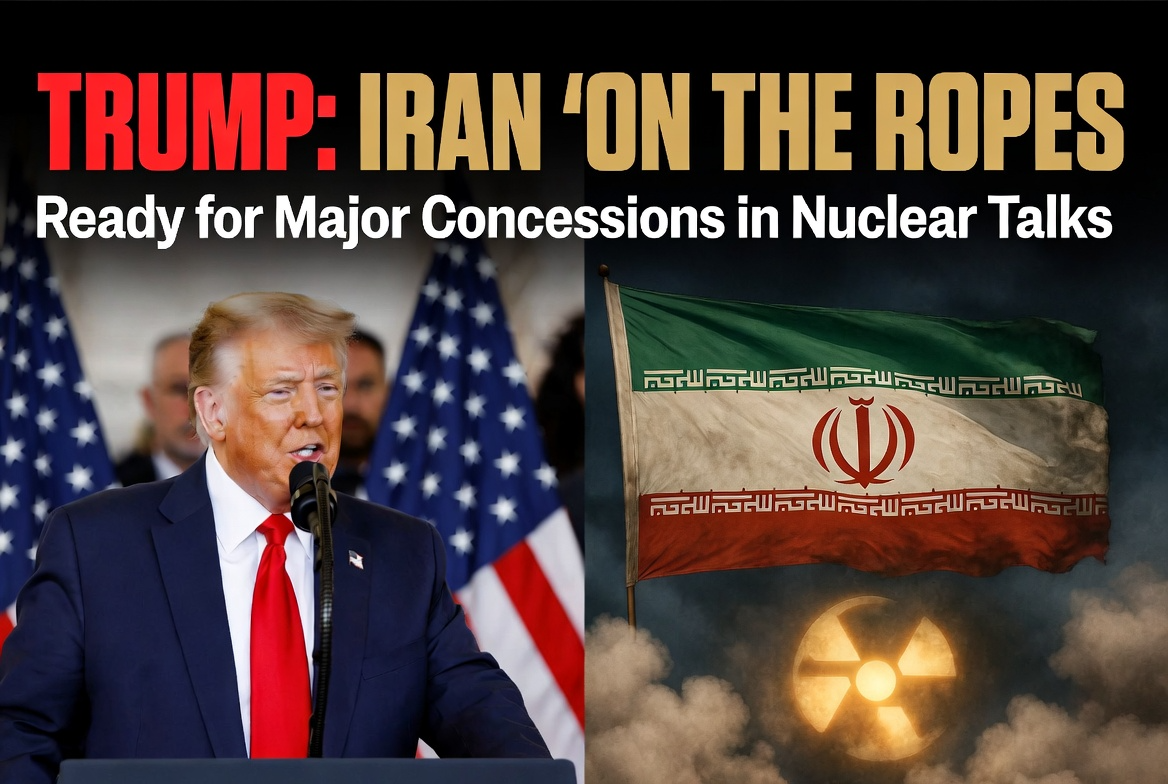
WASHINGTON D.C. June 24, 2026 — President Donald Trump asserted Tuesday that Iran is in a position of extreme weakness following recent U.S. and allied military actions, declaring that Tehran is “on the ropes” and “willing to give us practically anything” in ongoing negotiations.
The comments, widely circulated on social media, come amid a fragile 60-day negotiating window established after the Islamabad Memorandum ceasefire that ended the brief but intense 2026 Iran conflict. Trump has repeatedly framed the talks as a U.S. victory, emphasizing that Iran — not Washington — entered discussions out of desperation.
“We didn’t meet out of desperation, Iran did. They are FINISHED!” Trump posted on Truth Social in recent days, vowing no financial concessions and warning of renewed strikes or U.S. control of the Strait of Hormuz if Iran fails to comply.
U.S. officials, including Vice President JD Vance, have pointed to damage inflicted on Iranian nuclear and military sites, the elimination of key commanders, and broader regional pressure as factors that forced Tehran back to the table. Trump has also claimed Iran agreed to robust IAEA nuclear inspections, with any sanctions relief funneled through U.S.-controlled accounts for humanitarian purchases.
Iranian officials have pushed back sharply, denying major concessions on inspections or nuclear issues and cautioning that no final agreement has been reached. Tehran maintains it retains control over its assets and has not committed to unlimited access for inspectors at damaged facilities.
The current round of diplomacy follows U.S.-Israeli strikes earlier this year that targeted Iranian capabilities. A temporary closure of the Strait of Hormuz by Iran spiked global oil prices, adding economic urgency to both sides. Trump has threatened to impose tolls on the waterway and resume military action if talks collapse.
Critics within the GOP, including some hawks, argue the emerging framework concedes too much leverage, while supporters hail it as a pragmatic exit from escalation without full-scale war.
Negotiations in Switzerland and elsewhere have produced a roadmap but remain tense. Iranian negotiators have at times walked out in protest over Trump’s public rhetoric, including reported threats during talks.
The 60-day clock continues to tick. Trump has signaled inspectors could enter Iran “at the appropriate time,” while insisting any deal must ensure long-term nuclear restraint, limits on ballistic missiles, and reduced support for regional proxies.
Iranian responses have been measured, with officials stressing that core issues like uranium enrichment levels and sanctions relief remain unresolved. Regional dynamics, including a Lebanon ceasefire, add further complexity.
As both sides maneuver ahead of a potential final accord, Trump’s latest remarks underscore his strategy of maximum public pressure — a tactic that has drawn both praise for forcing concessions and criticism for complicating delicate diplomacy.
About The Author