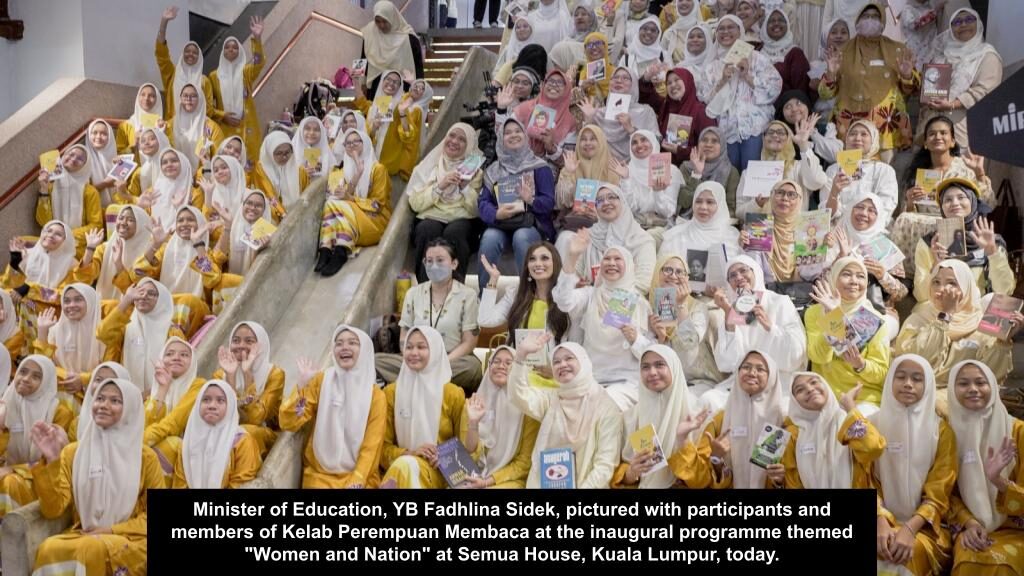
8 August 2026, Kuala Lumpur — In a quiet corner of Semua House, a different kind of nation-building conversation unfolded this week — not in a boardroom or a parliament chamber, but around open books and shared stories.
The occasion was the inaugural gathering of the Kelab Perempuan Membaca (Women’s Reading Club), an initiative under Perbadanan Kota Buku, launched with a theme that is disarmingly simple yet quietly radical: Perempuan dan Negara — Women and Nation.
It is a theme that asks a pointed question: what happens when a nation deliberately invests in the reading habits of its women? For the organisers, the answer is not abstract. It is generational.
A Minister’s Conviction, Turned Into a Movement
The club’s origin traces back to an idea championed by YB Fadhlina Sidek, Malaysia’s Minister of Education. Her premise is one that education policymakers have long argued but rarely operationalised at community scale: that reading is not a leisure activity for women, but infrastructure — the foundation on which knowledgeable, critical-thinking, change-capable women are built.
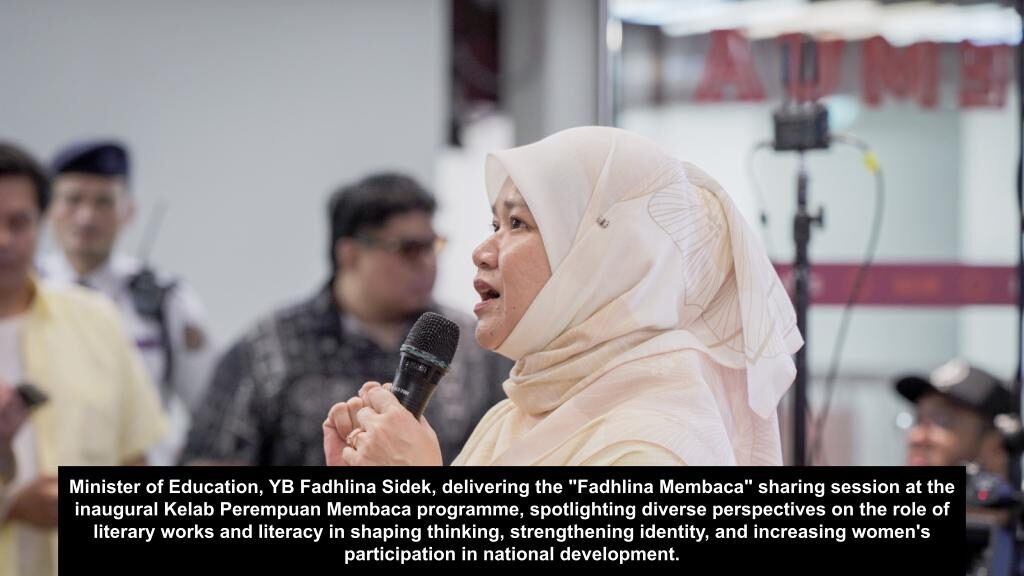
According to the organisers, the Minister’s vision positions reading culture as the starting point for a longer chain of impact — from the individual woman, to her family, to her community, and eventually to the nation itself. It is a deliberately layered theory of change: literacy shapes thinking, thinking shapes identity and confidence, and confidence translates into leadership and participation in nation-building.
This is not a new idea in development literature — the link between female literacy and societal advancement is well documented globally — but what makes this initiative notable is its structure. Rather than a one-off campaign, Kelab Perempuan Membaca is designed as a recurring, hybrid-format series, meaning its ambitions are long-term and cumulative, not symbolic.
Leadership in the Room
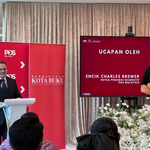
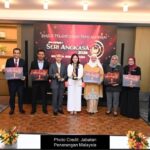
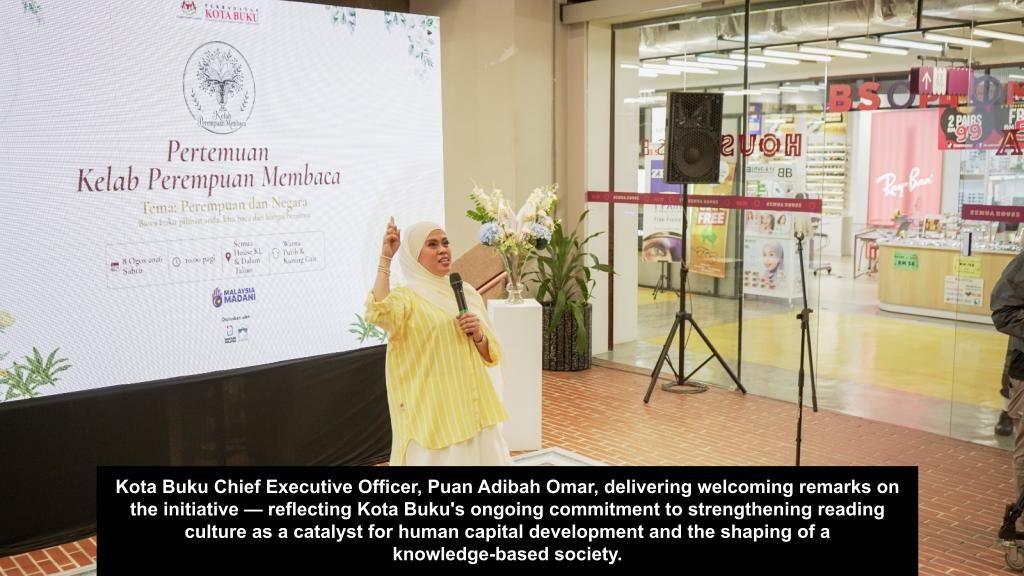
The inaugural session was officiated by Minister Fadhlina Sidek herself, and notably, the event drew Kota Buku’s Chief Executive Officer, Puan Adibah Omar, into direct engagement with the club’s members — alongside publishing industry leaders, writers, academics and media practitioners.
That mix of attendees is itself a statement of intent. This was not positioned purely as a government literacy programme, nor purely as a corporate CSR initiative — it was framed as a convergence point between policy leadership, industry expertise, and grassroots readership. Puan Adibah Omar’s presence, in particular, reflects Kota Buku’s broader institutional push — as a statutory body under the Ministry of Education — to treat reading not just as a cultural good, but as an economic and human capital strategy tied to Malaysia’s ambitions in digital publishing and intellectual property trade across Asia.
From Pages to Participation
What distinguished this first session was its emphasis on dialogue over passive consumption. Structured around book discussions, the programme deliberately created space for participants to explore, in their own words, how literary works and literacy shape thinking — and, by extension, how that shaping translates into strengthened identity and greater participation by women in national development.
This is the crux of the “Women and Nation” theme: reading is being framed not as an escape from the world, but as training for engaging more critically with it. Family literacy activities, member experience-sharing, professional networking sessions and a book-lending initiative rounded out the day — signalling that the club’s ambitions extend beyond the individual reader to household and community literacy as well.
A Hybrid Model for a Modern Movement
Perhaps the most telling detail is the format itself. Held simultaneously in person and online, the session drew what organisers describe as an encouraging turnout across both modes — evidence, they suggest, of rising public appetite for literacy programmes that combine reading, intellectual dialogue and community-building, rather than reading as a solitary pursuit.
For a country pushing to expand its digital reading ecosystem — through platforms like Kota Buku’s Book Capital and its “Reading Intelligence” data-driven approach — a hybrid-first women’s reading club is a natural extension of that strategy: meeting readers, especially women balancing multiple roles, where they already are.
The Larger Picture
Kelab Perempuan Membaca now joins a broader institutional effort by Kota Buku to position reading culture as a catalyst for human capital development, aligned with the Ministry of Education’s push to expand reading habits nationwide. But its narrower, more personal promise may be its most powerful: a recurring space where women’s leadership is not just discussed in policy terms, but rehearsed in practice — one book, one conversation, one shared perspective at a time.
About The Author