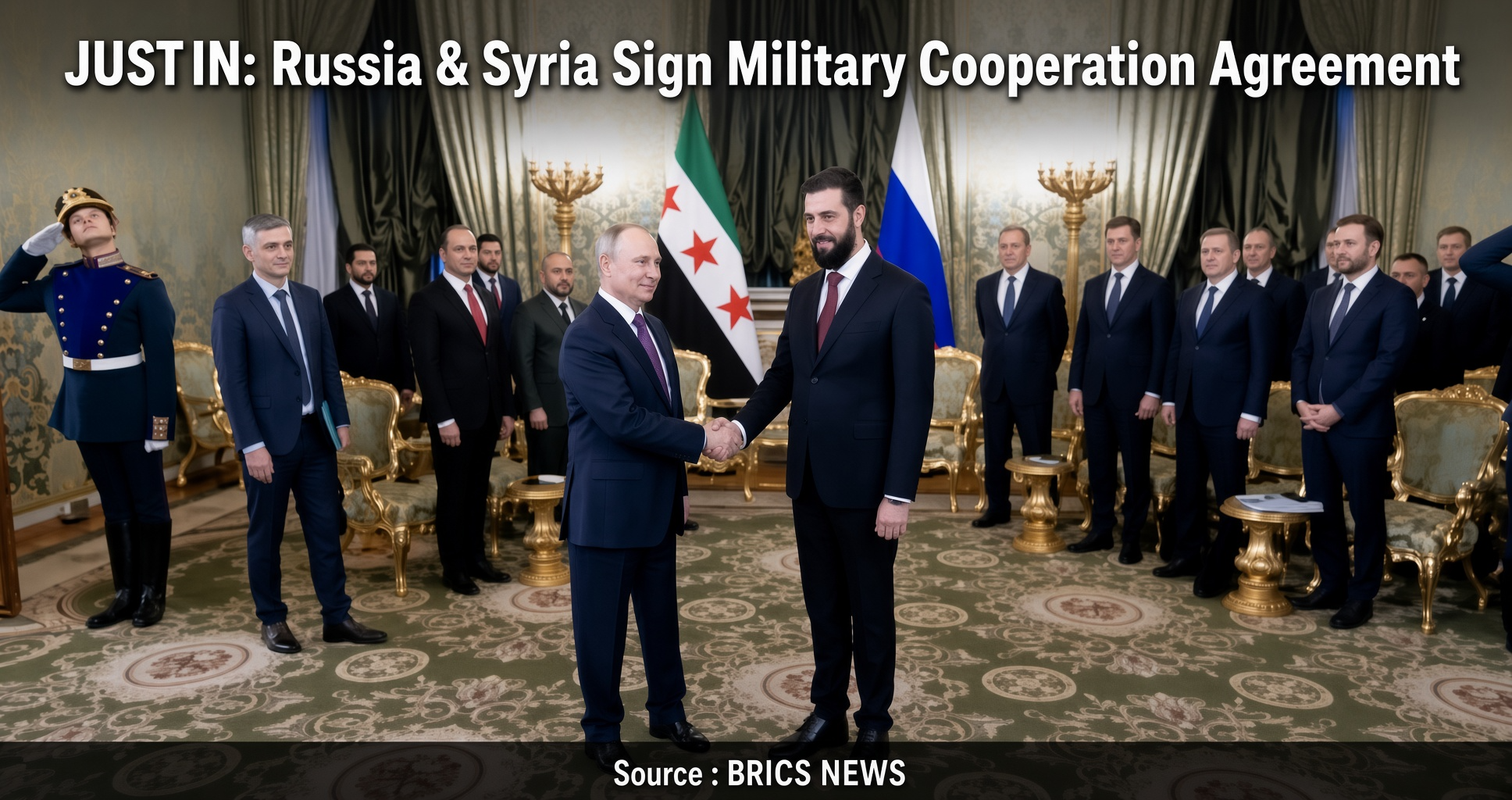
MOSCOW Aug 9, 2026 — Syria and Russia have finalized a memorandum of understanding (MoU) reorganizing Moscow’s long-standing military presence on the Syrian Mediterranean coast, Syrian authorities announced on Sunday.
The agreement, reached after approximately 18 months of intensive negotiations, settles the status of Russia’s two primary facilities in the country: the Hmeimim (Khmeimim) air base near Latakia and the naval facility at Tartous.
Under the MoU, the Syrian state will assume full management of civilian facilities, including Hmeimim Airport and the fourth commercial berth (Pier No. 4) at Tartous port, along with associated warehouses. These will be gradually integrated into Syria’s civilian administration. Military facilities at both sites will be transformed into joint training and qualification centers under new arrangements designed to safeguard the mutual interests of both countries. The transition is to be completed within no more than three months.
Syria’s Foreign Ministry described the deal as “the most significant development” since talks began and said it opens the way for a new phase in Syrian-Russian relations. Syrian Foreign Minister Asaad al-Shaibani inspected the sites on Sunday. Syria’s General Authority for Ports and Customs confirmed it would take over the commercial operations previously run by Russia at Tartous.
The bases have served as Russia’s principal military footholds in the Mediterranean and Middle East for years. Their future became a central issue in talks with Syria’s new interim leadership after former President Bashar al-Assad was ousted in December 2024. Russia provided critical military support to Assad during the Syrian civil war, and the facilities remained operational throughout the subsequent negotiations.
Some outlets and social media accounts, including a post by BRICS News featuring RT video footage of a formal ceremony, characterized the development as Russia and Syria signing an agreement on military cooperation. Official Syrian statements focus on the reorganization of the existing bases rather than a broader new defense pact. Russia has not yet issued an official public comment on the MoU.
The arrangement allows Syria greater sovereignty over key coastal infrastructure while preserving a form of continued Russian military engagement through joint training. Analysts note it reflects a pragmatic adjustment by both sides following the political transition in Damascus.
About The Author