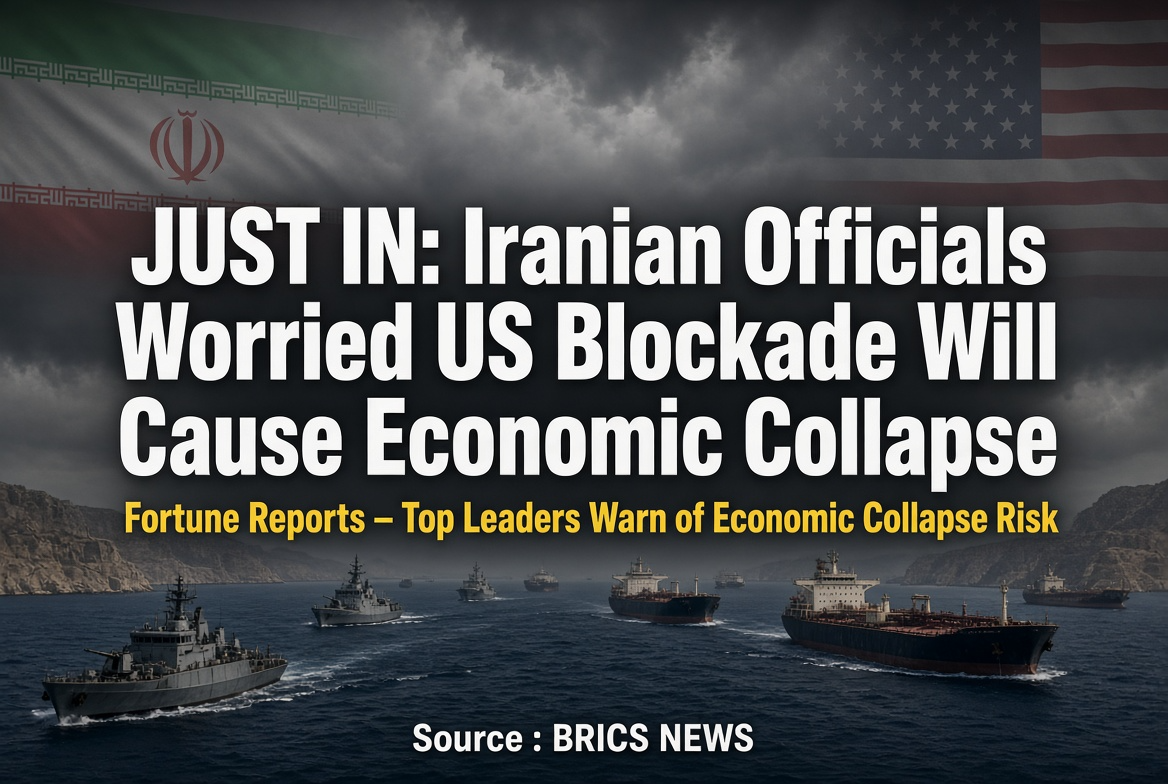
WASHINGTON D.C Aug 8, 2026 – Iranian officials have expressed deep concern that the ongoing U.S. naval blockade of the country’s ports risks causing a severe economic collapse, according to a report cited Saturday by BRICS News.
The concerns stem from a July Fortune magazine article detailing how top Iranian leaders privately warned Supreme Leader Ayatollah Mojtaba Khamenei about the devastating impact of the blockade.
President Masoud Pezeshkian told Khamenei that economic conditions were dire and the U.S. naval blockade was “crippling.” He reportedly threatened to resign if a memorandum of understanding to ease restrictions and reopen the Strait of Hormuz was not approved. At the same time, the head of Iran’s central bank sent a letter warning of a severe budget crisis, the inability to sell oil through alternative routes in sufficient volumes, and the risk of running out of critical food and medical supplies by late August if the blockade continued.
These assessments helped persuade Khamenei to approve a temporary deal in June, despite his stated opposition “on principle.” The original U.S. blockade, imposed in mid-April 2026, had already halted most Iranian oil exports and restricted the majority of the country’s seaborne trade.
The United States lifted the blockade in mid-June following the memorandum of understanding but reimposed it on July 14 after renewed tensions and attacks involving the Strait of Hormuz. As of early August, the blockade remains in effect, with U.S. forces redirecting dozens of vessels attempting to reach or leave Iranian ports.
Analysts and recent data indicate mounting pressure on Iran’s economy. Inflation has approached 90 percent, oil loadings have dropped sharply, inventories are building both onshore and offshore, and shortages of fuel and other essentials have been reported. Some assessments suggest that prolonged enforcement of the blockade could drive Iran’s effective oil export revenues close to zero within weeks if no resolution is reached.
Iran has demanded that the United States lift the blockade, withdraw forces from the region, and provide compensation as conditions for fully reopening the Strait of Hormuz. Negotiations remain tense amid the broader conflict that began earlier this year.
The Fortune report underscores internal divisions in Tehran between pragmatists seeking relief from economic pain and hardliners resistant to concessions. Ordinary Iranians continue to bear the brunt through higher prices, reduced services, and growing hardship.
About The Author