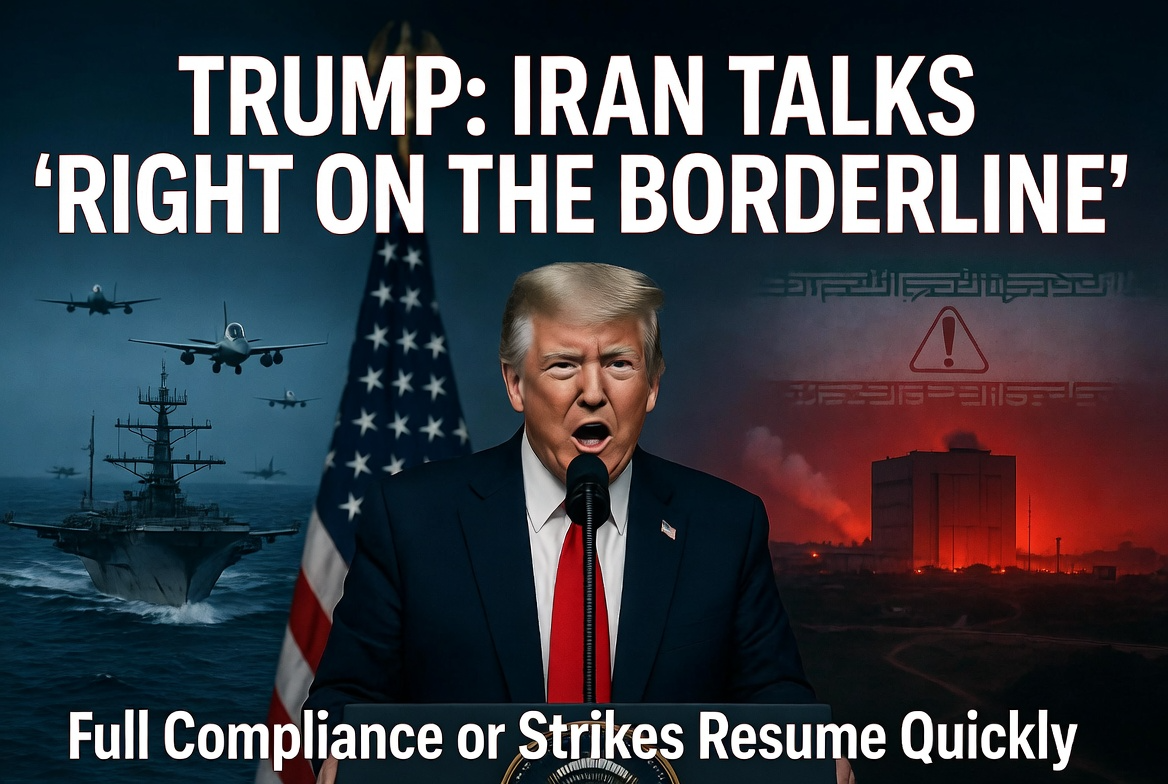
WASHINGTON, D.C. May 20, 2026 – President Donald Trump warned Wednesday that negotiations with Iran over its nuclear program and ongoing regional conflict sit at a critical juncture, stating that any deal must deliver “complete 100% good answers” or U.S. military action could escalate rapidly.
Speaking to reporters at Joint Base Andrews after returning from the U.S. Coast Guard Academy commencement, Trump emphasized America’s readiness while expressing openness to diplomacy that could save lives.
“It’s right on the borderline, believe me. If we don’t get the right answers, it goes very quickly. We’re all ready to go. We have to get the right answers — it would have to be a complete 100% good answers,” Trump said.
He added that a short delay for productive talks could prevent unnecessary casualties: “I never get tired. What I like to do, if I can save war by waiting a couple of days, so I can save people being killed by waiting a couple of days, I think it’s a great thing to do.”
The comments come amid Pakistan-mediated negotiations following intense U.S. and Israeli military operations earlier this year. In late February 2026, the U.S. and Israel launched coordinated strikes on Iranian nuclear facilities at Natanz, Fordow, and Isfahan, as well as military and naval targets, in what became known as the Twelve-Day War. Iran responded by attempting to close the Strait of Hormuz, disrupting global oil flows.
A conditional ceasefire took hold in April, with Gulf leaders urging a pause in further planned attacks to allow talks. However, tensions remain high, with reports of internal Iranian military friction between the regular army and the IRGC, internet blackouts inside Iran, and ongoing concerns over the regime’s nuclear ambitions and proxy activities.
The White House has framed the current approach as firm yet pragmatic: maximum pressure paired with a willingness to pursue a verifiable deal that permanently dismantles Iran’s nuclear weapons capability and threatens to the region.
Critics and Iranian opposition voices have urged the administration to press for full regime change rather than another interim agreement, arguing past deals have only bought the Islamic Republic time. Supporters of the talks highlight the potential to avoid broader war and further economic fallout from Hormuz disruptions.
No immediate details emerged on the specific “answers” demanded from Tehran, but officials have repeatedly stressed irreversible steps on enrichment, missiles, and regional proxies.
The situation remains fluid as diplomatic channels stay active. U.S. forces in the region continue to maintain a high state of readiness.
About The Author