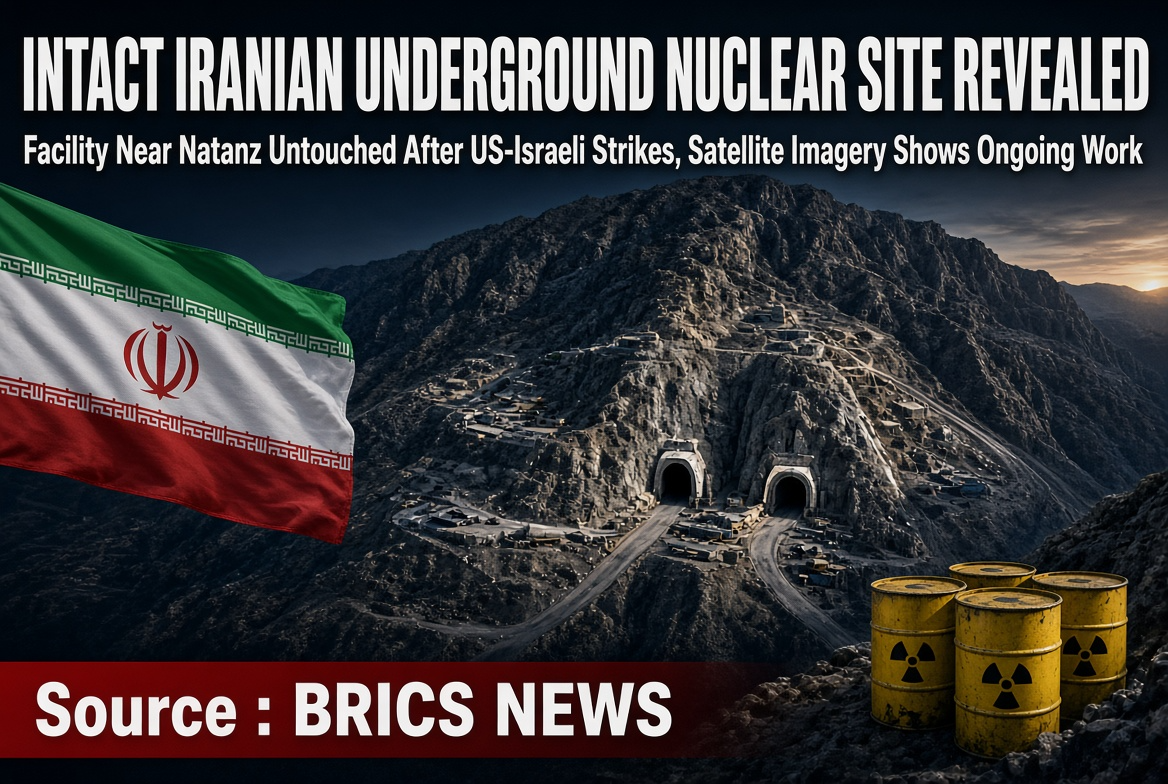
WASHINGTON D.C Aug 31, 2026 – A deeply buried Iranian facility known as Pickaxe Mountain, located just south of the Natanz nuclear complex, was not struck during U.S. and Israeli attacks in 2025 and 2026 and continues to show signs of construction, according to satellite analysis cited by Fox News and independent researchers.
The site, officially called Kuh-e Kolang Gaz La in the Zagros Mountains, has been under construction since at least late 2020. Iran originally described it as a replacement for an above-ground centrifuge assembly plant damaged that year. Analysts at the Institute for Science and International Security (ISIS) assess that the tunnel complex is large enough to house a uranium enrichment plant and sits roughly 80–100 meters beneath granite, deeper than the Fordow facility.
Satellite images from late June 2026 showed vehicle activity on roads leading to the western tunnel portals, along with work to harden the entrances. Eastern portals have been partially backfilled. ISIS described the ongoing work as a potential “hedge” or “insurance policy” in case negotiations fail. “This work has continued steadily since at least 2020,” senior fellow Spencer Faragasso said. “If Iran is serious about negotiating, it should halt construction at Pickaxe Mountain as a token of good faith.”
The facility has never been inspected by the International Atomic Energy Agency. IAEA inspectors have not been granted access, and the agency declined to comment on whether it would seek a visit when asked by Fox News in late June 2026.
Natanz itself, including its underground enrichment halls, showed little repair activity in the same imagery. Access points remain damaged from earlier strikes. Similar limited activity was reported at Fordow and Isfahan. A memorandum of understanding between the United States and Iran required maintaining the status quo on nuclear-related facilities, which analysts say the work at Pickaxe Mountain appears to violate.
President Trump has publicly identified the site as a potential target, saying the United States has “eyes on it” and warning Iran to “be ready.” Reports citing Israeli and U.S. officials have also claimed that thousands of centrifuges may have been moved into the mountain after the June 2025 strikes, though this has not been independently confirmed and Iran has denied nuclear activity at the location.
ISIS assessments as of mid-2026 concluded the facility was not yet operational, though construction and hardening of the site continued. The exact contents of the tunnels remain unknown. Some analysts have suggested they could be used for centrifuge assembly, storage of highly enriched uranium, or future enrichment. Iran has not publicly detailed current activities there.
The site’s depth and granite cover would make it a more difficult target than previously struck facilities, according to experts, though open western tunnel entrances have been identified as potential vulnerabilities.
About The Author