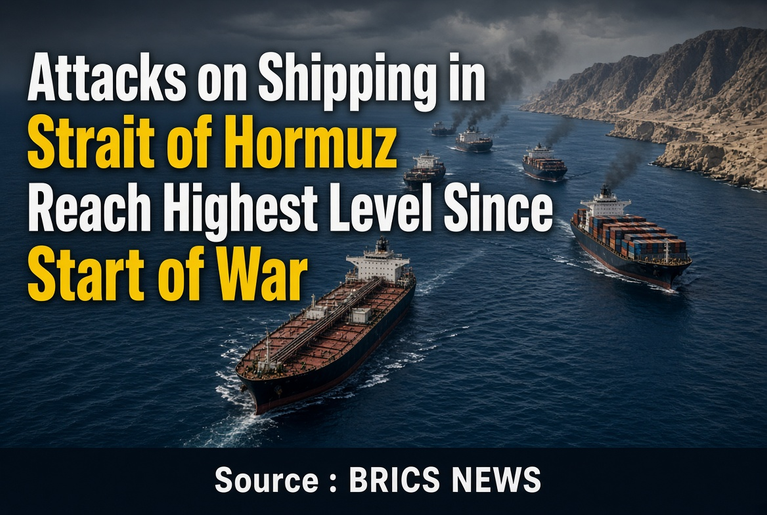
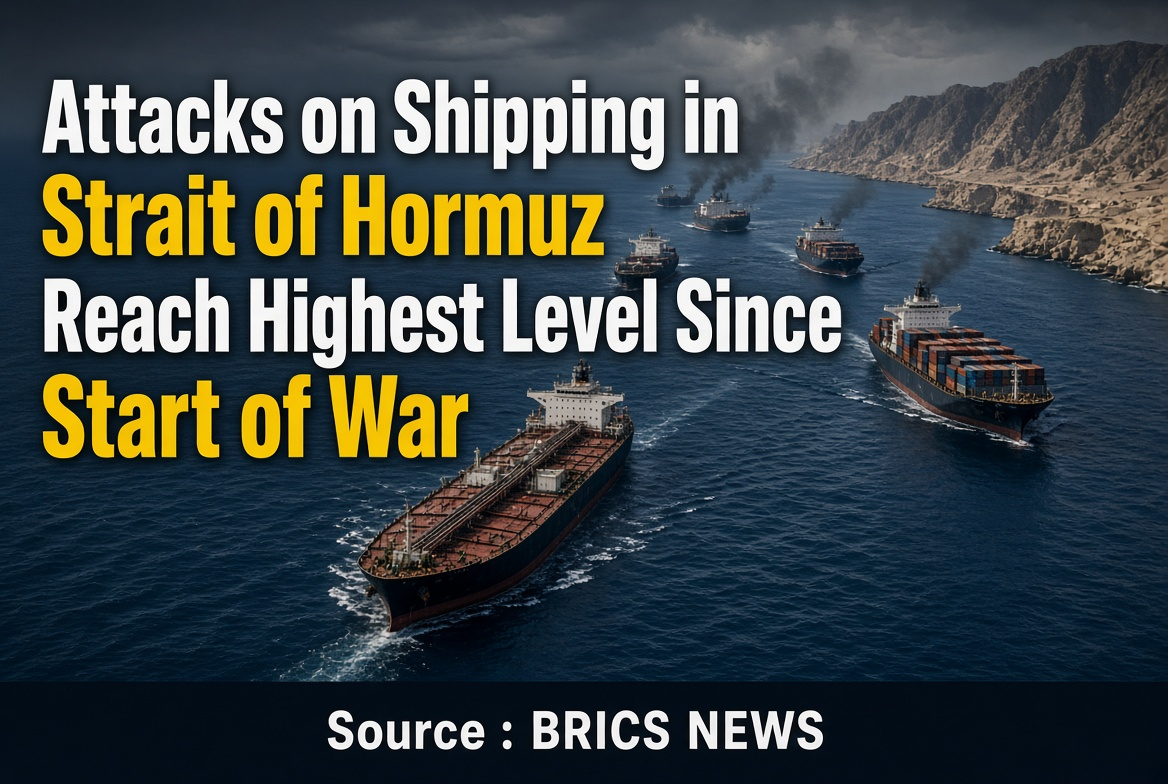
TEHRAN Oct 14, 2026 – Attacks on commercial vessels in the Strait of Hormuz have surged to their highest level since the U.S.-Israel war on Iran began in late February, with maritime agencies recording a sharp rise in incidents involving projectiles, drones, and mines in recent days.
The United Kingdom Maritime Trade Operations (UKMTO) reported 15 attacks between October 6 and October 14, including 11 in the past four days alone. These included a container ship and a tanker struck by unknown projectiles on Tuesday. Separately, maritime tracking firm Kpler recorded 10 tankers hit between September 28 and October 4, plus one more on October 5. Overall, UKMTO has logged around 20 attacks since the start of October.
Iran’s Islamic Revolutionary Guard Corps (IRGC) Navy has claimed responsibility for some of the actions, stating that vessels using routes it considers unauthorized have struck naval mines or been targeted after ignoring warnings and switching off transponders. On Wednesday, the IRGC said a cargo ship carrying more than 2,500 containers sank south of the strait after hitting a mine while taking a hazardous route. Iran maintains the measures are for national security and self-defense in response to the ongoing war and a U.S. naval blockade of Iranian ports.
U.S. Central Command has rejected Iranian claims of control over the waterway. A military official noted that Iran has shifted tactics after the destruction of some of its radar capabilities, deploying unarmed spotters in small boats to identify targets for follow-on action. The U.S. Navy-led Joint Maritime Information Center has kept the threat level for merchant shipping at “severe,” citing persistent IRGC attacks, attempted strikes, harassment, drone overflights, and radio hailing of vessels.
The escalation has disrupted oil flows through the strait, which before the war handled roughly 20 percent of global crude and LNG shipments and about 125 vessels per day. Daily volumes through the waterway dropped as low as 2.9 million barrels on October 11, compared with a pre-war average near 17 million barrels. Brent crude rose to about $106.58 a barrel amid the reports.
The Strait of Hormuz remains a critical chokepoint amid the broader conflict that began on February 28. Iran has sought to enforce restrictions on transit and disrupt a U.S.-assisted shuttle system used by Gulf producers to move oil, while Washington has conducted strikes on Iranian military targets and maintained a blockade. Both sides have accused the other of endangering commercial shipping, with crews reported safe in most recent projectile strikes but some vessels sustaining fires or minor damage.
About The Author