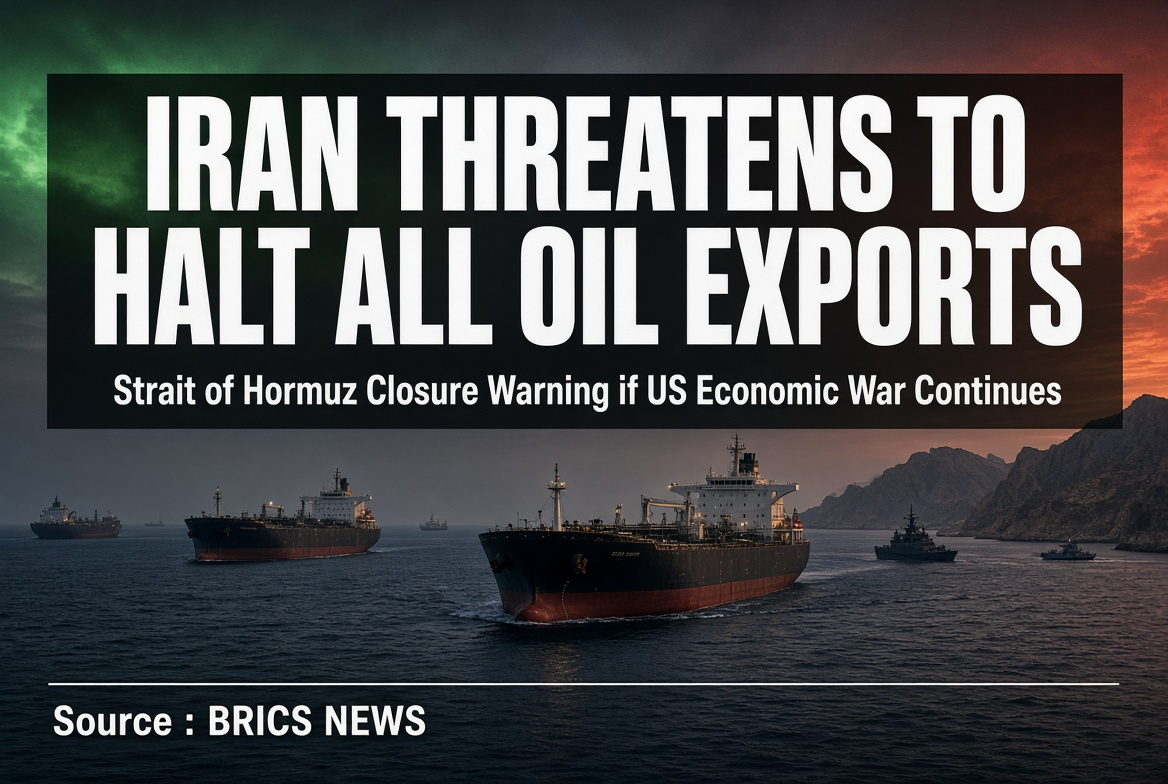
TEHRAN August 23, 2026 — Iran’s top security official has warned that Tehran will stop all oil shipments through the Strait of Hormuz and the Persian Gulf if neighboring countries join a new U.S. economic campaign against the Islamic Republic, escalating tensions in the critical waterway that has already seen sharply reduced traffic amid the ongoing conflict.
Mohsen Rezaei, secretary of Iran’s Supreme National Security Council, issued the threat in an interview with state broadcaster IRIB that aired Saturday. “If the countries surrounding Iran join the Americans in their economic war, not a drop of oil will leave the Persian Gulf and the Strait of Hormuz,” Rezaei said, according to Iranian media reports including Tasnim and state television. He added that Iran would also target alternative oil export routes from the Gulf.
Rezaei said any country participating in the U.S. effort would be considered an “enemy.” Iran would first urge such nations to stay out of the dispute, but if they refused, Tehran would “harm their interests,” he stated. He further claimed Iran has so far limited itself to restricting oil flows and striking military targets, but is prepared to hit American economic and oil interests in the region if the pressure intensifies.
The warning comes days after U.S. President Donald Trump announced what he called an “Economic D-Day” — described as the most crushing economic operation ever directed at any country. Trump urged allies to cut off Iranian oil smuggling, financial channels, and related networks, with Treasury Secretary Scott Bessent expected to detail secondary sanctions targeting Iran’s trading partners as early as Monday.
The remarks follow the mid-August expiration of a 60-day U.S.-Iran memorandum of understanding signed in June that had temporarily eased fighting and partially restored some shipping through the Strait of Hormuz. That interim deal, which aimed at broader negotiations, lapsed without extension or a final agreement. Iran has since insisted the strait will remain closed or tightly controlled until the United States lifts its naval blockade of Iranian ports, removes oil sanctions, and meets other conditions.
Before the conflict that began in late February, roughly one-fifth of the world’s oil supply — around 18–20 million barrels per day — typically transited the Strait of Hormuz. Traffic has since collapsed to a fraction of pre-war levels, with recent daily crossings sometimes falling into single digits amid Iranian attacks on vessels, U.S. enforcement actions, and mutual claims of control over the waterway.
Rezaei also reiterated that Iran claims long-term management rights over the strait and continues talks with Oman on future arrangements that could include transit fees. Iranian officials have allowed limited selective passage, including for some Iraqi oil tankers, while asserting that broader commercial traffic will not resume under previous free-passage conditions.
The threat underscores Iran’s remaining leverage despite heavy economic strain from the prolonged confrontation and renewed U.S. sanctions. Global energy markets have already reflected the uncertainty, with oil prices rising amid concerns over further disruptions to Gulf exports. Gulf states have so far avoided open alignment with the latest U.S. measures, though some have explored alternative export infrastructure to reduce dependence on the strait.
As of Sunday evening, neither the White House nor regional governments had issued an immediate formal response to Rezaei’s specific warnings. The situation remains highly fluid, with both sides entrenched ahead of the expected U.S. sanctions announcement.
About The Author