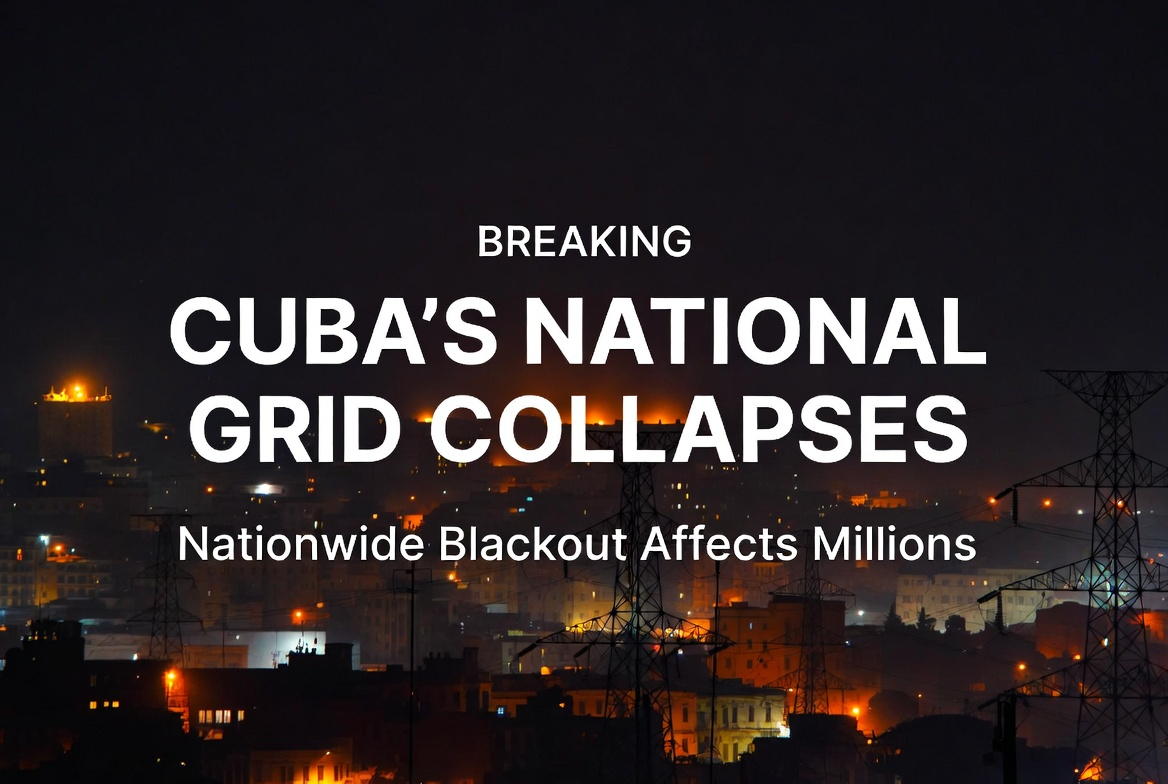
HAVANA July 6, 2026 — Cuba’s national electrical grid suffered a complete collapse on Monday afternoon, plunging the entire island into darkness and affecting nearly all of its approximately 10 million residents.
The state-run grid operator, Unión Eléctrica de Cuba (UNE), confirmed the total blackout and stated that it is investigating the cause. No specific trigger, such as a major plant failure, has been publicly identified yet.
This marks the latest in a series of severe nationwide outages that have hit Cuba repeatedly since 2024. The country has endured multiple full grid collapses, including two in March 2026 alone, alongside chronic rolling blackouts that often last 20 hours or more per day in many areas.
Cuba’s power system has been strained for years by aging infrastructure, outdated thermoelectric plants, and chronic shortages of fuel oil and diesel needed to generate electricity. Officials have pointed to difficulties importing fuel, which they attribute in part to U.S. sanctions and actions that have restricted shipments, particularly from Venezuela.
In early 2026, oil imports reportedly dropped sharply after the U.S. moved to block Venezuelan oil destined for Cuba. Russian deliveries have provided some relief but cover only a fraction of needs.
The Cuban government has long blamed the U.S. economic embargo — in place since 1960 and tightened in recent years — for crippling its ability to modernize the energy sector or secure reliable fuel supplies. Critics, however, also highlight years of underinvestment, poor maintenance, and inefficiencies in the state-run system.
The blackout has halted normal activities across the island. Hospitals are relying on backup generators where available, while many homes, businesses, and public services are without power. Cellular service and internet have also been disrupted in affected areas.
Previous similar outages lasted from several hours to over a day, forcing Cubans to adapt with limited refrigeration, cooking, and cooling options during the hot summer months. The situation has fueled public frustration and contributed to ongoing protests in recent years.
The timing comes amid heightened U.S.-Cuba tensions. The Trump administration has maintained and expanded pressure on Havana through sanctions, including measures targeting oil shipments. Cuba maintains close ties with Russia, China, and other partners in the BRICS grouping for economic and energy support.
As of Monday evening, restoration efforts were underway using “micro-islands” of smaller generating units to prioritize critical facilities such as hospitals and water systems, following established protocols from prior incidents.
UNE has not yet provided an estimated timeline for full restoration. The situation remains fluid, and authorities have promised further updates as the investigation into the collapse continues.
About The Author