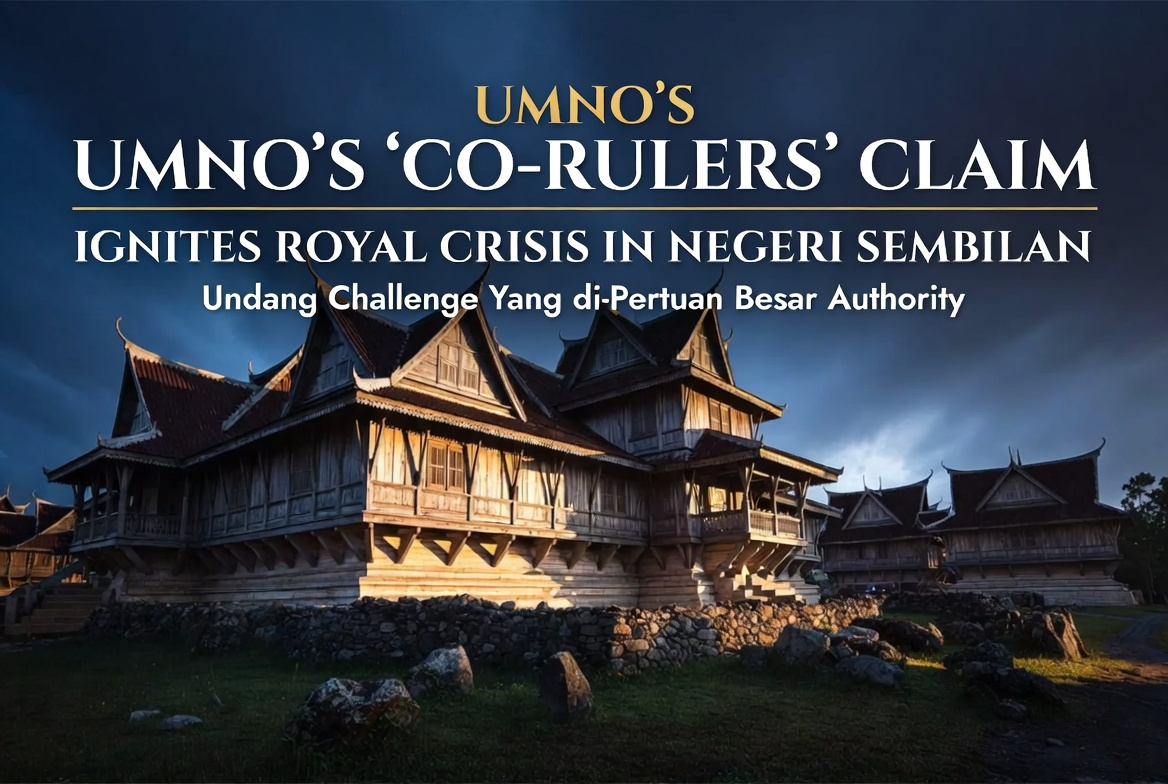
SEREMBAN, May 3, 2026 — A viral X post has thrust the unique constitutional and adat dynamics of Negeri Sembilan into the national spotlight, challenging UMNO’s assertion that the four Undang Yang Empat function as “co-rulers” equal to the Yang di-Pertuan Besar (YDPB), Tuanku Muhriz Tuanku Munawir.
The controversy erupted following a statement by UMNO Negeri Sembilan, in which state leader Datuk Seri Jalaluddin Alias described the YDPB and the four Undang — together with Tunku Besar Tampin — as “co-rulers” responsible for adat and state governance.
In response, X user @TheRedz_ posted a strongly worded rebuttal yesterday, accusing UMNO of spinning narratives to justify the April 19 attempt by the Undang to depose Tuanku Muhriz.
Citing Perkara 7 of the Undang-Undang Tubuh Negeri Sembilan 1959, the post emphasised that the YDPB is the supreme head of state, with explicit requirements for royal lineage. It described the Undang as “Ruling Chiefs” (pembesar) selected according to local adat in the respective luak (districts) of Sungai Ujong, Jelebu, Johol and Rembau — not of royal blood and clearly subordinate in the hierarchy.
“Yang di-Pertuan Besar tu head nombor satu. Top of the chain. No debate,” the post stated, adding that even the appointment or dismissal of an Undang requires approval from the Dewan Keadilan dan Undang (DKU), chaired by the YDPB himself
The post warned that portraying the Undang as equal to the Ruler risks undermining royal authority and entering “dangerous territory” that could invite legal and constitutional consequences.
Negeri Sembilan’s system is distinct among Malaysian states. Under the Adat Perpatih tradition and the 1959 state constitution, the Undang play a pivotal role in electing the YDPB — a process not based on strict primogeniture. However, once installed, the Ruler’s position is protected by constitutional safeguards, and the respective powers of the YDPB and Undang remain subjects of intense legal and historical interpretation.
The viral post and ensuing discussion have highlighted deep public interest in preserving the balance between adat, constitutional law, and royal institutions — a delicate equilibrium that observers say must be resolved according to the state’s own legal framework.
About The Author