By Professor Dato Dr Ahmad Ibrahim
Let’s get one thing straight: the most dangerous person in the world right now isn’t a general with a red button. It’s a farmer with empty hands. We have built a global civilization that worships algorithms, finance, and influencers, yet we tremble at the prospect of a bad harvest in Ukraine, a drought in the American Midwest, or a blight in Brazilian coffee fields. Why? Because farmers are the original producers. They conjure food from soil, rubber for our tires from trees, and now—fuel for our vehicles from crops. Without them, our world doesn’t just slow down. It stops.
And how do we repay them? With poverty, debt, and contempt. Before we talk about Silicon Valley’s latest “negative emissions” fantasy, look out the window. Farms are the oldest, most efficient carbon capture technology ever invented. Healthy soil sequesters gigatons of carbon. Perennial grasses, cover crops, and agroforestry systems pull CO2 out of the sky while also feeding us. No $100 million machine in a lab can match a well-managed hectare of prairie or rice paddy. But do we pay farmers for this planetary service? No. We pay them for yield—often forcing them to degrade the very soil that saves us.
The role has expanded. Farmers now produce biogas, ethanol, and biodiesel. In an era of energy insecurity, a farmer with a field of switchgrass or a digester full of manure is an energy producer. Yet the margins remain razor-thin. The same farmer who keeps your lights on might not be able to keep his own tractor running because the price of diesel has outpaced the price of his grain.
Here is the core injustice: farmers are price-takers, not price-makers. A multinational commodity trader knows the exact price of wheat to the penny; the farmer who grew it often doesn’t know if he’ll break even until the check clears. For every dollar you spend on bread, the baker, the distributor, and the supermarket take their cut. The farmer is lucky to see a dime.
This is not a whine; it is a warning. When farming becomes unviable, farmers leave the land. Young people, seeing their parents bankrupt, refuse to take up the plough. We are already seeing this across Europe, North America, and the Global South. The average age of a farmer in the US is nearly 60. In Japan, it’s over 67. Who grows your food in 20 years?
Let me be blunt: if we do not radically rebalance the economics of agriculture, we face collapse—not metaphorically, but literally. Three bad harvests in a row across different continents, and the just-in-time supply chains we rely on will snap. Grain stores will empty. Prices will skyrocket. And the same governments that ignored their farmers will be scrambling to import food from nations that were smart enough to protect theirs. We saw glimpses of this in 2008 and 2022. It will get worse.
Respect is not a ribbon on “National Farmers Day.” It is policy. It is: Paying farmers for carbon sequestration as a public utility, just as we pay for clean water and defense. Guaranteeing floor prices that cover the true cost of production. Restructuring agricultural finance so that farmers aren’t one broken axle away from losing the farm. Investing in local food systems so that farmers keep more of the retail dollar instead of subsidizing logistics giants.
The farmer turns dirt, water, and sunlight into life itself. They have done this for ten thousand years. And for the last fifty, we have rewarded them with poverty and condescension. Change the channel from the latest tech IPO. Look at your dinner plate. Then look at your local farmer’s balance sheet. The difference between those two things is a measure of our collective stupidity. We can choose to respect farmers now, voluntarily. Or we can be forced to respect them later, when famine does the teaching. I know which world I want to live in. The question is, do we have the wisdom—or the time—to choose wisely?
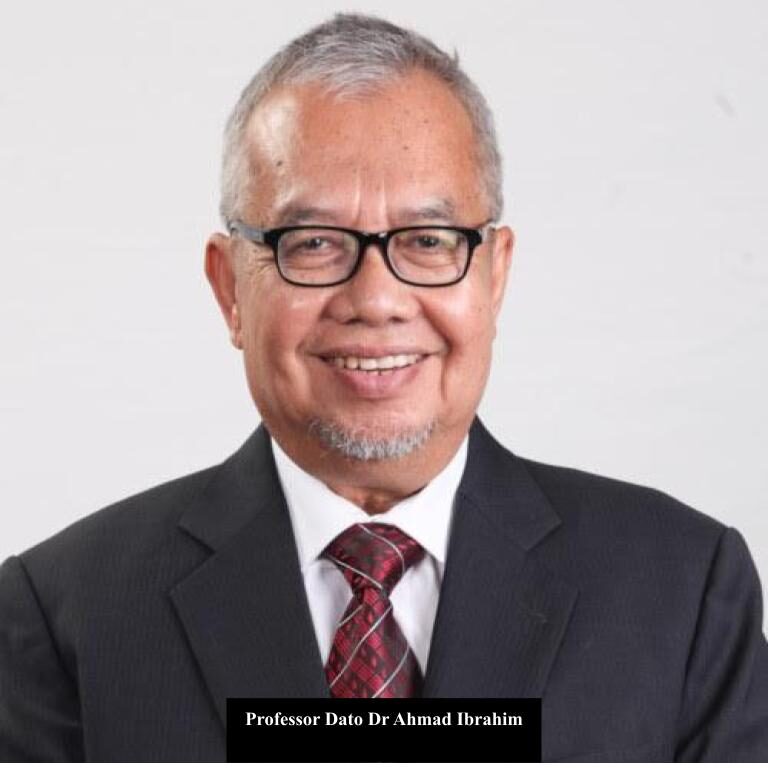
The author is affiliated with the Tan Sri Omar Centre for STI Policy Studies at UCSI University and is an Adjunct Professor at the Ungku Aziz Centre for Development Studies, Universiti Malaya.
About The Author