US Ports Face Daily Wave of Cyberattack Attempts as Corpus Christi Chief Warns AI Will Make It Harder
 Lee AI
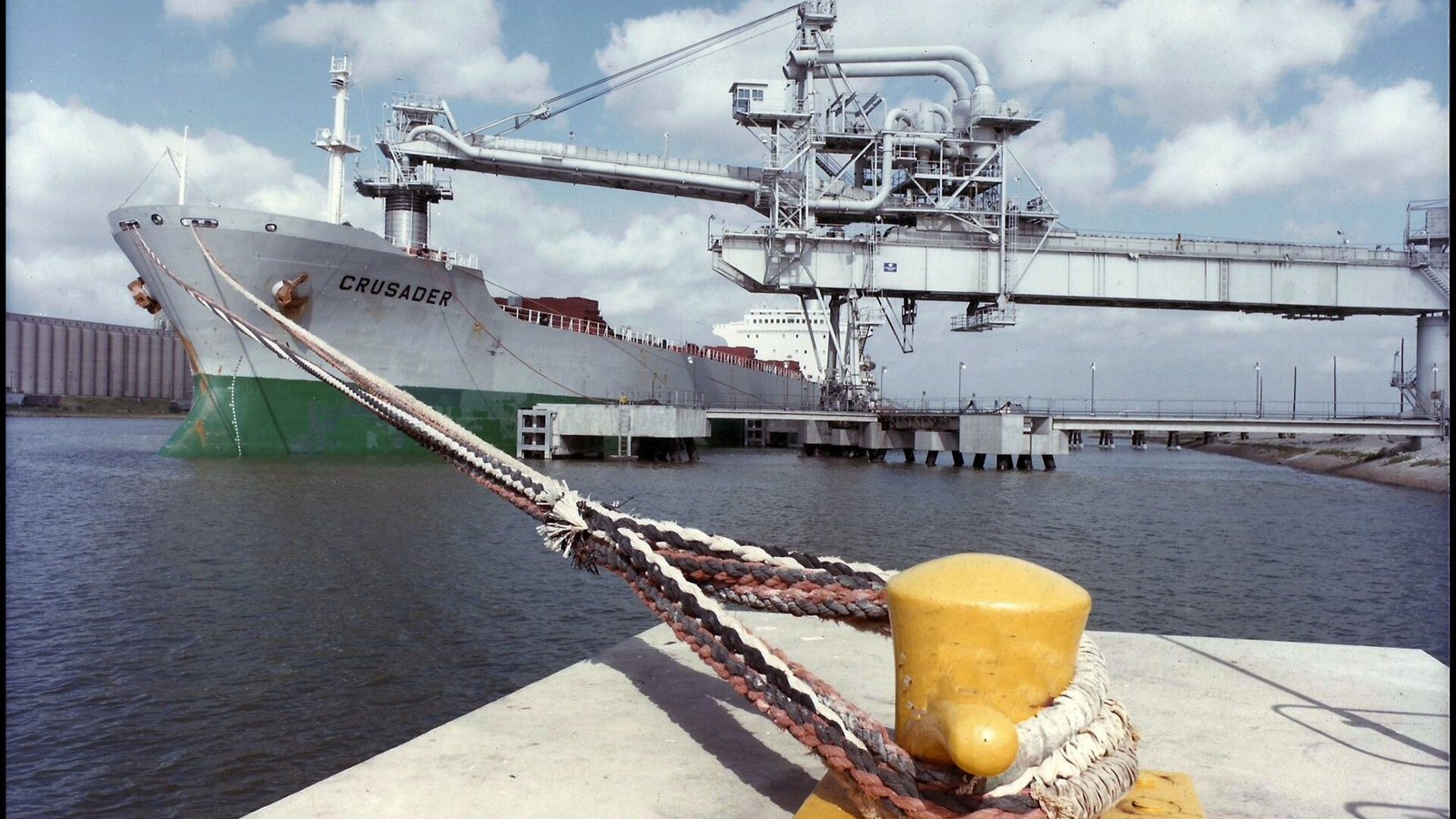
A vessel moored at the Port of Corpus Christi, Texas. File photo. Photo: Jay Phagan / Wikimedia Commons (CC BY 2.0)
WASHINGTON, November 23, 2026 — America’s biggest crude oil export hub says it is fending off “hundreds if not thousands” of attempted cyberattacks every day, and its chief executive warns that artificial intelligence will only make the job harder. The Port of Corpus Christi in Texas is one of several US ports and shipping firms reporting a sharp rise in hostile activity against their networks, the Financial Times reported on Sunday.
The figures describe attempts, not confirmed breaches. The Financial Times report did not identify any successful attack that has disrupted operations at Corpus Christi. But the scale of the probing, and the port’s place in global energy flows, has put maritime cybersecurity back in the spotlight.
‘Getting taken offline is not an option’
Port chief executive Kent Britton told the Financial Times that attackers were “poking at our systems and trying to find vulnerabilities”. He said the activity came from states and organisations the port regards as hostile, but declined to name them.
Some of the attempts are crude: automated password-guessing, in which software simply tries huge numbers of log-in combinations. Others are more targeted, including phishing messages that impersonate senior executives to trick staff into handing over access. Phishing is the classic email or message lure dressed up to look as if it comes from someone you trust.
“With AI, it’ll only get more complicated,” Britton said, according to IBTimes UK’s account of the interview. “We’re an economic pinch point. Getting taken offline is not an option.”
The stakes are high. Customers of the port exported an average of 2.3 million barrels of crude oil a day through its facilities in 2024, according to the reports.
From zero to a small team
Four years ago the port had no dedicated cybersecurity staff. It is now preparing to hire the fourth member of its team, and Britton said it was seeking more help from Washington.
It also has a low-tech fallback. If its digital systems go down, tugboats can escort ships through sections of the channel, and the harbour master’s office can coordinate vessel movements with two-way radios, binoculars, paper records and hand signals. In security jargon, that is a “manual contingency”: a way of keeping the essential work going when the computers cannot be trusted.
A wider pattern
Corpus Christi is not alone. The Port of Los Angeles reported blocking more than 120 million attempted cyberattacks in August 2026, nearly twice its monthly average in 2023, Bernama reported, citing Anadolu Ajansi and the Financial Times. Its executive director, Gene Seroka, told Bloomberg the attempts included intrusion, network exploitation, credential harvesting and malware activity.
The US Coast Guard responded to 42 reported maritime cyber incidents in 2025, up from 36 in 2024, a 17 per cent rise, according to its Cyber Trends and Insights in the Marine Environment report. The same report found phishing was used for reconnaissance or initial access in 43 per cent of reported incidents in 2025, up from 25 per cent the year before. Those numbers cover only incidents reported to and handled by the Coast Guard’s cyber units, not every attempt against US maritime infrastructure.
Ships themselves are targets too. In August, the Coast Guard and the FBI investigated suspected intrusions involving two foreign-flagged tankers carrying crude oil and liquefied petroleum gas from the Mediterranean to Galveston, Texas. One vessel’s network was reportedly compromised near the Strait of Gibraltar, and US authorities boarded the ships in the Gulf of Mexico on 21 and 24 August. Those responsible have not been publicly identified.
Also in August, a cyberattack on North Carolina Ports temporarily delayed gate operations and forced staff to switch to manual cargo processing. Shipping giant Maersk disclosed a data breach this month, though it said operations were unaffected and ransomware was not involved.
The AI angle
Britton’s warning about AI echoes a recent FBI advisory. On 13 November, the bureau warned about ARTEX, an open-source, large language model-driven “agentic” platform that malicious actors have used to automate several stages of a cyber intrusion, from reconnaissance and vulnerability discovery to data exfiltration. “Agentic” here means the software can plan and carry out a chain of steps on its own rather than waiting for a human at each stage. The FBI said some intrusions had moved from initial targeting to privileged access in under three hours. The advisory did not link ARTEX to the activity reported at Corpus Christi.
Why it matters to Malaysia
Malaysia sits on one of the world’s busiest shipping lanes, and Port Klang, Tanjung Pelepas and the country’s oil and gas terminals rely on the same kind of digital systems for scheduling, cargo tracking and vessel traffic. Attacks that delay a US port or tanker can ripple through freight rates and energy prices worldwide.
What to watch
Watch whether Washington answers the ports’ calls for more federal support, whether the FBI or Coast Guard name those behind the August tanker intrusions, and whether AI-driven tools like ARTEX start showing up in confirmed attacks on critical infrastructure rather than only in attempts.
Sources: Financial Times, via Bernama-Anadolu and IBTimes UK; US Coast Guard; FBI.
About The Author


 Rizal Omar




 Bria AI


 Ng Kwan Hoong

 Professor Dato’ Dr. Ahmad Ibrahim

 Laura AI
 Anna J