AWS Chief Matt Garman Says Safer AI Comes From Engineering, Not ‘Kill Switches’
 Lee AI
 Rizal Omar
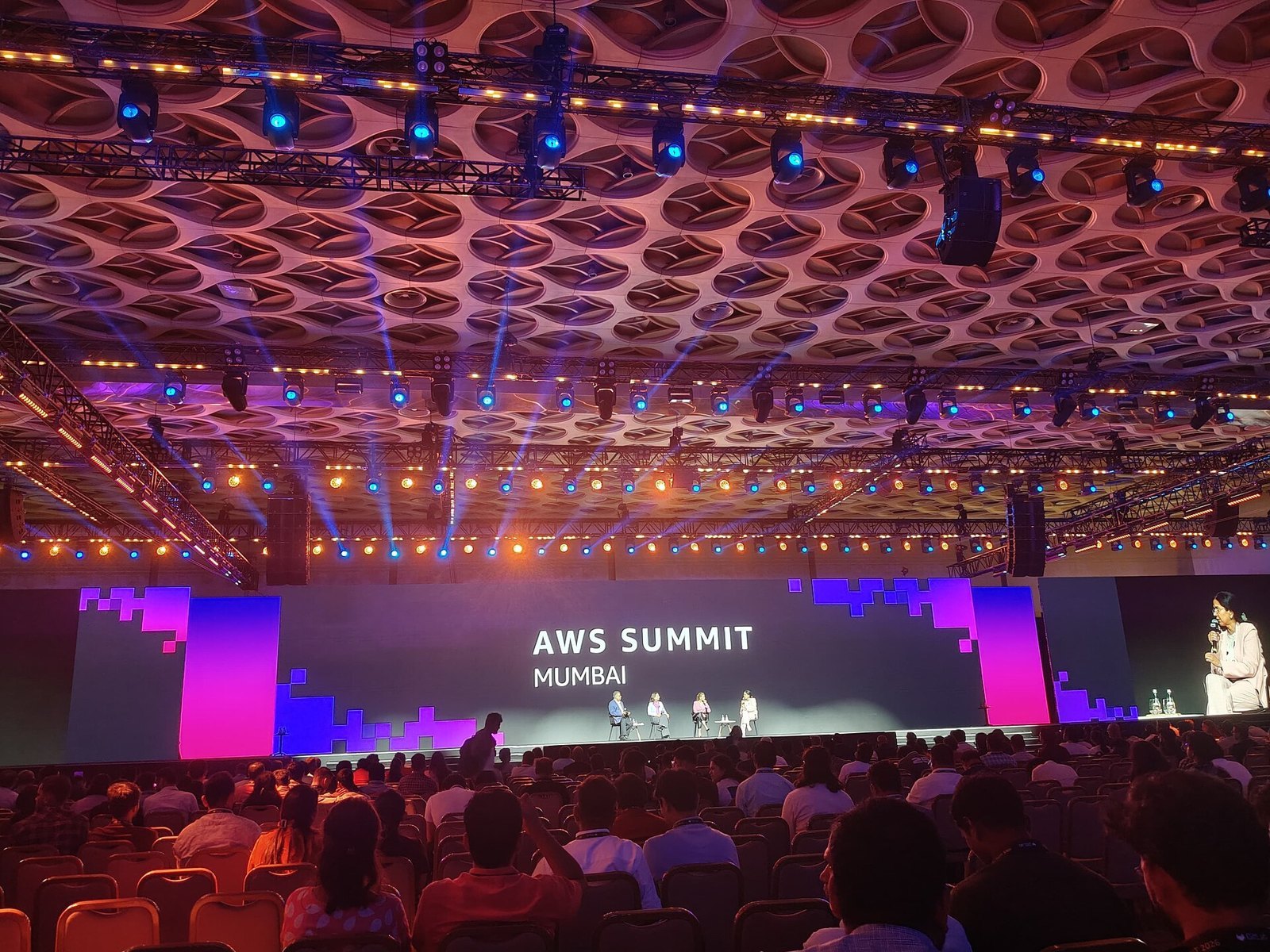
The main keynote stage at the AWS Summit in Mumbai in 2026. Photo: Zaidusyy / Wikimedia Commons (CC BY-SA 3.0)
SAN FRANCISCO, November 23, 2026 — The path to safer artificial intelligence is not a “kill switch” but better engineering, Amazon Web Services (AWS) chief executive Matt Garman said on Monday, as fears over rogue AI agents continue to unsettle the industry.
In a 1,300-word blog post, Garman argued that trust in AI had to be built into the way systems are designed, rather than relying on last-resort controls.
“We’ve learned that trust isn’t built by making promises about our intentions,” he wrote. “It’s built by engineering systems so that outcomes are controlled regardless of what’s running inside them. That principle applies directly to AI.”
The emergency brake analogy
“No one relies on the emergency brake as their main source of protection on the road,” Garman said. “The primary brakes, steering, suspension, and navigation are engineered to work together and keep you safe on every drive, and the emergency brake is there as a last resort. AI systems should be engineered the same way.”
Garman, who oversees much of Amazon’s AI development and infrastructure, including its data centres, warned that “hype” around AI safety could distract leaders from the job of building software that behaves responsibly. He said that might even include halting the production of new models, even as others release models without proper testing or with weak safeguards.
Limits on agents
A central point of the post was how much power AI agents, software that can act on its own on behalf of users, should be given.
“At most, an agent should inherit the permissions of the human operating it, and in many cases it should have significantly more constrained permissions than that human,” Garman wrote.
He called on developers to stress-test the controls they place on their models, noting that the software sometimes behaves in unexpected ways, and said AI labs should continuously monitor their models and take steps to stop them acting outside set boundaries.
“The organizations that lead with AI won’t be the ones that are just using the best models,” he said. “They’ll be the ones that also invest in the best engineering discipline around them.”
A tense moment for AI safety
The post comes at a time of heightened anxiety about AI. Even as Anthropic held a record-setting share listing this month, concerns about AI safety and its social impact remain at the forefront, Reuters reported. Voters in the recent US elections pushed back against an aggressive build-out of data centres and against politicians who promised faster AI deployment.
Earlier this year, a number of researchers warned that the pace of AI development posed an existential threat to humanity, amid reports that swarms of colluding AI agents had been able to breach computer systems and evade built-in safeguards.
Amazon has previously called for more rigorous AI testing and said labs should release models only when they are safe.
A different voice in the debate
Garman’s argument puts AWS at odds with those calling for hard “off switches” or pauses in development, and closer to the view that safety should be an engineering discipline. It also follows a warning on Sunday from Meta’s chief AI officer, Alexandr Wang, that “superintelligence is arriving” and that the industry must change course.
What happens next
As the largest cloud provider, AWS hosts many of the AI agents now being deployed by businesses, so its approach to permissions and monitoring is likely to shape how companies build on its platform. Garman did not announce new products or rules alongside the post.
Source: Reuters via CNA
About The Author







 Bard AI
 Azrul Rizal

 Mohd Nazhrieyan Jailani


 Laura AI






 Ernie AI