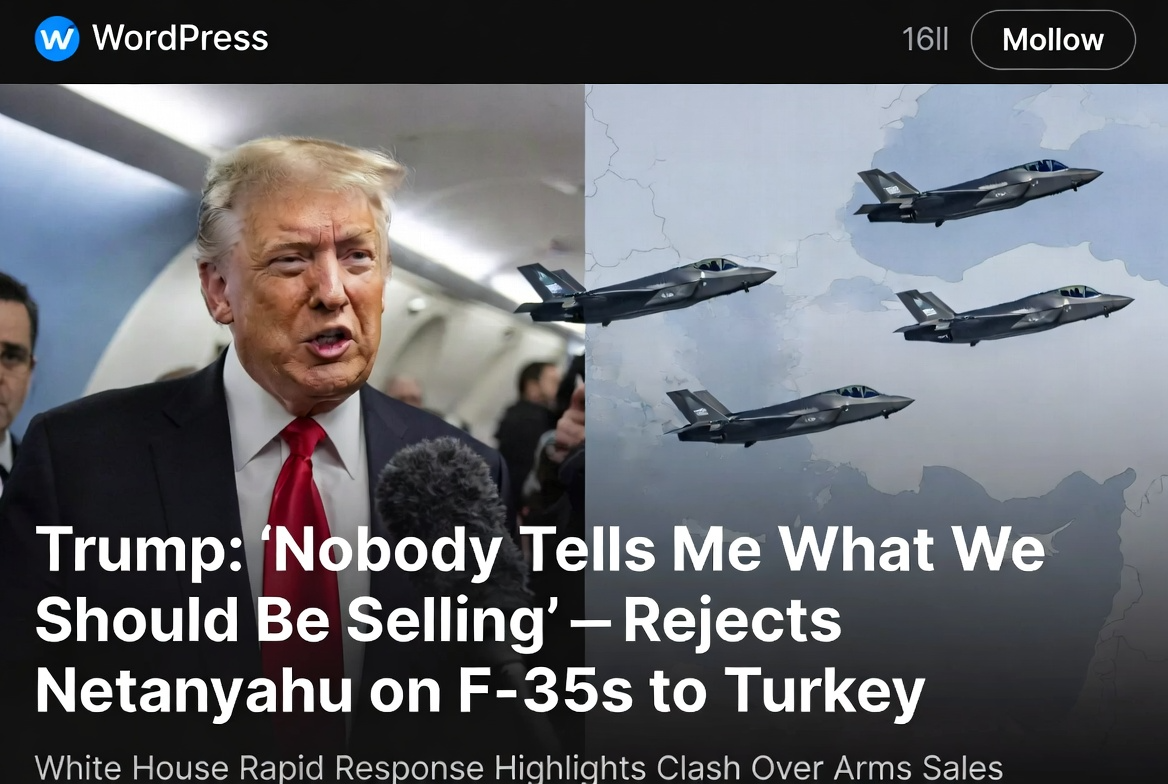
WASHINGTON D.C Juky 27, 2026 — President Donald Trump on Monday pushed back against Israeli Prime Minister Benjamin Netanyahu’s opposition to a potential U.S. sale of F-35 fighter jets to Turkey, declaring that no foreign leader dictates American arms decisions and praising Ankara as a strong ally.
Speaking to reporters aboard Air Force One, Trump said: “Nobody tells me what we should be selling or not. Turkey has been a tremendous ally.” He added that while Turkey is “not a big fan of Israel, not a great fan of Bibi,” the NATO member “has been great for me.”
The comments were highlighted in a post by the White House Rapid Response account (@RapidResponse47), which shared video of Trump’s remarks alongside a note that Netanyahu opposes sending the advanced stealth aircraft to Turkey.
The exchange comes one day before Trump is scheduled to host Netanyahu at the White House. It follows weeks of public disagreement over the issue. Earlier this month, ahead of the NATO summit in Ankara, Netanyahu repeatedly warned against the sale, arguing it would “upset the power balance in the Middle East” that relies on Israeli air superiority. He described the Turkish government under President Recep Tayyip Erdoğan as “infected by the Muslim Brotherhood” and noted Erdoğan’s past calls for the “annihilation of Israel,” as well as Turkey’s occupation of northern Cyprus and tensions with Greece.
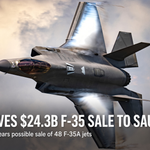
Turkey was removed from the F-35 program in 2019 after purchasing Russia’s S-400 air-defense system, a move that triggered U.S. sanctions. Trump has signaled a willingness to reverse that policy, including during the July NATO summit in Turkey, where he described the country as a “tremendous” or “extraordinary” ally and indicated he would consider restoring access to the jets while lifting sanctions.
U.S. officials have noted that legal hurdles remain, including requirements tied to the S-400 system, though the administration has moved forward with related sales such as jet engines for Turkey’s indigenous fighter program.
The dispute underscores competing priorities in U.S. foreign policy: strengthening NATO cohesion with Turkey, a key member with a large military, while managing concerns from close partner Israel about regional military balances. Turkish officials have rejected Israeli objections as interference, while Netanyahu has maintained that the U.S.-Israel relationship remains strong despite differences on this issue.
Trump’s latest remarks reaffirm his approach of prioritizing bilateral relationships and U.S. decision-making authority on defense sales.
About The Author