By Professor Dato Dr Ahmad Ibrahim
We’ve all sat through it. The death-by-PowerPoint lecture. The wedding toast that rambles for twelve minutes. The team meeting where the boss reads bullet points off a screen as if we’re illiterate. The common diagnosis? “That speaker was boring.”
But according to a compelling new research from communications scholar Anna Neya Kazanskaia, the real problem isn’t a lack of charisma or a dull topic. It’s a lack of persuasive architecture. In her January 2025 paper, “Persuasive Communication in Public Speaking,” Kazanskaia drops a truth bomb that should terrify every executive, politician, and parent who has ever tried to convince a teenager to clean their room: Logic doesn’t move people. Emotion does. And trust is the only currency that matters.
Here’s the kicker: most of us are doing it backwards. Kazanskaia’s findings dissect why some speakers—think Churchill, Oprah, or even that one coworker who somehow gets everyone to agree in under three minutes—succeed while the rest of us flop. She boils influence down to three gears that must be engaged in the right order.
Gear One: Stop selling facts. Start selling feelings. We think persuasion is a math problem. Lay out the data, present the bullet points, and surely the audience will see reason. Wrong. Kazanskaia found that audiences make emotional decisions in the first ten seconds, then desperately search for logic to justify that choice. The speakers who win are the ones who go straight for the heart: a personal story, a moment of shared frustration, a single vivid image that makes people feel something before they think anything.
Want your boss to approve your budget? Don’t lead with spreadsheets. Lead with the human problem the budget solves. Want your community to vote? Don’t recite policy. Tell them about the single mother who missed the last bus.
Gear Two: The trust trap. Here’s where most of us stumble. We assume that if we sound confident, people will believe us. Kazanskaia’s data says the opposite. Audiences are exquisitely tuned lie detectors. The moment you pretend to know everything, they’re gone. The secret? Strategic vulnerability. The most persuasive speakers are the ones who admit a weakness first. “I don’t have all the answers, but here’s what I’ve learned.” “I made a mistake on this once, and here’s why.”
That confession isn’t a flaw—it’s a hook. It signals that you’re human, that you’re not selling snake oil. And once trust is established, your arguments land like feathers instead of bricks.
Gear Three: The one-thing rule. We are drowning in information. Kazanskaia’s research confirms a brutal cognitive limit: an audience will remember, at most, one central idea from your entire speech. Just one. So why do we cram in seven points, three sub-bullets, and a bonus anecdote? Ego. We want to show how much we know. But persuasion isn’t about showing off—it’s about making a change. The effective speaker doesn’t try to boil the ocean. They drill a single well, deep enough to hit water.
Pick your one sentence. The one thing you need people to walk away believing. Then cut everything else. Focus on that one message. When using slides, that one message must stand out. Not a concoction of messages which tend to confuse. Confusion will not lead to persuasion. It will lead to ridicule.
The verdict before us is: You have more power than you think. Kazanskaia’s work is not a dry academic exercise. It’s a rescue manual for anyone who has ever felt ignored, talked over, or ineffective. The myth of “natural born speakers” is just that—a myth. Persuasion is a set of tools: emotion first, then trust, then a single, razor-sharp idea.
The next time you stand up to speak—in a boardroom, at a PTA meeting, or across the dinner table—don’t ask yourself, “Am I smart enough?” Ask the harder question: “Did I make them feel something? Did I earn their trust? And can they remember the one thing that matters?” If the answer is no, don’t blame the audience. Blame the architecture. And then go rebuild it.
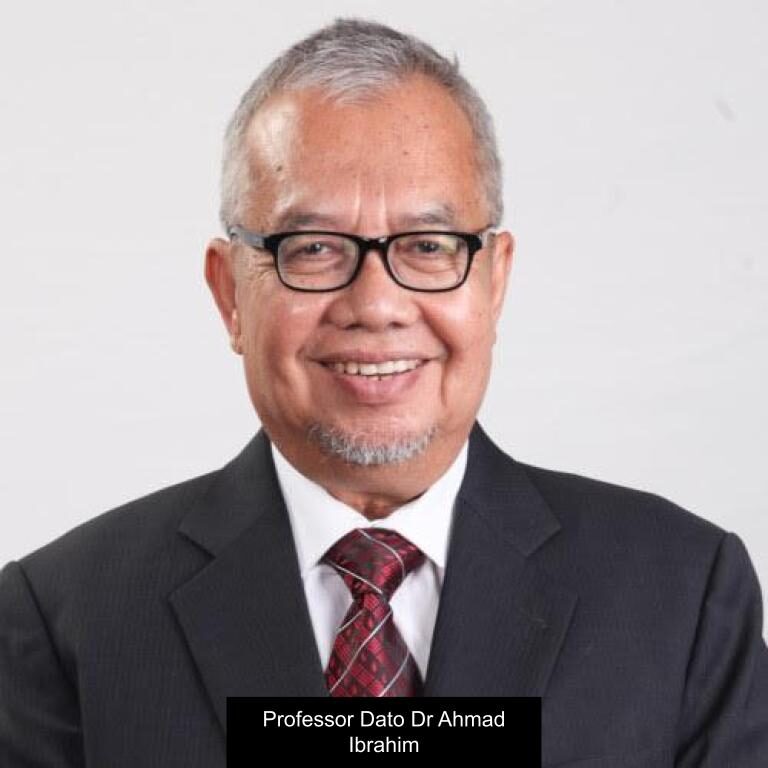
The author is affiliated with the Tan Sri Omar Centre for STI Policy Studies at UCSI University and is an Adjunct Professor at the Ungku Aziz Centre for Development Studies, Universiti Malaya.
About The Author