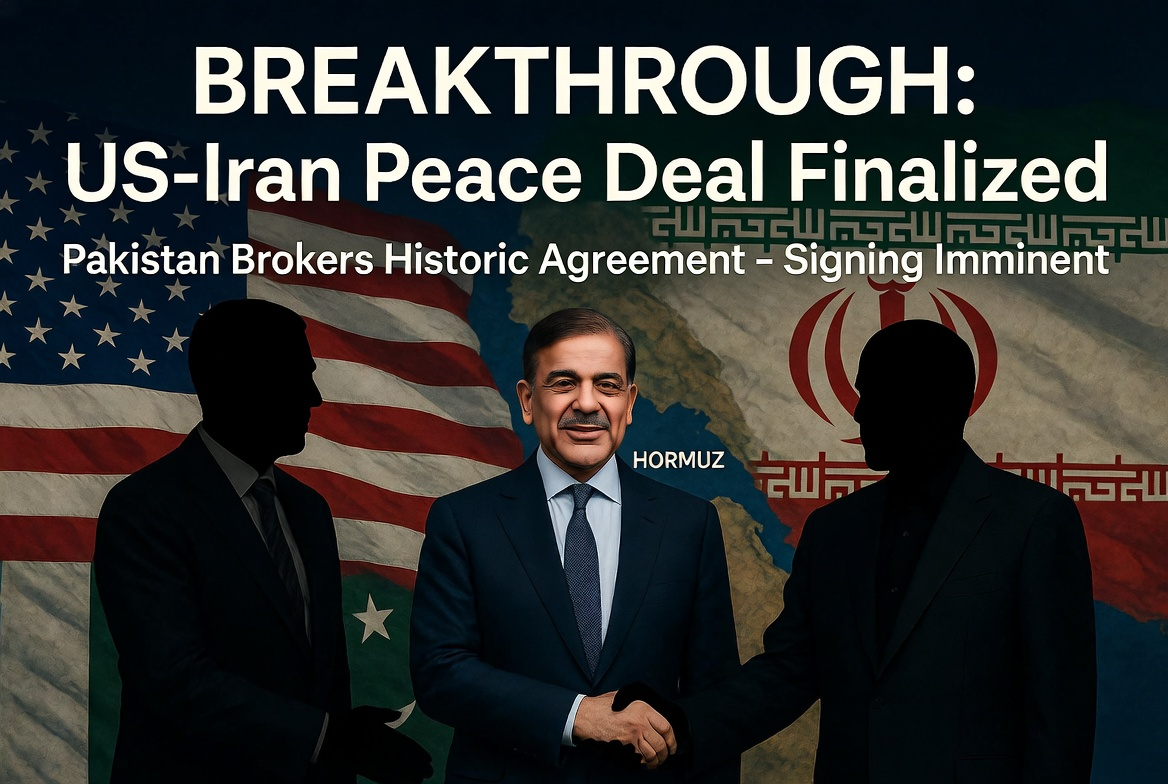
ISLAMABAD, PAKISTAN June 13, 2026 — Pakistani Prime Minister Shehbaz Sharif stated Friday that the United States and Iran have reached agreement on the final text of a peace deal to end months of conflict in the Middle East, with his government working closely with both sides to finalize next steps and an electronic signing possibly within hours.
In a post on X, Sharif declared: “Setting aside the noise, we can confirm that a final, agreed upon text of the peace deal has been reached and Pakistan is now working closely with both sides to finalize the next steps. Peace has never been this close as it is now.”
Pakistan has played a central mediating role since an April ceasefire, hosting indirect and direct talks in Islamabad. The latest announcement follows a fragile truce established in early April after intense US-Israeli strikes on Iran that began in late February 2026.
The 2026 Iran war erupted on February 28 with nearly 900 US and Israeli strikes targeting Iranian military sites, air defenses, and leadership, including the reported killing of Supreme Leader Ali Khamenei. Iran responded with missile and drone barrages across the region, resumed fighting involving Hezbollah in Lebanon, and closed the Strait of Hormuz — a critical chokepoint for about 20% of global oil shipments.
The closure, combined with naval blockades and tit-for-tat attacks, triggered global fuel shortages, soaring energy prices, and disruptions to maritime trade. A temporary April ceasefire, also mediated by Pakistan, paused major hostilities but left underlying issues unresolved, including Iran’s nuclear program, regional proxies, and control of the Strait.
Recent weeks saw renewed exchanges of fire, Iranian drone threats in the Hormuz, and US intercepts, keeping tensions high even during negotiations.
While full details remain under wraps, reports indicate the memorandum of understanding includes:
- Reopening the Strait of Hormuz to unrestricted commercial shipping.
- Limits on Iran’s uranium enrichment and removal of stockpiles.
- Phased sanctions relief tied to Iranian compliance.
- Commitments to de-escalate proxy conflicts, including in Lebanon.
Both sides have downplayed conflicting leaks, with Sharif urging focus on the agreed text amid what he called “incessant misinformation” aimed at sabotaging the process.
Iranian officials have described the framework as affirming their resilience, while US President Donald Trump has signaled optimism, noting a potential signing soon.
Markets reacted with cautious optimism, with oil prices easing on hopes of restored flows through Hormuz. However, analysts and observers remain skeptical given the history of stalled talks.
- Israel has expressed reservations, with concerns that any deal might not fully neutralize Iran’s nuclear ambitions or regional influence.
- Domestic critics in Pakistan point to ongoing internal challenges, questioning the government’s focus…
About The Author