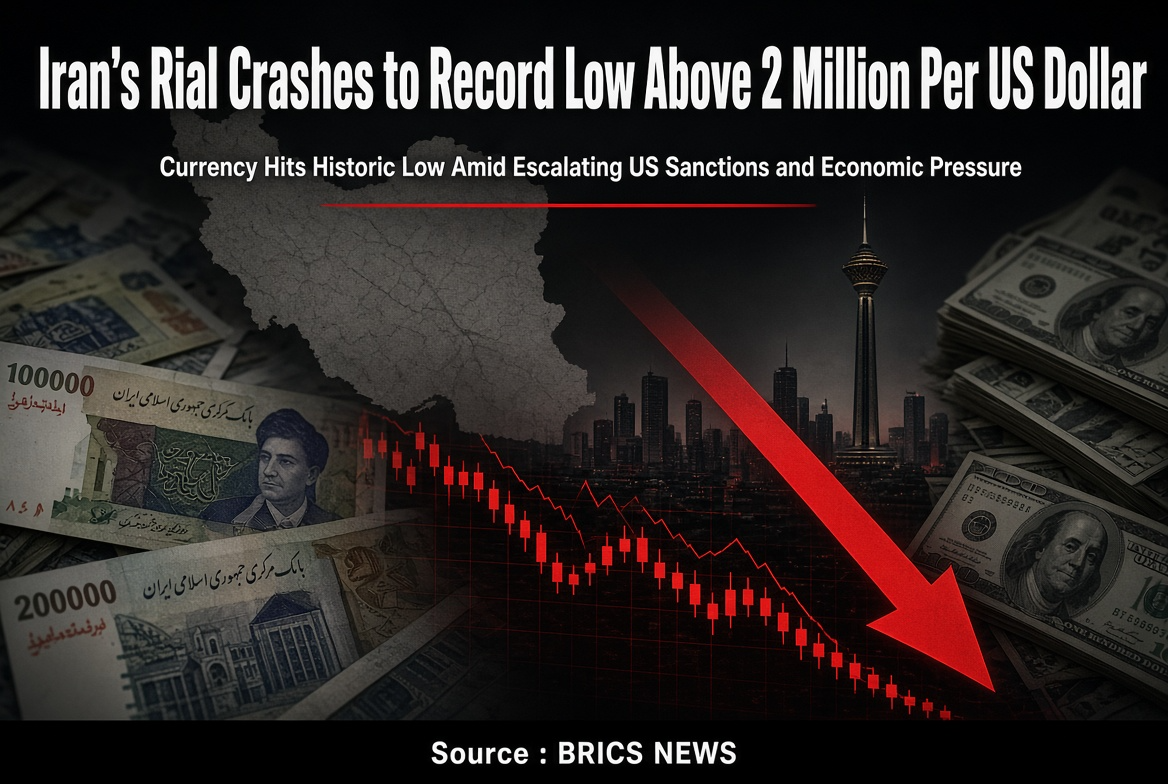
TEHRAN August 24, 2026 — Iran’s currency has crashed to a historic low, with the US dollar trading at more than 2 million Iranian rials on the open market for the first time, according to currency trackers and market reports.
The free-market rate reached approximately 2.02 million rials per dollar as trading opened Monday, marking a sharp depreciation from around 1.865 million earlier last week. One toman (equal to 10 rials) exceeded 200,000 against the dollar.
Iran’s official Central Bank rate remains significantly stronger at about 1.5 million rials per dollar, but the parallel market rate — the one most businesses and ordinary Iranians actually use for imports, savings, and daily transactions — is the true measure of economic stress.
The latest collapse comes as the United States prepares to announce what Treasury Secretary Scott Bessent has called the “single greatest financial offensive ever marshalled against an adversary” and an “economic D-Day.” Washington has already reimposed a naval blockade on Iranian ports, restricted oil exports (which Iranian officials now say have effectively fallen to zero), and is expected to expand secondary sanctions targeting countries and entities still doing business with Tehran.
The rial has been under sustained pressure since the outbreak of conflict involving the United States and Israel on February 28, 2026. Nearly six months of war, combined with long-standing sanctions, high inflation (projected near 70% this year by some forecasts), and a contracting economy have accelerated the currency’s freefall. The International Monetary Fund expects Iran’s GDP to shrink by more than 5% in 2026.
Everyday prices have soared: rice is up roughly 60% and beef more than 150% since the fighting began, making basic goods increasingly unaffordable for many Iranians.
Analysts note that the gap between the official and free-market rates continues to widen, reflecting limited access to hard currency, disrupted trade channels, and growing public anxiety over further economic measures. Iranian officials have described the latest drop as temporary, but market data shows the rial has roughly doubled in weakness against the dollar since early this year.
The development was first widely flagged on social media, including by accounts covering BRICS and geopolitics, before being confirmed across major international outlets.
About The Author