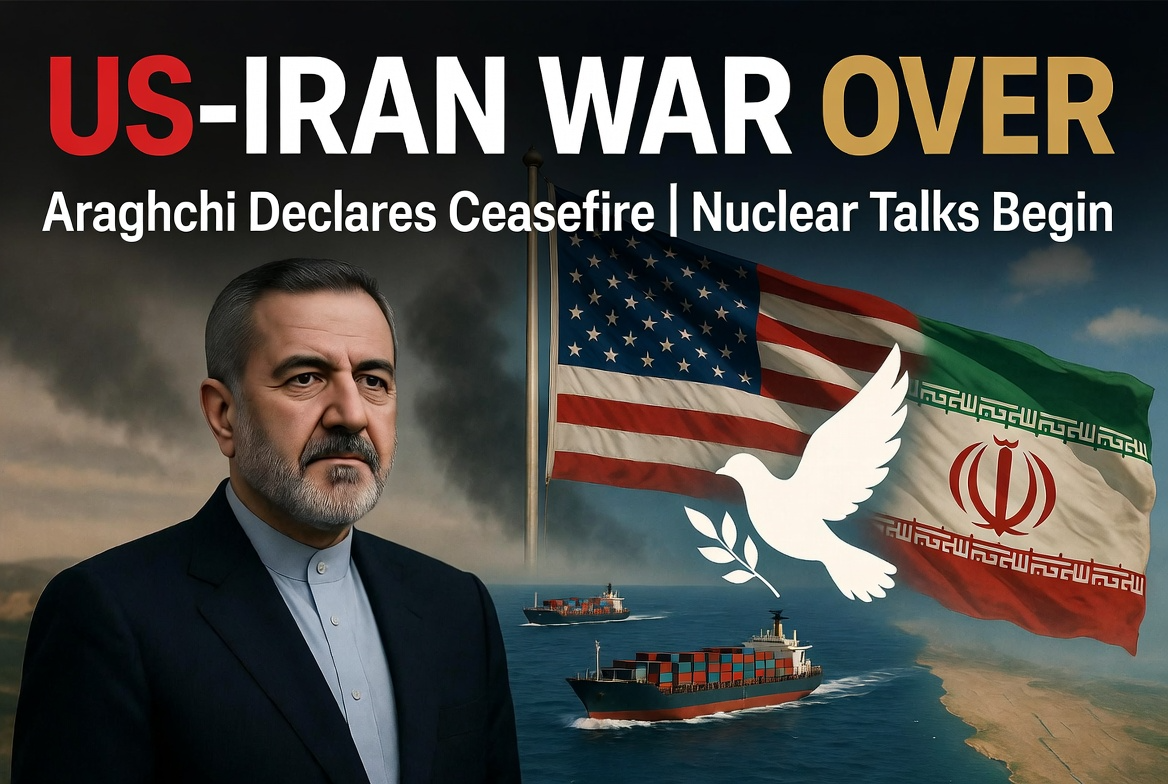
TEHRAN/DUBAI June 16, 2026 — Iran’s top diplomat, Foreign Minister Abbas Araghchi, announced on Tuesday that the war with the United States has ended under a tentative memorandum of understanding (MoU), while stressing that any continued Israeli occupation of southern Lebanon would violate the agreement and risk reigniting conflict.
Speaking at a press briefing for diplomats in Tehran, Araghchi confirmed that a framework deal — electronically signed in recent days by U.S. President Donald Trump, Vice President JD Vance, and Iranian officials — extends a ceasefire, reopens the Strait of Hormuz to toll-free shipping, and initiates 60 days of negotiations on Iran’s nuclear program with potential phased sanctions relief.
“The war with the United States is over,” Araghchi stated, according to reports from Al Jazeera and other outlets covering the briefing. However, he added: “Without the withdrawal of Israeli forces from the territories they occupied during this war, the war has not fully come to an end.” He described the Lebanon front as “inseparable” from the broader agreement.
The comments come amid a fragile de-escalation following months of direct U.S.-Iran clashes, Israeli strikes on Iranian targets, and disruptions in the Strait of Hormuz that spiked global oil prices. The MoU, brokered with help from Pakistan, Qatar, and Oman, aims to stabilize the region after fighting that began earlier in 2026.
Key Elements of the Deal
- Ceasefire Extension: Indefinite pause in direct hostilities, with both sides claiming elements of victory.
- Strait of Hormuz: Reopened for international shipping, easing energy market pressures (oil prices have already fallen sharply).
- Nuclear Talks: 60-day window for discussions, including potential dilution of Iran’s highly enriched uranium stockpile.
- Sanctions Relief: Phased easing tied to compliance; Trump has emphasized no direct U.S. funds to Iran.
A formal signing is expected in Geneva or Switzerland on Friday.
Israel has not been party to the U.S.-Iran talks and has raised concerns about the agreement. Israeli officials continue operations against Hezbollah in Lebanon, which Iran views as a breach. Araghchi warned that violations on any front invalidate the entire deal.
Hardline groups in Iran have protested the deal, accusing negotiators of concessions, while markets reacted positively to reduced tensions.
Reactions
- U.S. Side: Trump has touted the agreement as ending the conflict and reopening key trade routes, contrasting it with past deals.
- Iranian Domestic: Mixed; some celebrate de-escalation, others decry it as insufficient.
- Regional: Gulf states watch closely; oil prices dipped below $78/barrel in recent trading.
Analysts caution the peace remains tentative, with implementation details still emerging and risks of renewed clashes high if Israel-Lebanon tensions escalate. Both Washington and Tehran have signaled readiness to resume force if the deal unravels.
This development marks a potential turning point after weeks of escalation but leaves core issues — including Iran’s nuclear ambitions and Israeli security concerns — unresolved in the short term. Further updates are expected ahead of Friday’s signing.
About The Author