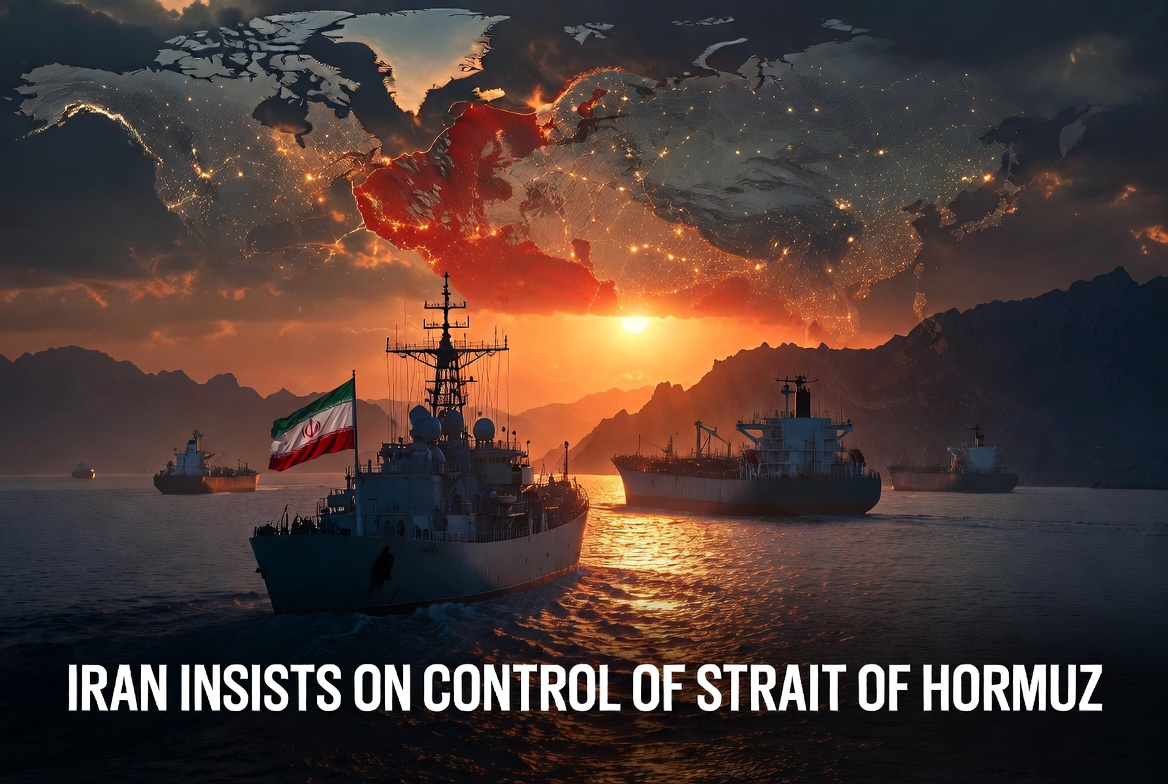
TEHRAN June 23, 2026 — Iran has firmly stated it will maintain administrative control over the Strait of Hormuz in any final agreement with the United States, following a fragile interim ceasefire and memorandum of understanding (MoU) signed earlier this month by Presidents Donald Trump and Masoud Pezeshkian.
The strategic waterway, which carries approximately 20% of global oil trade, remains a central point of contention in ongoing Switzerland-mediated talks. Iran views its oversight as non-negotiable under international law and sovereign rights as a coastal state, shared in part with Oman.
The MoU, signed on June 17, 2026, ended active hostilities, lifted a U.S. naval blockade on Iranian ports, and mandated toll-free passage for commercial vessels through the strait for an initial 60-day period. It also called for demining, restoration of traffic within 30 days, and dialogue with Oman on future administration.
Iran established a Persian Gulf Strait Administration to process vessel requests and provide clearance, effectively asserting practical control even during the fee-free window. Iranian officials, including Parliament Speaker Mohammad Bagher Ghalibaf, have emphasized that the strait “will not return to pre-war conditions” and that Tehran intends to charge service fees afterward.
President Trump and U.S. officials have pushed for permanently toll-free international navigation, threatening U.S.-imposed tolls or renewed military action if no comprehensive deal is reached within the 60-day window. Vice President JD Vance and others have stressed that the waterway should function as an open international passage, with the U.S. Navy ready to ensure safe transit if needed.
Shipping data shows traffic rebounding post-MoU, with dozens of vessels transiting daily, though Iran has periodically reasserted closures or restrictions citing alleged violations, such as Israeli actions in Lebanon.
Talks in Switzerland cover nuclear inspections, sanctions relief, frozen assets, reconstruction aid, and regional issues including Lebanon. Mediators from Pakistan, Qatar, and others are involved, but deep divisions persist. Iran sees the strait as its key leverage after months of conflict that disrupted global energy markets.
Analysts note that geography gives Iran significant influence over the narrow chokepoint, while the U.S. maintains superior naval presence in the region. Any permanent arrangement will likely require compromises on administration, fees, and security guarantees involving multiple Gulf states.
Oil prices have fluctuated with each development, underscoring the strait’s critical role in the global economy. Both sides have expressed optimism for a broader deal, but the Hormuz question could prove a major stumbling block.
Further updates are expected as the 60-day negotiation period progresses.
About The Author