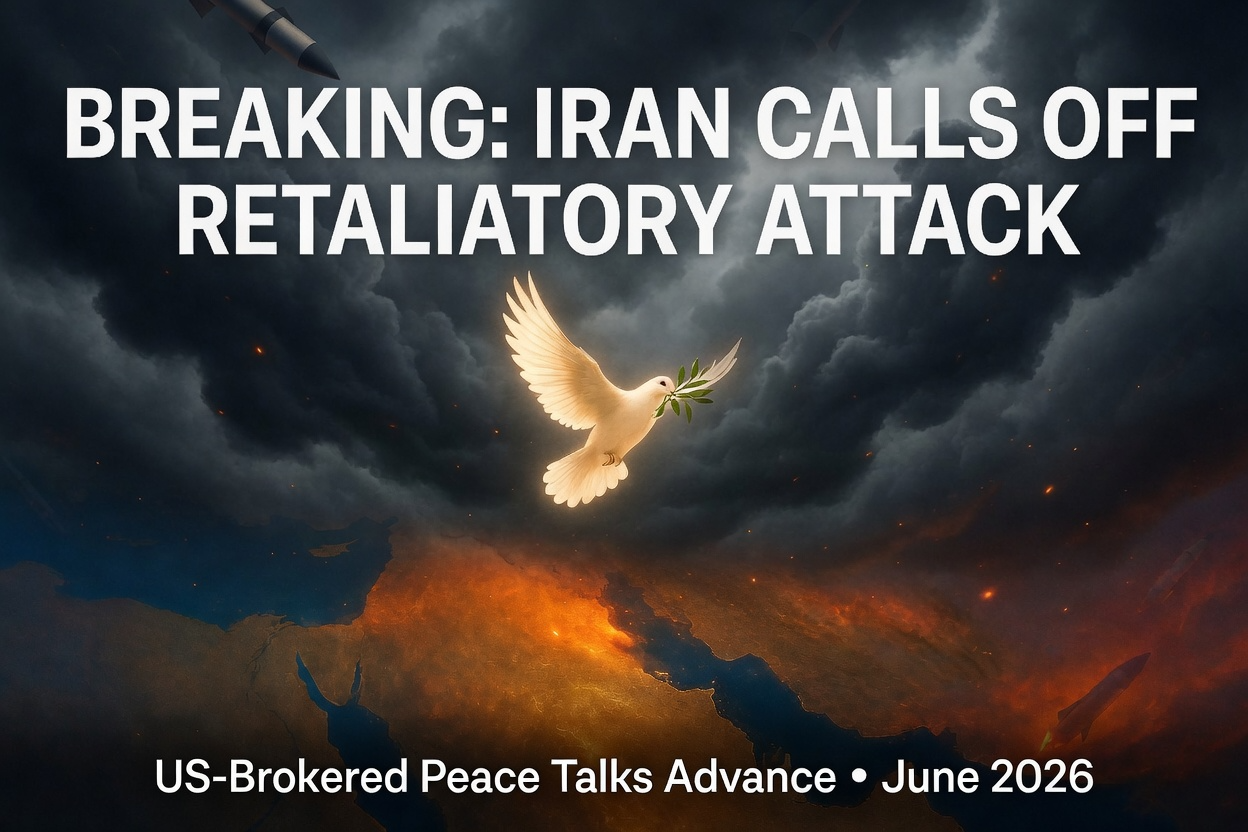
TEHRAN, June 15, 2026 — Iran has canceled a planned retaliatory strike against Israel, according to reports circulating on social media and diplomatic sources, in a significant de-escalation move tied to advancing US-Iran peace negotiations.
The announcement, highlighted by accounts monitoring BRICS and regional affairs, comes just days after the United States and Iran finalized key elements of a memorandum of understanding (MOU) aimed at ending months of conflict. Pakistan has played a central mediating role in the talks.
The decision follows a brief but intense exchange of strikes earlier in June 2026. Iran launched missiles at Israel in response to Israeli actions in Lebanon, prompting limited Israeli retaliation. Both sides subsequently signaled pauses in direct attacks, with Iran conditioning any sustained halt on an end to Israeli operations against its allies, including Hezbollah.
The broader 2026 Iran war erupted in late February after US-Israeli strikes on Iranian targets. It has involved disruptions to the Strait of Hormuz, proxy conflicts, and significant economic fallout across the region.
The MOU, described as a one-page framework with around 14 points, outlines:
- A formal end to active hostilities.
- Gradual reopening of the Strait of Hormuz.
- Initial steps toward curbing Iran’s nuclear program.
- Sanctions relief discussions.
- A 30- to 60-day window for further technical negotiations, potentially in Switzerland, Islamabad, or Geneva.
Pakistani officials, including Prime Minister Shehbaz Sharif, have confirmed progress, with some reports indicating a signing could occur soon. US President Donald Trump has publicly framed the agreement as a major diplomatic win.
Iran’s decision to stand down appears directly linked to this framework. Analysts note that a major Iranian strike could derail the fragile talks, especially given Israel’s exclusion from the direct US-Iran negotiations and ongoing concerns in Tel Aviv about Iranian nuclear ambitions and proxy support.
Social media reactions have been mixed. Some users credit the Trump administration and Pakistani mediation for averting escalation, while others express skepticism, pointing to Israel’s potential continued operations in Lebanon as a flashpoint.
Israeli Prime Minister Benjamin Netanyahu has previously vowed strong responses to any threats but has also acknowledged pauses in strikes. Iran has warned it reserves the right to retaliate if provocations continue.
While the cancellation reduces the immediate risk of a wider war, underlying issues remain unresolved, including Iran’s regional alliances, Israel’s security concerns, and full nuclear negotiations. Regional observers are watching closely to see whether the MOU holds and leads to a more comprehensive agreement.
For now, the region appears to be catching its breath amid cautious optimism.
About The Author