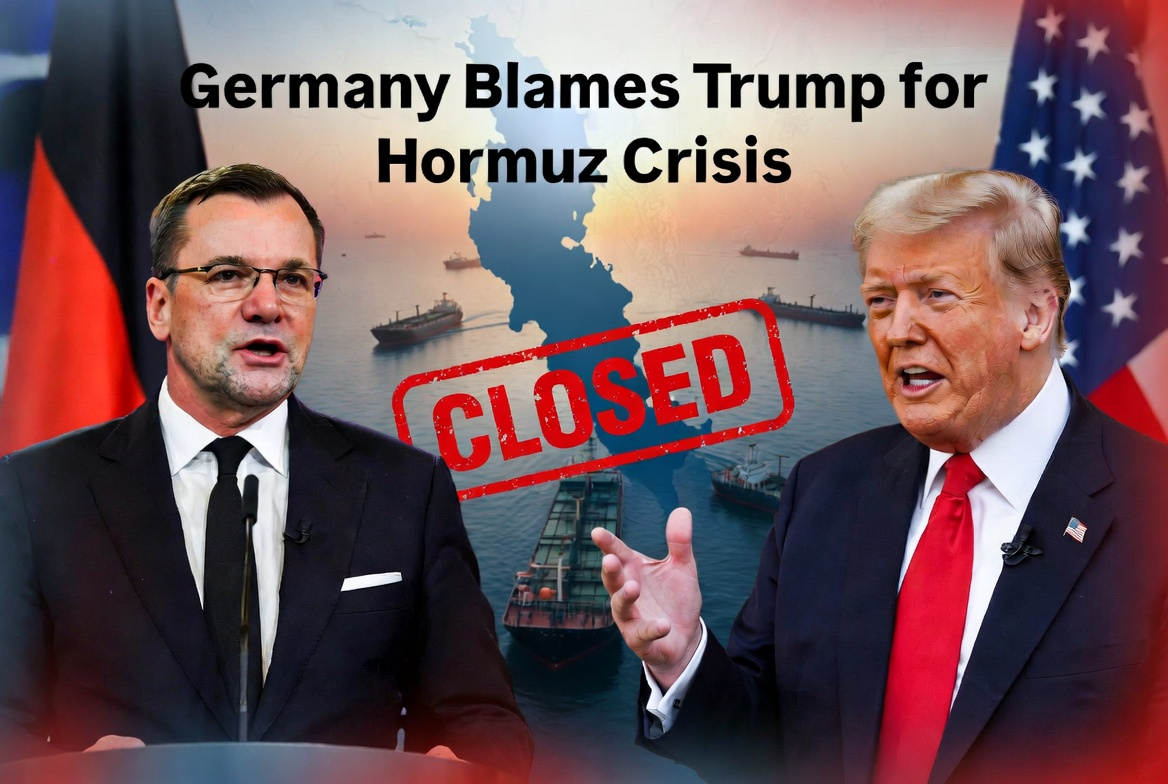
BERLIN, June 21, 2026 — German Defense Minister Boris Pistorius has publicly attributed the recent re-closure of the Strait of Hormuz to U.S. President Donald Trump, stating that the U.S. leader “pushed the cork in the bottleneck” of the vital waterway.
In comments to broadcaster ARD on Sunday, Pistorius said: “Ultimately, the cork in the bottleneck of the Strait of Hormuz was pushed in by Donald Trump, not by us, but we have an interest in getting it out again.” He emphasized that reopening safe passage is crucial for Europe’s energy supply and economic recovery, and any agreement would require support from Iran and Oman.
The remarks come as Iran announced the re-closure of the Strait on Saturday, citing alleged Israeli ceasefire violations in southern Lebanon and U.S. failures to uphold parts of a fragile U.S.-Iran memorandum of understanding signed earlier this week. The narrow chokepoint carries roughly 20% of global oil and LNG shipments.
U.S. officials, including Central Command, have disputed Iran’s claims, asserting that merchant traffic continues. President Trump has threatened to impose U.S. tolls on vessels transiting the strait if a final deal with Iran is not reached within 60 days, describing it as payment for “services rendered as the Guardian Angel to the countries of the Middle East.”
Pistorius also pushed back against earlier U.S. calls for European naval support to secure the waterway. Echoing statements from March, he questioned what a small number of European frigates could achieve that the powerful U.S. Navy could not, declaring, “This is not our war, we have not started it.”
Germany has signaled willingness to support diplomatic efforts and potentially participate in demining or peacekeeping under an international framework and Bundestag mandate once a stable ceasefire holds, but it has consistently ruled out direct military involvement in offensive operations.
The Strait of Hormuz has been repeatedly disrupted since the U.S.-Israeli military campaign against Iran began in late February 2026. Iran has used closure threats and actions as leverage amid ongoing tensions, including recent fighting in Lebanon that has strained the latest truce. U.S.-Iran talks are scheduled to resume in Switzerland on Sunday to flesh out details of the interim agreement.
Global energy markets have reacted with volatility to the latest developments, with concerns over supply disruptions driving price spikes.
Pistorius’s comments highlight growing transatlantic friction over the Middle East conflict, with European leaders prioritizing diplomacy and energy security while distancing themselves from what they view as primarily a U.S.-led confrontation.
About The Author