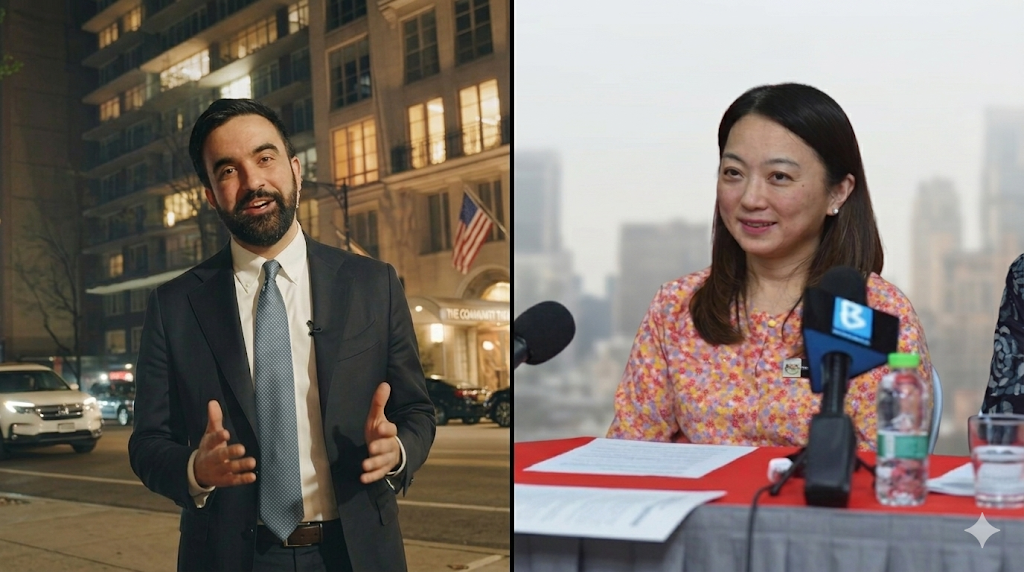
In an era of rapid urbanization and calls for more inclusive leadership, two politicians on opposite sides of the globe are drawing quiet but compelling comparisons. Zohran Kwame Mamdani, sworn in as New York City’s 112th mayor on January 1, 2026, and Hannah Yeoh Tseow Suan, appointed Minister in the Prime Minister’s Department in charge of Federal Territories on December 17, 2025, share more than just high-profile urban oversight roles. Both represent a new generation of progressive leaders who have broken historical barriers while focusing on livable cities, equitable development, and governance that serves everyday people.
Trailblazing Backgrounds and Barrier-Breaking Firsts

Mamdani, born in 1991 in Kampala, Uganda, to Indian parents (acclaimed filmmaker Mira Nair and anthropologist Mahmood Mamdani), became New York City’s first Muslim mayor, first Indian-American mayor, and first African-born mayor at age 34. A former rapper known as “Young Cardamom” and a democratic socialist elected from Queens’ 36th Assembly District, he surged to victory in the 2025 mayoral race on a platform centered on working-class affordability.

Yeoh, born in 1979 in Subang Jaya, Selangor, is a Malaysian Chinese lawyer and longtime Democratic Action Party (DAP) stalwart. At 46, she made history as the first ethnic Chinese politician to helm the Federal Territories portfolio — overseeing Kuala Lumpur, Putrajaya, and Labuan. She previously served as Malaysia’s youngest and first female Speaker of the Selangor State Legislative Assembly (2013–2018), Minister of Youth and Sports (2022–2025), and MP for Segambut in Kuala Lumpur.
Both rose through reformist parties — Mamdani with the Democratic Socialists of America, Yeoh with the multi-racial, center-left DAP — in countries where ethnic and religious identities often shape political narratives. Mamdani proudly embraces his immigrant-Muslim-South Asian heritage; Yeoh has repeatedly stated that “race or skin colour has never defined or limited my work,” emphasizing service across all communities regardless of background.
Overseeing the Heart of Global Cities
Their portfolios are remarkably aligned in scope. As NYC mayor, Mamdani governs the world’s financial capital and one of its most diverse metropolises, tackling housing costs, public transit, and economic inequality head-on. Early initiatives include plans for city-owned grocery stores to combat food deserts and affordability crises.
Yeoh, as Federal Territories Minister, is responsible for the strategic planning, physical development, and livability of Malaysia’s capital region and federal enclaves. Her stated priorities — improving basic government services, sustainable development, safeguarding green spaces and public parks, and tackling flash floods — mirror the day-to-day urban challenges faced by millions in Kuala Lumpur
In both cases, the roles demand balancing economic competitiveness with social equity in dense, multicultural urban hubs.
Shared Progressive Priorities: Livability, Sustainability, and Good Governance
Despite ideological labels — Mamdani as an outspoken democratic socialist, Yeoh as a DAP reformist — their policy instincts converge on practical improvements for ordinary residents:
- Affordability and Services: Mamdani pushes universal childcare, fare-free transit pilots, rent stabilization, and public housing expansion. Yeoh focuses on efficient public services and making federal territories “globally competitive centres for administration, commerce and finance” while keeping them livable.
- Sustainability and Climate Resilience: Both emphasize green spaces and climate-linked equity — Mamdani through decarbonization tied to social justice, Yeoh through park preservation and flood mitigation in flood-prone Kuala Lumpur.
- Inclusive Governance: Mamdani’s administration highlights economic justice for working New Yorkers; Yeoh has built a reputation for clean, transparent governance that transcends race and religion.
Their youth and outsider-to-insider trajectories also inject fresh energy. Mamdani, a two-and-a-half-term assemblyman turned mayor, and Yeoh, a 17-year elected representative moving between state, federal, and ministerial roles, embody a shift toward leaders who prioritize results over entrenched patronage.
Why the Comparison Matters
In polarized times, Mamdani and Yeoh illustrate a broader global trend: diverse, progressive voices rising to manage the world’s most complex cities. Voters in New York and Malaysians observing federal territories appear less focused on identity and more on competence and empathy — whether it’s delivering groceries or green lungs.
As one Malaysian commentator noted in the context of both leaders, citizens increasingly judge politicians by their ability to deliver, not by skin color or faith.
From the skyscrapers of Manhattan to the bustling streets of Kuala Lumpur, Zohran Mamdani and Hannah Yeoh are proving that effective urban leadership transcends borders. Their tenures — still in early days — will test whether these shared values can translate into tangible improvements for the millions they serve. In an interconnected world, the similarities between an East African-born New Yorker and a Malaysian Chinese trailblazer may just signal the future of city governance.
About The Author