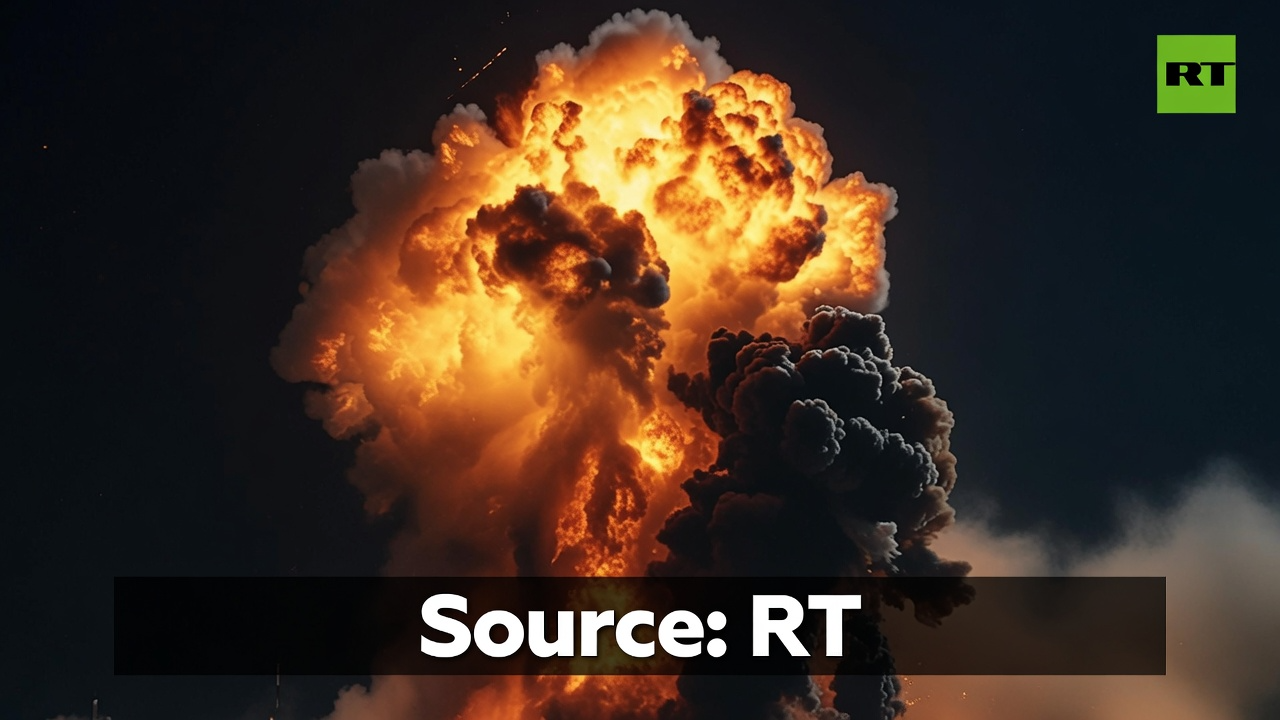
QESHM ISLAND, IRAN June 10, 2026 — Iranian state media reported at least six explosions on Qeshm Island in the strategic Strait of Hormuz on Tuesday night, with footage circulating online showing large fireballs and plumes of smoke lighting up the sky.
Russia Today (RT), citing Iran’s IRIB state broadcaster, described the blasts as part of a US strike ordered by President Donald Trump as a “proportional response” to recent Iranian actions. The video shared by RT shows shaky nighttime footage of multiple bright orange explosions, rising smoke, and secondary blasts consistent with impacts on ground targets.
This incident fits into a pattern of tit-for-tat exchanges in the ongoing 2026 US-Iran conflict. US Central Command (CENTCOM) has previously conducted self-defense strikes on Iranian radar and drone control sites in the Goruk area and on Qeshm Island following Iranian drone launches targeting maritime traffic in the Strait of Hormuz.
Background on the Conflict
- Strategic Importance: Qeshm Island, located at the entrance to the Strait of Hormuz, is a key area for Iranian military and commercial operations. The strait handles about 20% of global oil shipments, making it a flashpoint for regional tensions.
- Recent Escalations: Reports over the past weeks have included US strikes on Iranian coastal radar sites after drone incidents, Iranian responses involving attacks on US-linked targets, and exchanges near Bandar Abbas and other southern Iranian locations.
- Iranian Accounts: State media like Mehr and Tasnim have reported explosions, sometimes attributing them to air defenses, disposal of unexploded ordnance, or direct strikes, while activating defenses in nearby areas.
No immediate confirmation from US officials on Tuesday’s specific events, and casualty or damage details remain unverified. Iranian officials have condemned previous US actions and asserted the right to self-defense.
The developments come as diplomatic efforts for de-escalation and potential ceasefires continue in parallel with military posturing. Oil prices have fluctuated with each flare-up due to fears over shipping disruptions in the Gulf.
This is a rapidly evolving situation. Further details are expected from official US, Iranian, and regional sources.
About The Author