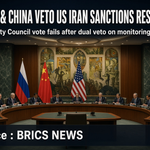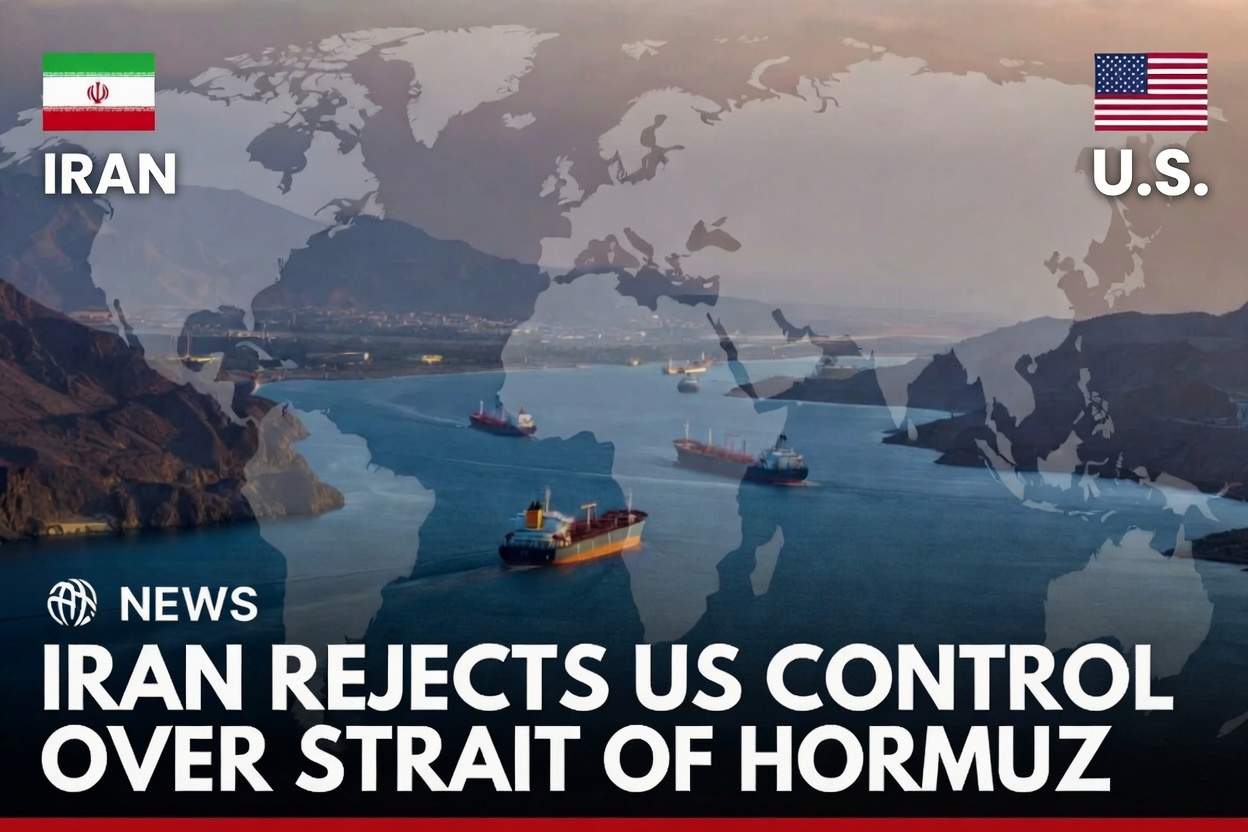
TEHRAN July 25, 2026 — Iran said on Saturday it will not allow the United States to exercise control over the Strait of Hormuz, the critical waterway through which roughly one-fifth of the world’s oil and gas supplies normally pass.
The statement, reported by BRICS News, comes amid months of military exchanges between the United States and Iran that began after U.S. and Israeli strikes on Iranian targets in late February 2026. A fragile interim memorandum of understanding reached in June aimed to reopen the strait and pause major fighting, but the agreement has repeatedly come under strain.
Iran has repeatedly asserted that the strait falls under its administration as a coastal state and has sought to require vessels to use Iranian-designated routes, coordinate with its forces, and eventually pay transit fees once a negotiation period ends. Tehran has warned that any U.S. interference in the management of the waterway would be met with a strong response and has described the strait as a “red line.”
The United States, for its part, maintains that the Strait of Hormuz is an international waterway open to free navigation. U.S. Central Command has stated that Iran does not control the strait and has reported facilitating the transit of hundreds of commercial vessels and hundreds of millions of barrels of oil since earlier this year. Washington has conducted airstrikes on Iranian military sites along the coast in response to attacks on shipping and has rejected Iranian claims of exclusive authority.
Recent developments include continued U.S. strikes, Iranian attacks or threats against vessels using non-approved routes, and diplomatic efforts involving Oman, a key mediator. On Saturday, reports also indicated that an agreement between Iran and Oman on the future of the strait could be reached soon. U.S. President Donald Trump has previously spoken of the possibility of American involvement in securing the waterway, comments that prompted sharp Iranian pushback.
The dispute has kept global energy markets on edge, with shipping disruptions and elevated risks of wider escalation in the Persian Gulf. Both sides have continued limited military actions even while signaling openness to further talks.
About The Author