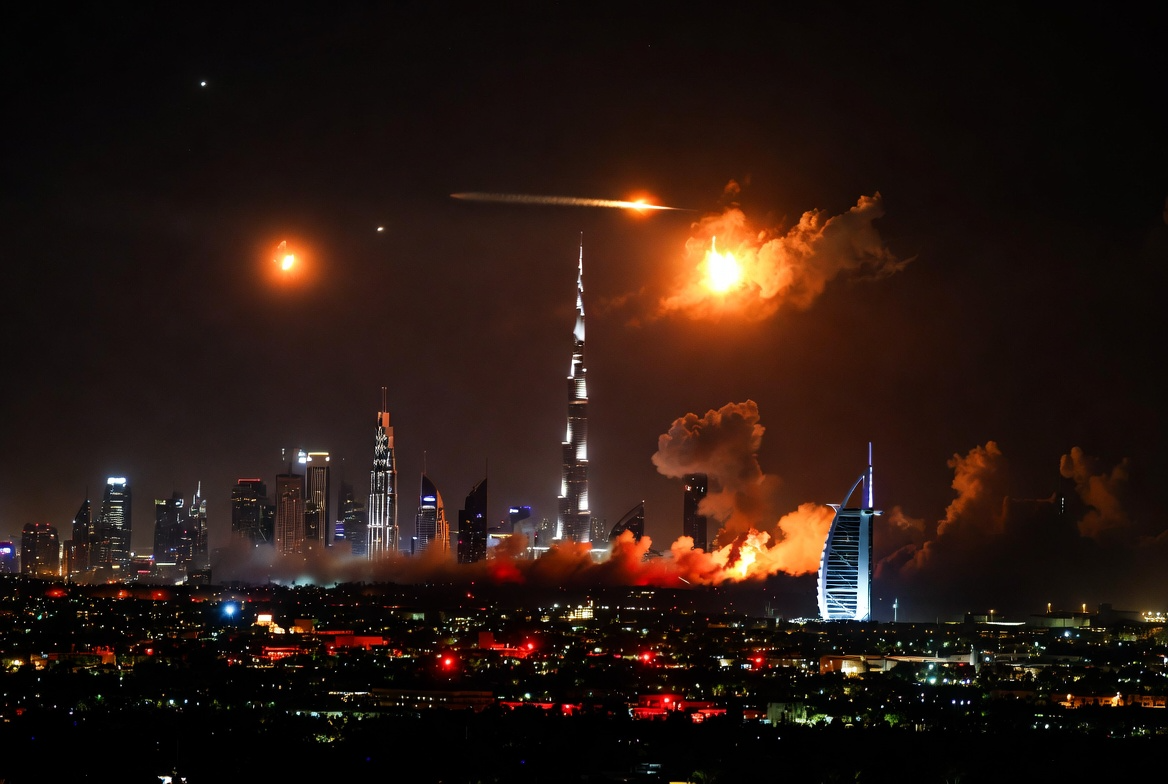
DUBAI, UAE June 3, 2026 — Loud explosions were heard across parts of Dubai late on Tuesday, June 2, as air defense systems intercepted incoming threats, according to multiple reports and social media accounts from the region.
The blasts follow a pattern of escalated Iranian attacks on U.S. allies in the Gulf, including the UAE, Kuwait, and Bahrain. Officials and residents described hearing thunderous booms, with emergency mobile alerts urging people to seek shelter due to potential missile threats.
No immediate reports of major casualties or significant ground damage in Dubai have been confirmed by UAE authorities as of early Wednesday. Air defenses, including advanced systems like Patriot and THAAD, appear to have neutralized most incoming projectiles, consistent with previous interceptions during the ongoing 2026 Iran conflict.
This incident aligns with Iran’s retaliatory strikes against Gulf states hosting U.S. military assets. Iran’s Islamic Revolutionary Guard Corps (IRGC) has claimed responsibility for recent waves targeting U.S. bases and infrastructure in response to American and allied actions, including strikes on Iranian territory such as Qeshm Island.
Earlier phases of the conflict saw Iranian missiles and drones striking UAE targets, including areas near Dubai International Airport, Palm Jumeirah, and landmarks like the Burj Al Arab, causing limited fires, injuries from debris, and flight disruptions. UAE forces have conducted retaliatory operations, and most incoming threats have been intercepted, though falling debris has occasionally caused civilian harm.
Dubai, a global financial and aviation hub, has faced repeated alerts this year, leading to temporary airspace restrictions and heightened security.
The Dubai Media Office and UAE authorities typically issue statements confirming successful interceptions and minimal impact. Residents are advised to follow official channels, avoid speculation, and stay indoors during alerts.
Oil prices showed volatility in after-hours trading amid the reports, reflecting broader concerns over Strait of Hormuz security and regional stability.
This latest flare-up underscores the fragile security situation in the Gulf, where proxy dynamics and direct confrontations continue to threaten civilian areas and critical infrastructure.
Updates will follow as more details emerge from official sources.
About The Author