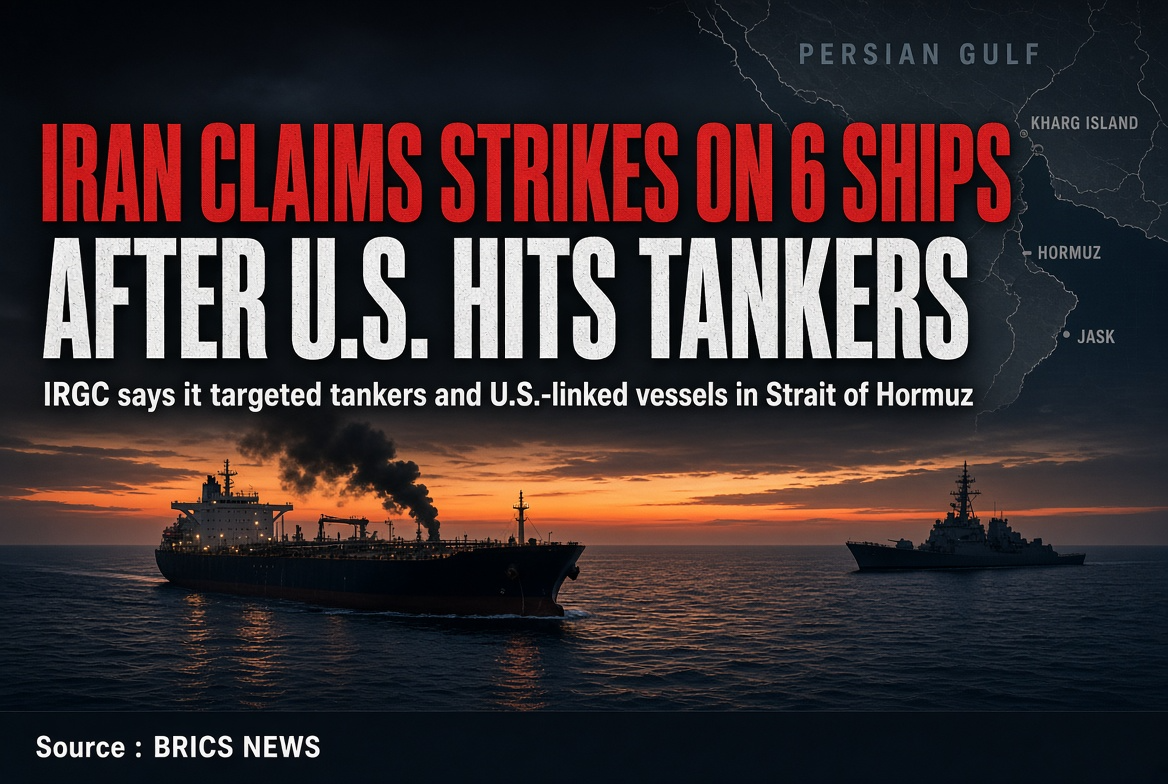
TEHRAN Sept 5, 2026 – U.S. Central Command said its forces disabled or destroyed three Iranian crude oil carriers after the Islamic Revolutionary Guard Corps launched ballistic missiles at two U.S. Navy warships—an aircraft carrier and a guided-missile destroyer. Both American ships evaded the missiles and no U.S. personnel were harmed, CENTCOM said.
The targeted tankers were identified as the M/T Downy off Kharg Island, Iran’s main oil export terminal; the M/T Stark 1 near Jask; and the unladen M/T Kylo (also known as Noxen) in the Gulf of Oman, which was struck after its crew was directed to abandon ship. CENTCOM described the vessels as part of a “multibillion-dollar shadow network” that funds the IRGC and its regional proxies.
“Let the message to the IRGC be clear: If you shoot at two of our ships, we will impose an even higher economic cost — taking out three of yours,” Adm. Brad Cooper, CENTCOM commander, said in a statement. “We will not hesitate to defend American forces, and if necessary, destroy Iran’s limited and exposed oil fleet.”
Hours later, Iran’s IRGC Navy claimed it had struck six ships in response. It said it targeted three oil tankers attempting to transit the Strait of Hormuz on what it called an “unauthorized” southern route under U.S. protection, plus three U.S.-affiliated vessels in other areas. Iranian state media quoted the IRGC warning other ships not to be “deceived” by the U.S. military or use unauthorized waterways, or they would be targeted.
Independent confirmation of damage from the Iranian-claimed strikes was not immediately available. U.S. officials have confirmed the earlier missile launches at their warships but have not publicly addressed specific hits on American naval vessels in this exchange.
The Strait of Hormuz, which normally carries about one-fifth of global oil and LNG trade, has been at the center of the conflict since fighting intensified earlier this year. Iran has asserted control over the waterway, mined sections of it, and insisted vessels use routes it designates or obtain its permission. The United States has maintained a naval presence to enforce a blockade on Iranian oil exports and protect freedom of navigation, including an alternative southern route closer to Oman.
Shipping volumes through the strait have been sharply reduced for months, with only a handful of vessels transiting on some days. Oil prices rose during the week on the renewed fighting, with Brent crude ending Friday near $96 a barrel amid concerns over further supply disruptions.
The Saturday clashes follow a pattern of tit-for-tat attacks on tankers, coastal defenses, and naval assets that has persisted despite earlier attempts at de-escalation. Both sides have framed their actions as defensive responses to the other’s aggression while seeking to impose economic costs.
About The Author