
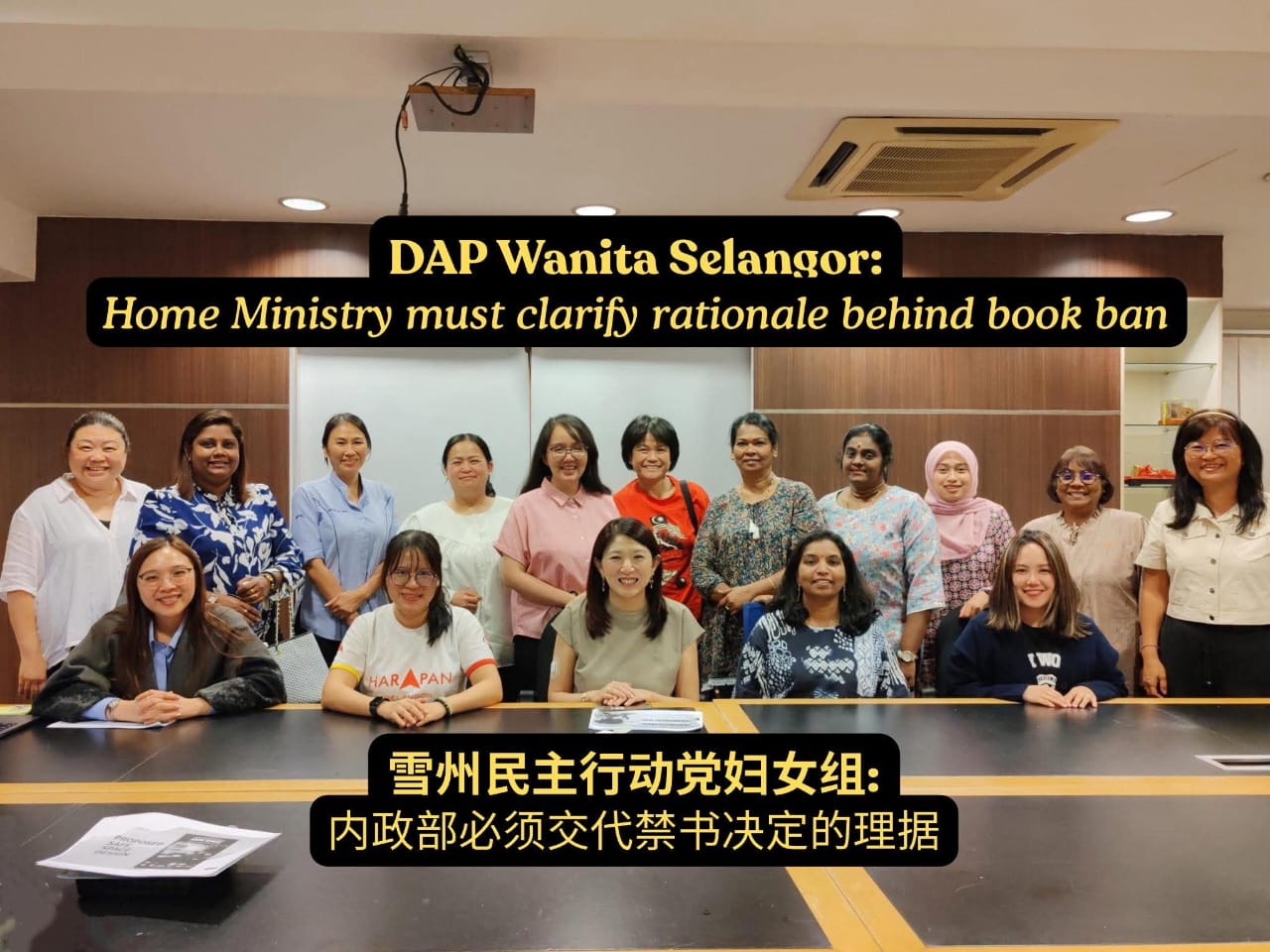
KUALA LUMPUR, April 18, 2026 — DAP Wanita Selangor has expressed deep concern and disappointment over the Home Ministry’s recent prohibition order on two non-fiction books that have been in public circulation for years, urging the ministry to provide a clear explanation for the decision.
The banned titles are Memoir Shamsiah Fakeh: Dari Awas ke Rejimen Ke-10 (first published in 2004 by Universiti Kebangsaan Malaysia and reprinted multiple times) and Komrad Asi (Rejimen 10): Dalam Denyut Nihilisme Sejarah (published in 2022). Both are memoirs related to members of the Communist Party of Malaya (CPM), specifically focusing on the 10th Regiment. The Home Ministry cited the presence of communist elements and ideologies as the reason for the ban, issued under the Printing Presses and Publications Act 1984.
In a strongly worded statement, DAP Wanita Selangor questioned the timing and rationale of the ban, particularly for Shamsiah Fakeh’s memoir, which has been available to readers for over two decades without any reported incidents of inciting extremism.
“The sudden ban on a book that has been in circulation for more than 20 years raises serious questions. Why now?” the group stated, highlighting concerns about freedom of speech and expression in Malaysia.
The women’s wing also expressed full solidarity with its Vice Chairperson, Jamaliah Jamaluddin, who is the granddaughter of the late Shamsiah Fakeh — a prominent Malay independence fighter, feminist, and CPM member. Jamaliah, who is also the Bandar Utama assemblyperson and a Selangor executive councillor, has publicly voiced her disappointment, describing the move as unfounded and warning that it could narrow intellectual discourse and historical understanding in the country.
“Public discourse and access to diverse perspectives are essential for a healthy democratic society. Malaysians today are informed and capable of critical engagement with ideas and historical narratives. Banning books at this stage risks implying that the rakyat cannot think, evaluate, or decide for themselves,” DAP Wanita Selangor added.
The group stressed that Malaysian citizens are mature enough to read, reflect, and form their own views without excessive gatekeeping, and warned against underestimating public intelligence.
It further called for transparent, consistent, and accountable guidelines on book bans, arguing that arbitrary decisions could erode public trust in institutions — especially as Malaysia seeks to strengthen democratic values and institutional integrity.
“Book bans cannot be arbitrary. There must be clear, fair, and transparent criteria applied with accountability,” the statement read.
DAP Wanita Selangor concluded by reaffirming its commitment to a Malaysia where ideas are debated openly rather than suppressed, and where citizens are trusted rather than restricted.
“Democracy thrives when voices are heard, not silenced,” the group quoted.
The ban, revealed by publisher Gerakbudaya on April 15, 2026, has drawn criticism from various quarters, including civil society groups and Pakatan Harapan politicians, who view it as a potential setback to intellectual freedom and historical discourse. The Home Ministry has maintained that the action aims to protect public order by curbing communist ideologies.
This development comes amid ongoing debates about censorship and the balance between national security and freedom of expression in Malaysia.
About The Author