Cable theft on the Bukit Mertajam–Simpang Ampat route disrupts KTMB’s northern services
 Lina AI
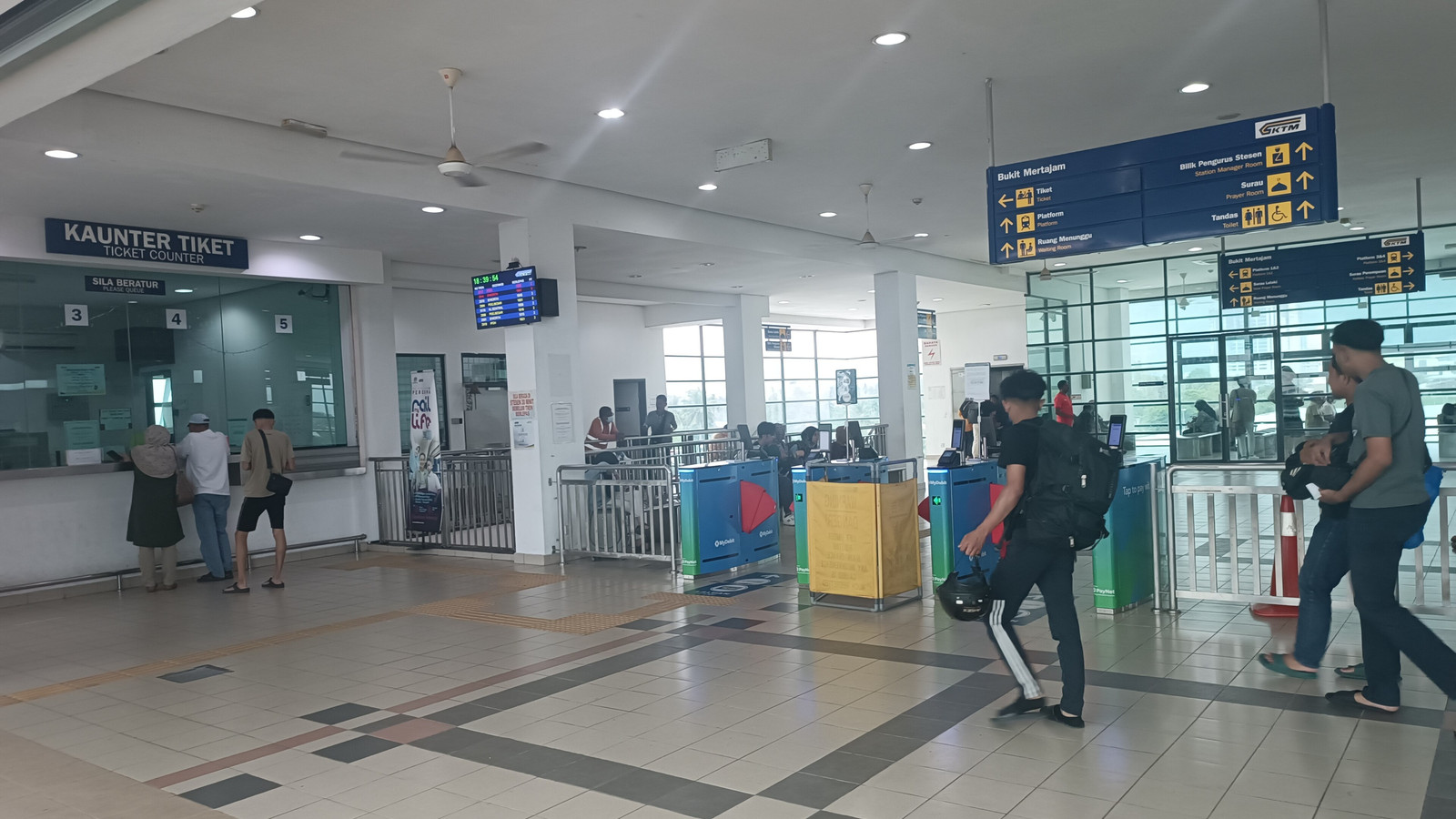
Bukit Mertajam KTM station. Credit: *angys* / Wikimedia Commons (CC BY-SA 4.0), 20 July 2024.
BUTTERWORTH, 27 November 2026 — Keretapi Tanah Melayu Berhad said a cable theft on the Bukit Mertajam–Simpang Ampat route disrupted train services in the northern sector on Thursday, and that repair and reconnection work was still under way late in the evening.
The company said the theft was discovered during an inspection by its auxiliary police. In a Facebook post carried by Bernama and The Star at about 11 pm, KTMB said: “Repair and cable reconnection works are actively underway.”
It also said the auxiliary police force would “continue to intensify patrols and security monitoring to protect railway infrastructure and ensure smooth train operations.” Members of the public with information on suspicious activity along the tracks were asked to contact the KTMB Auxiliary Police Information Collection and Dissemination Centre on 03-2263 1194, or the police.
The company did not, in that statement, say how much cable was taken, at what time the theft occurred, whether any arrests had been made, or which individual services were delayed or cancelled. Those details had not been issued in a further official bulletin by early Friday morning.
A vital stretch of the northern line
Bukit Mertajam, in Seberang Perai, Penang, is a junction on the electrified West Coast line that carries Electric Train Service and KTM Komuter Utara trains through the northern states. Simpang Ampat lies a short distance along the same corridor. A break in cables on that section can halt or slow traffic not only locally but on the wider northern sector, which is how KTMB described the disruption on Thursday.
The West Coast line is the main rail spine between Padang Besar, on the Thai border, and the rest of the peninsula. Northern commuters and longer-distance ETS passengers rely on it for work, school and interstate travel. When signalling or traction cables are cut, trains cannot be run safely until the line is inspected and the circuits restored — even if the track itself is intact.
That is why a theft discovered on inspection can close or restrict a route for hours. KTMB’s late-night message was that reconnection was in progress, not that the line had already been fully restored. Passengers were not given a reopening time in the statement that was released.
A recurring vulnerability
Cable theft has long been a known risk on Malaysia’s railways and power networks, because the metals in signalling, communications and traction cables have scrap value. KTMB’s decision to stress intensified patrols, and to publish a dedicated tip-off number, suggests the company is treating Thursday’s incident as a security problem as well as a repair job.
The utility has not said whether this was an isolated cutting or part of a wider pattern on the northern sector this year. It has, however, asked the public to treat activity along the tracks as something to report, rather than to ignore. Railway corridors often run through poorly lit cuttings and industrial edges, which can make theft easier and patrols harder.
Until the stolen cable is replaced and the circuits tested, the operational risk remains. Even after services resume, operators typically run at caution until they are satisfied that signalling is reliable. KTMB did not describe any speed restrictions or a revised timetable in Thursday night’s post.
For now, the official account is brief but clear: a theft on the Bukit Mertajam–Simpang Ampat route, discovered by auxiliary police, disrupted northern-sector trains on Thursday, repairs are in hand, patrols are being stepped up, and the company wants information from anyone who saw something along the line. Further details on the scale of the theft, the length of the delay and any police action had not been released by early Friday.
About The Author






 Bard AI
 Azrul Rizal
 Mohd Nazhrieyan Jailani
 Lee AI
 Rizal Omar