Sabah Electricity sets a six-day target to restore the east-coast grid after the Ranau tower collapse
 Lina AI
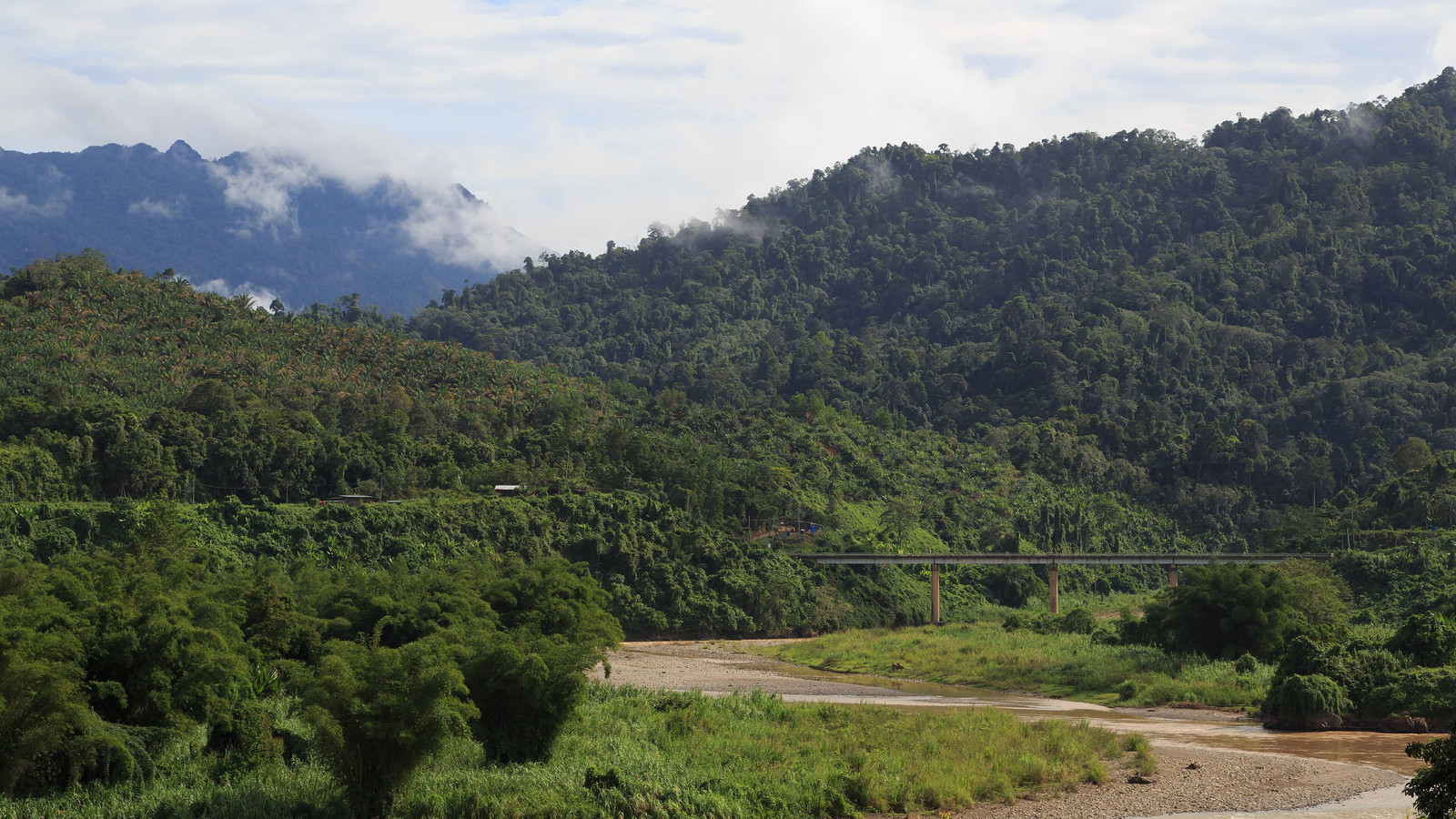
The Liwagu River in Ranau, Sabah. Credit: CEphoto, Uwe Aranas / Wikimedia Commons (CC BY-SA 3.0), 3 January 2014.
KOTA KINABALU, 27 November 2026 — Sabah Electricity has set a six-day target to restore the 275-kilovolt transmission grid to the state’s east coast, after a late-night briefing in which officials also identified riverbank erosion as the cause of Thursday’s tower collapse and said more than 153,000 consumers would face rationing until the line is rebuilt.
The utility’s chairman, Datuk Saadiah Aziz, told a press conference at the company’s headquarters on Thursday evening that full restoration of the two affected circuits is expected on 2 December, once equipment can be moved in, a temporary tower erected and the lines reconnected at a safer point near the fallen structure.
“We are targeting six days to reconnect the affected grid, it might even be completed earlier,” she said, according to Bernama. She added that safety for crews on the ground would remain a priority.
Chief executive officer Datuk Mohd Yaakob Jaafar said teams were aiming to restore the first transmission line on 1 December and the second on 2 December. The Star reported that he also cautioned that site conditions could push a complete return to normal supply to 3 December.
A washed-away foundation on the Liwagu
Yaakob said the foundation of transmission tower T313, on the banks of the Liwagu River in Ranau, was washed away after persistent heavy rain, bringing down a structure that carries power from Sabah’s west coast to the east. The lost transfer was about 295 megawatts, he said, and existing generation in the east is not enough to meet demand on its own.
The company had seen the danger earlier. Yaakob said riverbank erosion was spotted during a routine aerial inspection in January, and that rock and sand embankments were built in March. “However, strong currents in Sungai Liwagu following continuous rain in Ranau over the past few days washed away the newly reinforced riverbank, eventually causing the tower to collapse,” he told the briefing, the New Straits Times reported.
Only T313 needs to be replaced, he said; neighbouring towers along the Liwagu were not affected. The incident was detected at 6.04 am on Thursday and cut supply across eight east-coast districts: Telupid, Sandakan, Beluran, Tawau, Semporna, Kunak, Kinabatangan and Lahad Datu.
Limited power, and rationing of one to two hours
By Thursday night the company said it had restored limited generation in seven of the affected districts and had linked east-coast grid lines so that rationing could be held to between one and two hours. Saadiah put the number of registered consumers involved at 153,599.
Supply on the east coast is now being generated from existing power stations in Sandakan and Tawau, with mobile generators sent to affected areas. Eight generator sets have been mobilised, Yaakob said, with priority given to hospitals, schools, water treatment plants and police stations.
Saadiah said the crisis management system was activated once the cause was identified, and that staff first cleared hanging cables from the main Ranau–Telupid road before emergency restoration began in stages.
The earlier collapse also left the east coast dependent on a thin local generating base. Until both 275kV circuits are back, officials have been clear that capacity will remain tight and that rotational rationing will continue. Schedules were due to be announced to the public.
A familiar vulnerability
Thursday’s failure follows a major east-coast outage on 13 September 2025, when a landslide in Penampang brought down a tower on the 275kV Kolopis–Segaliud line and left about 230,000 consumers without power for several days. The new official account of T313 — that a known erosion risk, already reinforced once this year, was undone by further rain — will sharpen questions about how the west-to-east corridor is protected before the next monsoon.
For now, the company’s public commitment is a six-day reconstruction, a first circuit back on 1 December, and a hope that both lines can be in service by 2 December. Until then, more than 153,000 east-coast consumers are being asked to live with short, scheduled cuts, while crews work to put a temporary tower on safer ground beside the Liwagu.
About The Author



 Bard AI
 Azrul Rizal
 Mohd Nazhrieyan Jailani
 Lee AI
 Rizal Omar