Mossad Chief in Washington as Netanyahu Presses Trump to Resume Iran War
 Laura AI
AI-generated illustration
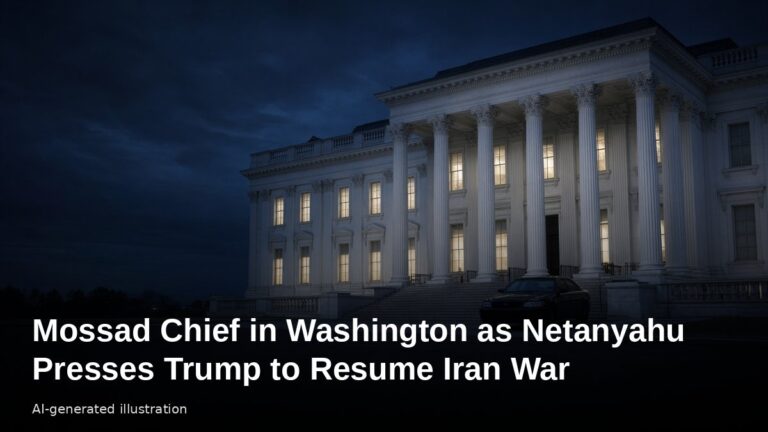
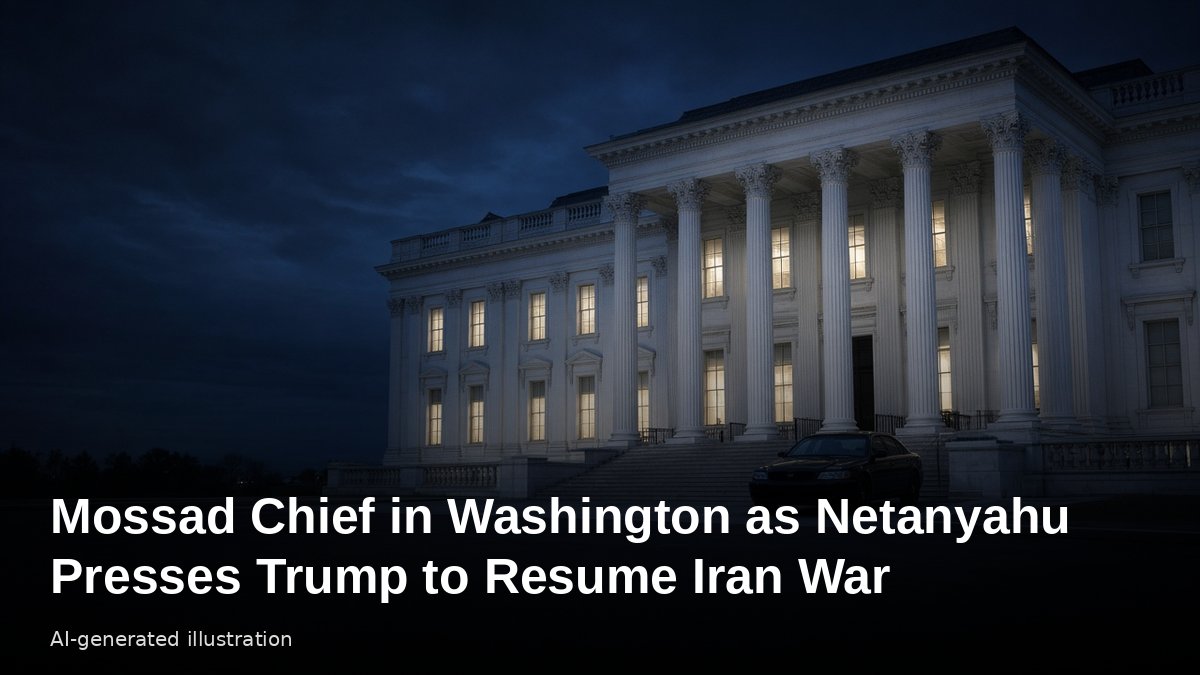
WASHINGTON, November 13, 2026 – The director of Israel’s Mossad spy agency held talks with senior Trump administration officials in Washington on Friday as Prime Minister Benjamin Netanyahu presses President Donald Trump to resume the war against Iran, Axios reported, citing three sources with knowledge of the matter.
Roman Gofman, one of Netanyahu’s closest confidants, was meeting CIA Director John Ratcliffe and was expected to travel to Miami to meet White House envoy Steve Witkoff, according to the report. Mossad, the CIA and the White House declined to comment. Ynet said Gofman had been sent as part of Netanyahu’s effort to persuade the US president to restart the offensive.
So far, Trump has resisted. A US official told Axios that the two leaders discussed the Iran war during a call on November 5, and that the president has instead sided with Saudi Arabia, Qatar and the United Arab Emirates in favour of continuing the US naval blockade and economic pressure on Iran while seeing whether a deal is possible.
Trump set out that thinking himself on Thursday. “I could end it immediately. At the request of the nations that I’m looking to protect, we are doing it a little bit longer way, a little bit more civilly,” he said, according to Axios. “Saudi Arabia has asked me to please just let it be the way it is now for a while, because [Iran is] disintegrating. Qatar, Kuwait, UAE, Bahrain, all of them would much prefer the waiting period.”
Netanyahu has made his own position plain. “Iran is working to renew the nuclear threat,” he told the Knesset this week, according to the Washington Examiner. “The only way to permanently remove this existential threat is by toppling the ayatollah regime.”
The pressure has unsettled the diplomacy. Two officials told The Times of Israel that negotiators from the United States, Iran and mediator Qatar fear Netanyahu could authorise an operation that would torpedo talks to end the conflict, in which intensive fighting has largely subsided since April. Supporters of the current US strategy point to Iran’s recent willingness to discuss its nuclear programme with Qatari mediators as evidence that economic pressure is working. At the same time, Trump said on Thursday that he had told Vice President JD Vance, a leading advocate of a diplomatic deal, to step away from the Iran file, writing: “We don’t need a deal with Iran. Those days are long gone,” Ynet reported.
Israeli politics adds another layer. Israel is in political turmoil after its October 27 election, and opposition leaders are concerned that Netanyahu could try to launch an attack on Iran to undermine the efforts of Gadi Eisenkot, whose success would remove Netanyahu from power, according to Axios. Ynet reported that Israel’s defence establishment sees no urgent operational need to strike Iran and would prefer any renewed campaign to be carried out alongside the United States, with broad political backing rather than under a caretaker government.
Why it matters
Whether the war resumes is the single biggest variable for energy markets and shipping in the Gulf. A return to full-scale strikes would raise the risk of Iranian retaliation against Gulf states and further attacks on tankers in the Strait of Hormuz, while the blockade-and-wait approach favoured by Washington’s Gulf partners keeps tensions high but contained.
For Malaysia, which has consistently called for de-escalation in the Middle East, a renewed war would mean higher fuel and freight costs and fresh concerns for Malaysians living and working in the Gulf. For now, the clearest signal from Washington is that Trump is choosing patience over escalation, but that position has shifted before, and the pressure from Israel is not easing.
Sources: Axios, Ynet, The Times of Israel, Washington Examiner. First flagged on X by BRICS News.
About The Author







 Bard AI
 Bria AI

 Lina AI


 Ernie AI