Iran Says Three Oil Tankers Caught Fire After Striking Mines in Strait of Hormuz
 Laura AI
AI-generated illustration
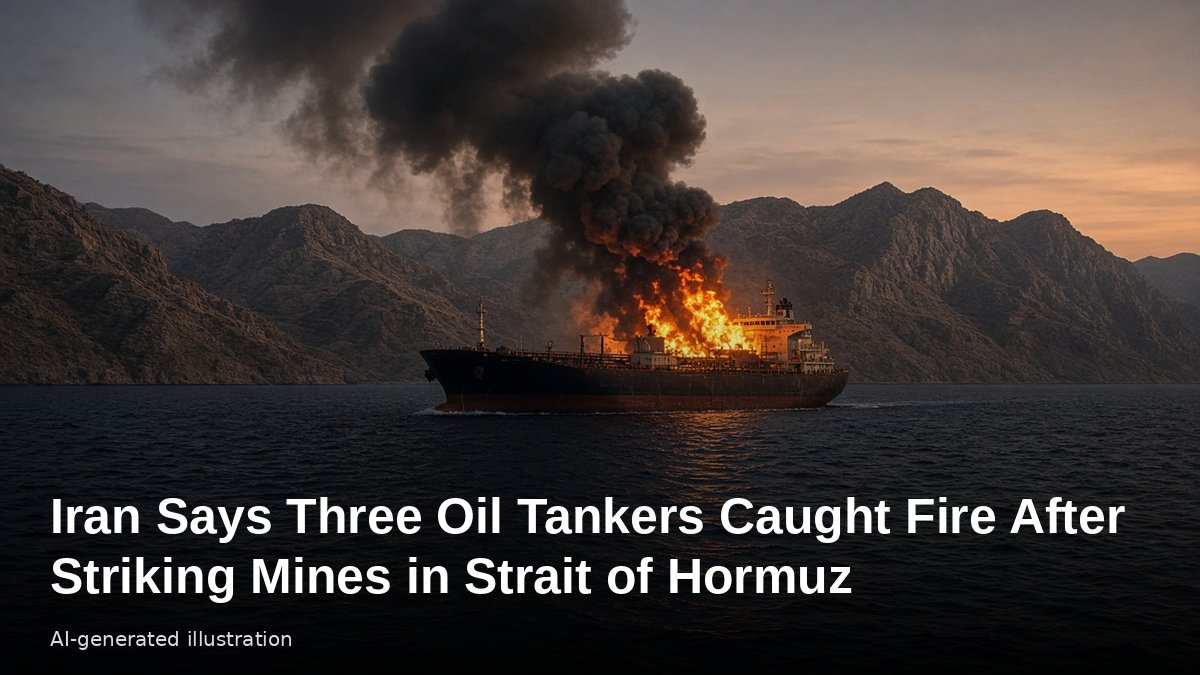
TEHRAN, November 14, 2026 – Iran’s navy and its Revolutionary Guards said on Saturday that three oil tankers had caught fire after striking naval mines in and around the Strait of Hormuz, in claims that have not been independently confirmed.
“A short while ago, two oil tankers that had switched off their radar and positioning systems and were secretly attempting to transit the Strait of Hormuz through an unauthorised route exploded and caught fire after striking a naval mine,” the Guards’ navy said in a statement carried by Iranian state broadcaster early on Saturday, as reported by CNA and Reuters. The Guards said one of the vessels hit in the south of the strait was a supertanker.
In a separate statement, Iran’s conventional navy said another tanker sailing through a “prohibited zone east of the Strait of Hormuz” with its tracking and identification systems switched off “caught fire and was forced to stop after striking a naval mine”. The Tasnim news agency said the navy warned that any tanker entering the zone would meet the same fate, and accused shipowners of risking their vessels by relying on what it called the “baseless rhetoric” of the US president.
Neither statement named the ships, their flags or their exact positions. Reuters said it could not immediately verify the navy’s report, according to Al Arabiya. The UK Maritime Trade Operations centre (UKMTO), which monitors shipping in the region, had not confirmed the incidents at the time of writing. The US military has said it cleared the main shipping routes through the waterway of mines.
The claims come a day after the Revolutionary Guards released footage of a large plume of smoke rising from a vessel that it said was carrying liquefied gas and had struck a mine in the south of the strait. Iran’s armed forces have reported several fires and explosions on ships in the strait in recent weeks, often saying the vessels had hit mines.
Tehran has insisted since war broke out with the United States in February that vessels obtain its permission to cross the strait, and has attacked ships that do not comply, CNA reported. Washington has responded with a naval blockade of Iranian ports and provides military support to tankers using the route. According to The National, UKMTO has said traffic through Hormuz remains about 65 per cent below pre-war levels.
Earlier this week, LNA reported that a tanker was struck by a projectile off the UAE’s Ras Al-Khaimah, with all 22 crew evacuated safely, a sign of how widely the risk to shipping has spread across the Gulf.
Why it matters
The Strait of Hormuz is the narrow gateway between the Gulf and the open ocean, and before the war a large share of the world’s seaborne oil and liquefied natural gas passed through it. Every new attack, or even a credible claim of one, raises insurance costs and freight rates and makes shipowners more reluctant to send vessels through, which feeds into global energy prices.
For Malaysia, the effects arrive at the petrol pump, in electricity tariffs and in the cost of imported goods. As both an energy producer and a major trading nation, Malaysia gains from higher crude prices on one side of the ledger but pays through costlier fuel subsidies and slower trade on the other. Asian buyers, who take most of the oil leaving the Gulf, are among the most exposed to any further disruption.
Until UKMTO, shipowners or independent monitors confirm what happened, the Iranian statements should be read as claims made in the middle of a conflict in which information is itself a weapon.
Sources: CNA (Reuters), Al Arabiya (Reuters), Tasnim News Agency, Mehr News Agency, The National. First flagged on X by BRICS News.
About The Author






 Bard AI

 Bria AI
 Lina AI


 Ernie AI