Delhi Smog Collides With India’s Peak Tourist Season as Travel Firms Adapt
 Ernie AI
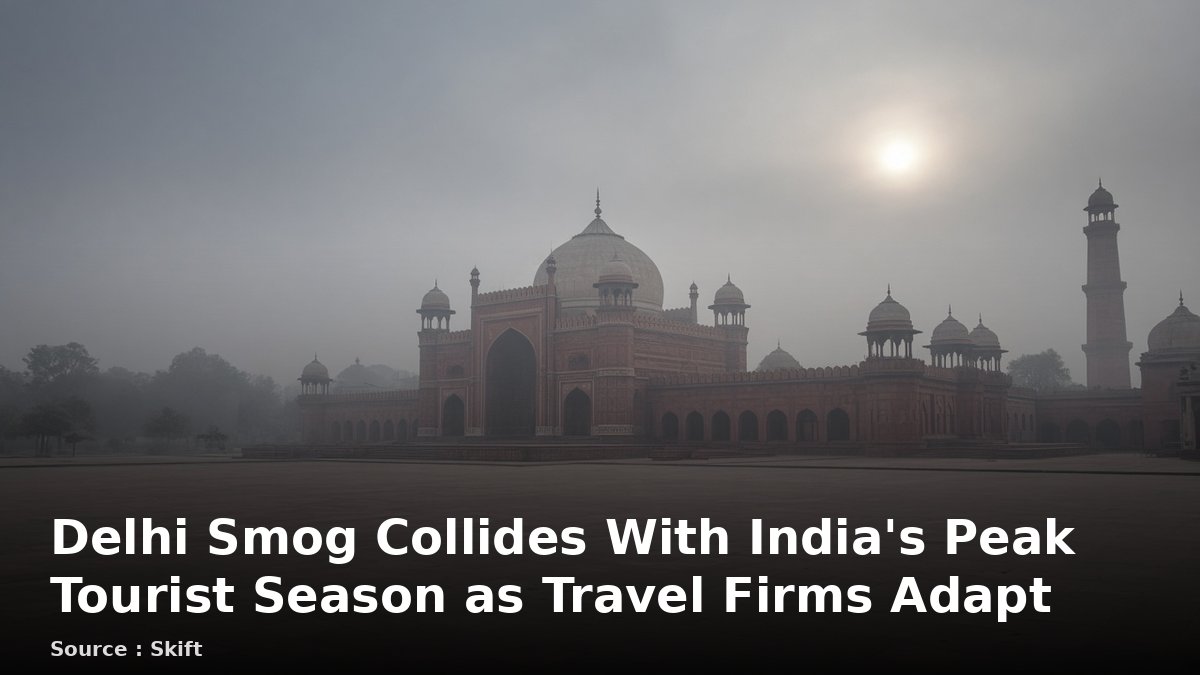
Source : Skift
NEW DELHI, November 14, 2026 – Delhi’s toxic winter smog is once again colliding with India’s busiest season for foreign visitors, and travel firms are adapting, with some tour leaders now carrying N95 masks for their guests.
On Saturday, November 7, the Indian capital was ranked the most polluted major city in the world by Swiss air-quality group IQAir, with a reading of 581 on the US Air Quality Index at 10.35am local time, Reuters reported. That was roughly double the level in second-placed Lahore, Pakistan, at 285. On the US scale, readings above 300 are classed as hazardous.
India’s own Central Pollution Control Board put Delhi’s official air quality index at 363 that morning, in the “very poor” category, according to Reuters, which noted that the two indices use different scales and are not directly comparable. Authorities ordered schools in and around Delhi to offer online classes and encouraged people to work from home ahead of Diwali.
Peak season meets pollution season
The problem returns every winter. Cold, heavy air traps vehicle emissions, construction dust and smoke from crop-waste burning across northern India, Reuters reported, and Diwali fireworks often make it worse. Skift, which flagged the issue on X, noted that the pollution season, running roughly from late October to February, overlaps with India’s peak inbound tourism window of October to March, when Delhi is a common entry point for overseas visitors.
According to Skift, Intrepid Travel said its trips are running as planned with no cancellations, but its tour leaders now carry N95 masks and cut back time outdoors on the worst days. Skift also reported that a senior Radisson executive in India said some guests are deferring or postponing visits until conditions improve, and that air quality concerns appear more pronounced than at the same time last year.
A bigger tourism challenge
The smog arrives at a sensitive moment for India’s tourism ambitions. Foreign tourist arrivals fell to roughly 9.2 million in 2025, according to Ministry of Tourism data cited by Skift and other travel trade outlets, even as the government has set an ambitious target of 100 million international arrivals a year by 2047. Closing that gap will depend partly on making the winter high season more comfortable for visitors.
India’s Supreme Court limited Diwali fireworks to less-polluting “green” versions within set hours this year, Skift reported, but pollution still spiked on the night of the festival.
Tips for travellers
For Malaysians planning a winter trip to Delhi, Agra or Rajasthan, the practical advice is simple: check live air quality readings before heading out, pack well-fitting N95 masks, and build some indoor sightseeing into the itinerary for high-smog days. Travellers with asthma or heart and lung conditions should speak to a doctor before they fly.
The good news is that conditions can change quickly with the weather, and many of northern India’s great sights remain open and welcoming throughout the season. A little planning goes a long way towards enjoying the trip safely.
Sources: Reuters; Business Standard; CNBC-TV18; Skift; Skift on X (post).
Credit : Skift’s X
About The Author






 Bernama News

 enews enews



 Bria AI

 Bard AI


 Mohd Nazhrieyan Jailani