By Professor Dato Dr Ahmad Ibrahim
An article in Foresight analyzes the governance crisis facing the World Trade Organization, WTO. The paper argues that the WTO’s legitimacy crisis stems fundamentally from a mismatch between its governance structures and the shifting power dynamics of the world economy, particularly the rise of emerging economies like China and India. Using four scenarios, the author concludes that pressure for profound governance reform will intensify as new forms of globalization—including the rise of Global Value Chains and the proliferation of Regional Trade Agreements—reshape international commerce.
By 2014, the WTO found itself in a prolonged state of institutional deadlock. The Doha Round, launched in 2001 with an ambitious development-focused agenda, had failed to reach conclusion despite more than a decade of negotiations. The 2013 Bali Ministerial Conference produced the Trade Facilitation Agreement—described as “low hanging fruit” to reinvigorate the organization—but even this modest achievement collapsed when India withdrew its support over food security concerns.
Cling, the author, identifies the core problem as a “discrepancy between the governance of world trade and the new power relationship prevailing in the world economy”. The WTO’s consensus-based decision-making and “single undertaking” approach—where “nothing is agreed until everything is agreed”—functioned effectively when a handful of developed countries could drive negotiations. However, the rapid rise of emerging powers fundamentally altered this dynamic. Consensus can no longer be imposed by a few key powers, but requires endorsement from diverse interest groups. Emerging economies now had both the economic weight and the negotiating leverage to block outcomes they viewed as unfavourable, changing the calculus of multilateral bargaining.
The paper emphasizes several structural transformations that were already reshaping the geography and composition of international trade. The rise of South-South trade represented a fundamental shift. Developing countries were not only increasing their share of global trade but were also trading more intensively among themselves. This diversification into more skill-intensive activities was closely tied to the emergence of Global Value Chains (GVCs), where production processes are fragmented across multiple countries. Regional Trade Agreements proliferated as an alternative to stalled multilateral negotiations. Mega-regionals like the Trans-Pacific Partnership and the Transatlantic Trade and Investment Partnership were under negotiation. The question was whether regional integration would fragment the global trading system or eventually reinvigorate multilateralism.
Technological progress was identified as perhaps the most powerful driver of future trade developments. Continuing advances in logistics, communications, and supply chain management were steadily reducing trade costs, enabling new forms of international specialization.
Population dynamics and human capital development also emerged as critical variables. For some countries, up-skilling would be crucial for maintaining their competitiveness; for others, labor shortages might need to be addressed through migration. Capital mobility and further reductions in trade costs were identified as key enablers for diversification into dynamic sectors.
The paper presented four distinct scenarios, each corresponding to a different institutional configuration for global trade governance through 2030. Notably, the research suggested that current trends toward regionalization might eventually be reversed, with multilateral relationships potentially regaining importance. However, this outcome was conditional on the WTO adapting its structures to accommodate greater diversity in members’ circumstances and priorities.
Trade cost reduction targets emerged as a pragmatic alternative to comprehensive negotiating rounds. The APEC experience with a 10% trade cost reduction target over ten years demonstrated that measurable, time-bound goals could drive meaningful progress without requiring complex issue-linkage. A G20 commitment to trade cost reduction could complement WTO processes while bypassing the single undertaking’s constraints.
The paper’s core argument is that the WTO cannot survive in its current form. The organization faces a fundamental choice between adaptation and irrelevance. As one observer bluntly stated in 2014, “Without a serious shakeup, the WTO’s future looks like that of the League of Nations”.
The required reforms go beyond procedural adjustments. They require rethinking the relationship between multilateral, plurilateral, and regional approaches to trade governance. Yet the paper also rejects pessimism. The continuing expansion of global trade, driven by technological change and economic fundamentals, creates ongoing demand for governance. The question is not whether trade will be governed, but which institutions will provide that governance. For the WTO to remain central, it must adapt to a multipolar world where emerging economies have both voice and veto power.
Cling’s analysis captures a pivotal moment in the evolution of global trade governance. The WTO’s crisis of legitimacy was not a temporary setback but a structural consequence of shifting power balances in the world economy. The rise of emerging economies, the proliferation of regional agreements, and the transformation of trade itself through Global Value Chains all pointed toward the need for fundamental reform.
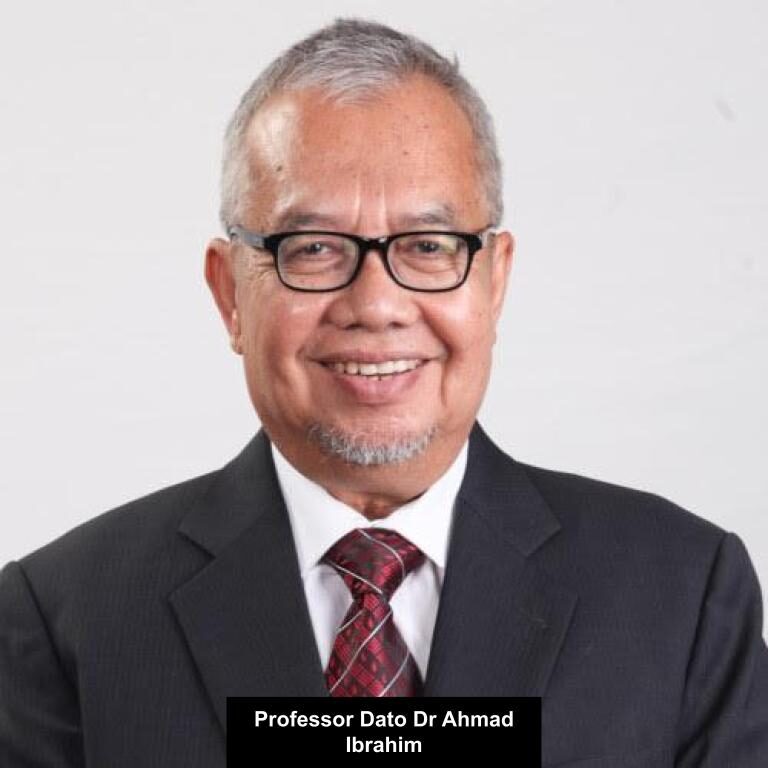
The author is affiliated with the Tan Sri Omar Centre for STI Policy Studies at UCSI University and is an Adjunct Professor at the Ungku Aziz Centre for Development Studies, Universiti Malaya.
About The Author