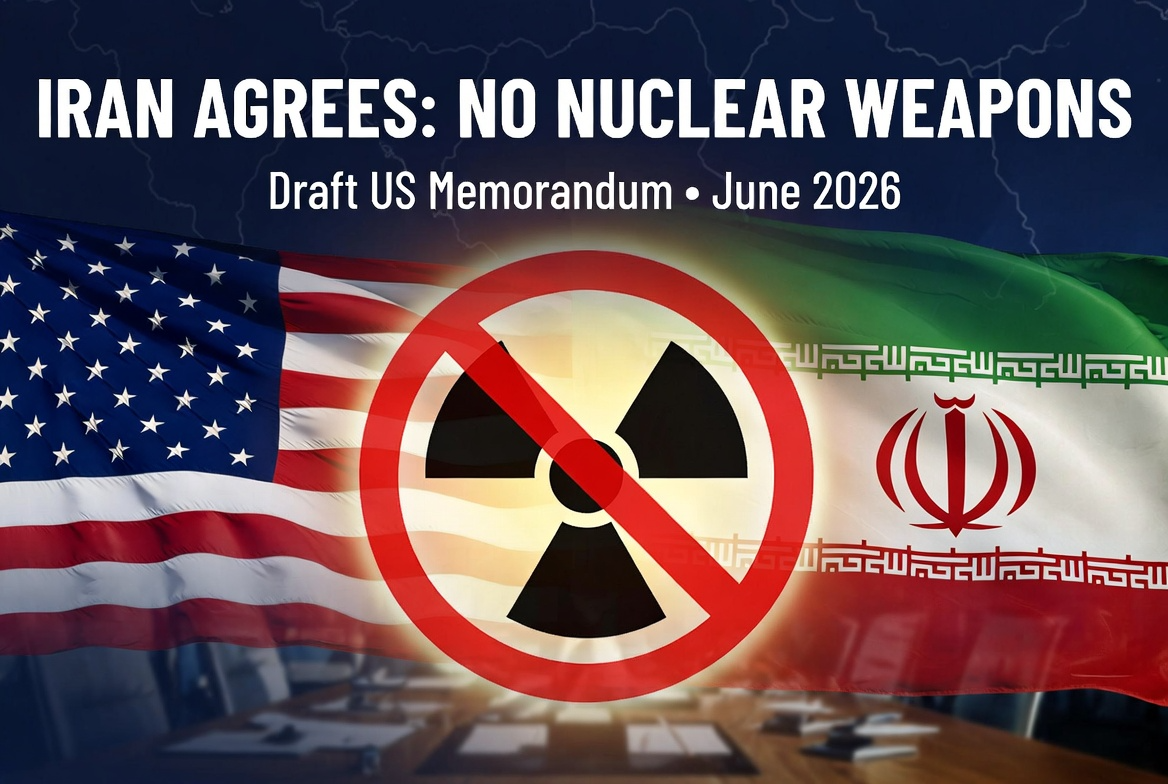
TEHRAN June 14, 2026 — A senior Iranian official has stated that Iran has agreed, under a draft memorandum of understanding (MOU) with the United States, not to produce or acquire nuclear weapons, according to reports circulating on social media and in regional outlets.
The development comes amid ongoing efforts to formalize a ceasefire following months of hostilities that began earlier in 2026. The draft MOU reportedly outlines a 60-day negotiating window for a more comprehensive agreement addressing Iran’s nuclear program, sanctions relief, the reopening of the Strait of Hormuz, and regional de-escalation.
According to U.S. and regional sources, the framework includes:
- Nuclear Commitments: Iran reaffirming it will not pursue or acquire nuclear weapons — a position Tehran has long maintained under its NPT obligations and a religious fatwa. Details on highly enriched uranium stockpiles (reportedly around 400-440 kg of 60% enriched material) and potential suspension of enrichment activities are slated for further talks within the 60-day period.
- Strait of Hormuz: Immediate reopening for unrestricted shipping in exchange for the lifting of the U.S. naval blockade.
- Sanctions and Assets: Potential release of frozen Iranian funds (estimates range from $12-25 billion) and broader sanctions relief tied to compliance.
- Ceasefire Extension: A 60-day pause in hostilities across fronts, including Lebanon, with further negotiations on proxies and missiles.
U.S. officials, including statements attributed to the Trump administration, describe the MOU as a step toward permanently blocking Iran’s nuclear pathways, with verification mechanisms and no immediate cash transfers. President Trump has emphasized that any final deal must ensure “Iran will never have a Nuclear Weapon.”
Iranian state media and officials present a more cautious view, noting that nuclear specifics remain for post-MOU negotiations and that the current draft focuses primarily on ending the war and economic relief. Some Iranian parliamentarians have criticized the text as overly concessional.
The announcement has drawn mixed responses:
- Skeptics point to the similarity with elements of the 2015 JCPOA, which the U.S. withdrew from in 2018, and question enforcement, verification, and buy-in from Israel.
- Supporters see it as a pragmatic de-escalation that could stabilize oil markets and reduce regional tensions.
- Israeli officials stress the need for strict limits on Iran’s nuclear program, missiles, and support for proxies like Hezbollah.
Recent explosions reported in Beirut’s Dahiyeh highlight the fragility of any ceasefire on multiple fronts.
No final signing has been confirmed as of Sunday, with mediators from Qatar and Pakistan continuing shuttle diplomacy. Both sides have expressed optimism for progress but stress that details must still be hammered out.
This story is developing. Further talks are expected in the coming days.
About The Author